
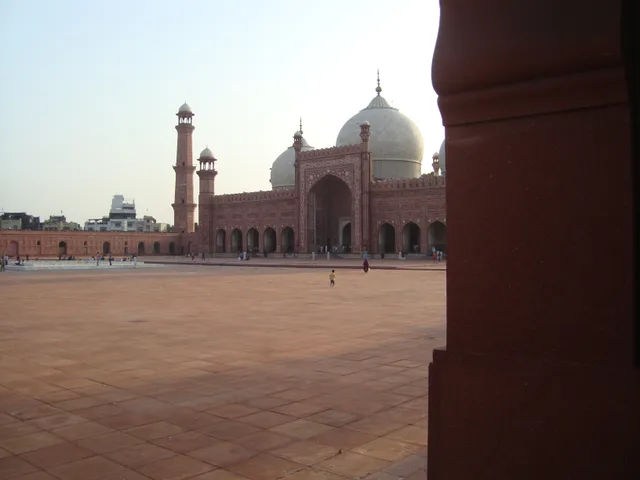
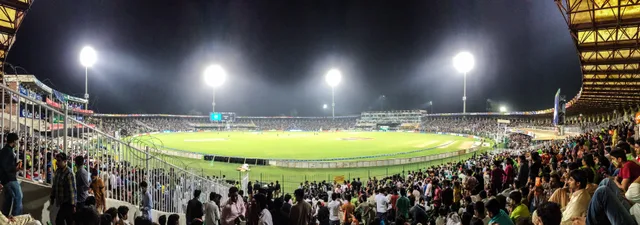
 Lahoremosquée Royale
Vivre
Pakistan: Guide de voyage, visas et hébergement gratuit · 2026
Residents navigate daily transport through private intercity bus networks rather than disrupted rail corridors, keeping purified drinking water as an absolute household staple.
Actuellement sur placePakistan
EntréeChoisissez un passeport
Lieux sur la carte183Taux de change276,69 Rsau 2 nov. 2026
Langue sur placeUrdu and EnglishIncontournables du pays
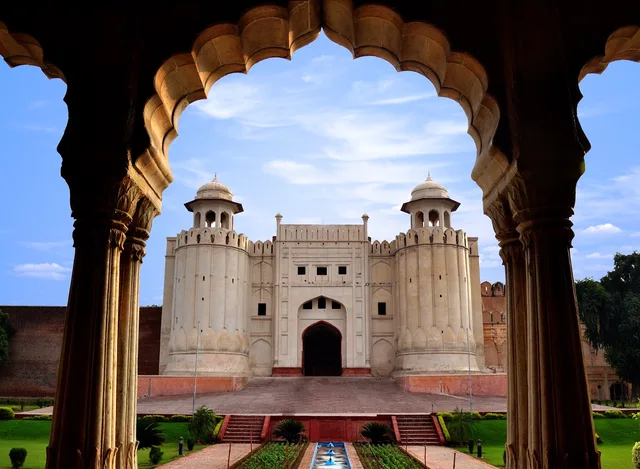
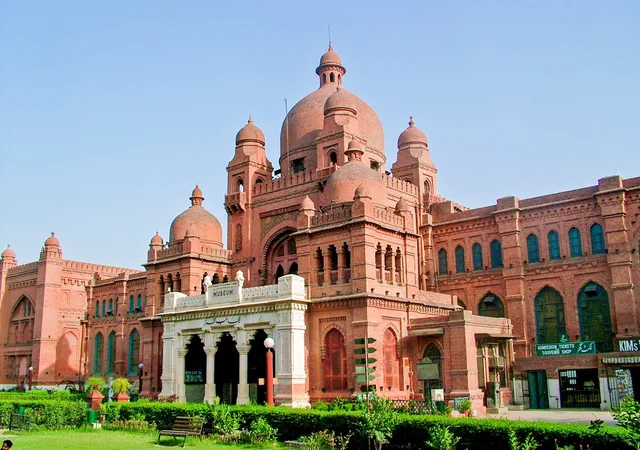
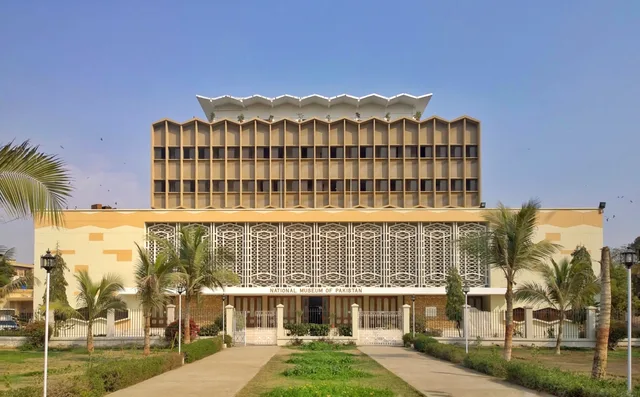
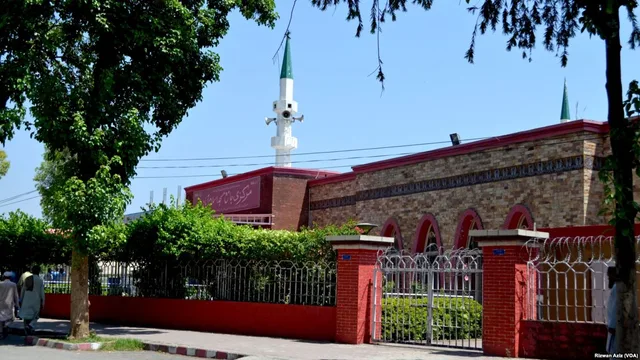
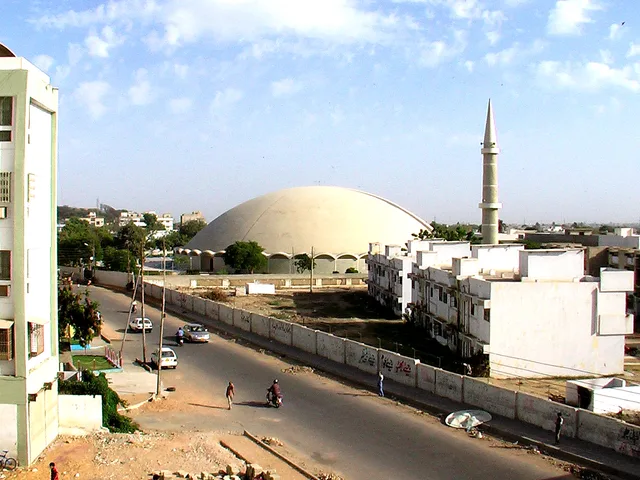
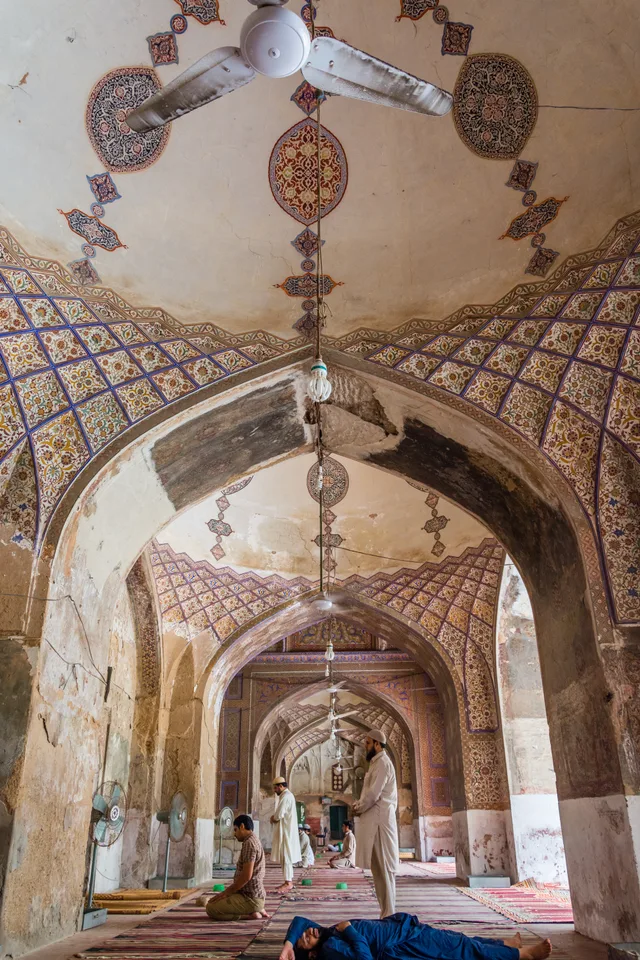
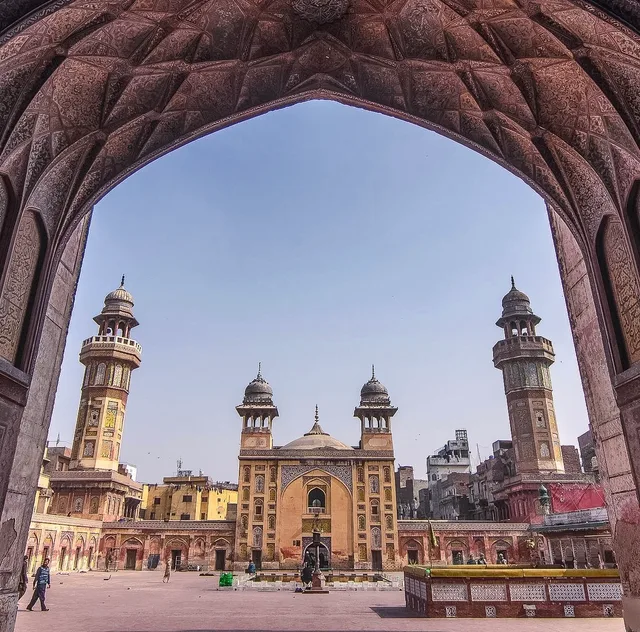
- Government offices, airports, and corporate workplaces
- English and Urdu
- Major hotels, modern supermarkets, and railway booking counters
- English and Urdu
- Local bazaars, neighbourhood food stalls, and traditional markets
- Urdu and regional languages
«کتنے پیسے ہیں؟» — Use at street stalls and auto-rickshaws before committing to a purchase or ride.
À propos du lieu
Daily life balances ancient urban heritage with modern commercial hubs and demanding transport logistics.
Pakistan spans major urban centres from the administrative capital of Islamabad to the coastal commercial core of Karachi. In northern and central regions, architectural heritage connects early settlements like Mohenjo-daro and Harappa to Mughal landmarks including the Badshahi Mosque and Lahore Fort. Modern civil society maintains strong family networks while expanding a prominent urban middle class.
Lire la suite
Traditional shalwar kameez remains standard daily attire across all provinces alongside Western business dress. Food culture centers on rich meat dishes such as nihari and spiced curries paired with flatbread or rice, accompanied by black or green tea variations like doodh pati. Intercity travel relies heavily on scheduled private bus lines, as domestic rail routes suffer from chronic infrastructure neglect.
Tap water is unsafe for consumption across the country, requiring residents to rely entirely on bottled or purified supplies. Security conditions demand constant attention to regional advisories, as border zones and specific northwestern territories remain restricted to foreign nationals. Urban areas feature distinct safety variations between neighborhoods, making private transport essential after dark.
Associations
- Mughal Architecture
- Shalwar Kameez
- Chai Culture
- Rail Infrastructure Hazards
- Tap Water Safety
Faits
- Islamabad is the national capital, while Karachi functions as the primary financial center.
- Urdu and English hold official language status across state institutions and administration.
- The passenger rail network experiences regular derailments and requires armed escorts on vulnerable routes.
- The services sector constitutes the largest component of domestic economic output.
Source : Wikidata · Wikipedia · Wikivoyage
Visa et aspects pratiques
Choisir un passeport
Définissez votre passeport — les délais de traitement, les frais et les documents requis diffèrent selon le passeport.
Bon à savoir
- Muslims are legally prohibited from purchasing, possessing, or consuming alcohol, while sales to non-Muslims are restricted to designated shops and licensed hotels.
- Pork is strictly prohibited from sale and consumption throughout the country.
- Israeli passport holders are denied entry under normal regulations without explicit prior clearance from the Ministry of Interior.
Questions fréquentes
Is tap water safe to drink in Pakistan?
Tap water is unsafe to drink across the country. Travellers should choose sealed bottled water or boiled water and ensure container caps remain unbroken. Drinks containing ice made from unpurified tap water should also be avoided.
Source : WikivoyageWhat regulations govern alcohol consumption in Pakistan?
Buying and consuming alcohol is prohibited for Muslim citizens under local law. Non-Muslim foreign visitors can purchase alcoholic beverages at licensed shops and bars located inside select upscale hotels. Murree Brewery produces domestic beer and spirits for authorized distribution.
Source : WikivoyageWhat should visitors know about local dress and clothing etiquette?
The shalwar kameez is the standard national garment worn by men and women throughout all provinces. Western-style shirts and trousers are common in urban commercial centres and formal workplaces. Modest clothing choices align with local cultural customs and Islamic values.
Source : WikipediaHow reliable and safe is passenger rail travel in Pakistan?
Rail journeys carry elevated safety risks due to aging colonial-era infrastructure and maintenance challenges. Trains passing through volatile regions face security threats, requiring armed guards on select routes. Intercity buses and domestic flights provide more dependable options between major cities.
Source : WikivoyageWhat dietary customs and restrictions apply to food in Pakistan?
Meat dishes featuring beef, mutton, or chicken form the core of local dining, served alongside flatbread or rice. Regional cooking in Sindh and Punjab includes vegetarian curry options, while northern regions rely more heavily on meat preparations. Pork is strictly banned nationwide under religious regulations.
Source : WikivoyageWhat should travellers expect when flying to northern mountain destinations?
Northern destinations including Chitral, Gilgit, and Skardu are served by scheduled domestic flights from the capital. Flights into these mountainous airstrips depend heavily on clear visibility and face frequent weather cancellations. Travellers heading to the northern valleys should maintain flexible schedules.
Source : WikivoyageAre there specific geographical regions restricted for foreign travellers?
Border territories near the frontier with Afghanistan and the Line of Control are restricted for international visitors. Travel near international boundaries requires special official permission, and foreign tourists are advised against approaching frontier corridors. Travellers should consult their respective consular advisories before visiting sensitive districts.
Source : Wikivoyage3 sources
Source : Wikivoyage · Wikivoyage · Wikivoyage
Sécurité et santé
Sécurité · avis officielsdonnées au 3 nov. 2026
Foreign nationals are strictly barred from visiting the Line of Control and border regions adjoining India.
Carrying firearms without an official permit from authorities is illegal and results in police detention.
Approaching military convoys and intelligence facilities is dangerous and carries severe security risks.
Source : UK FCDO Foreign Travel Advice · US Department of State Travel Advisory · Wikivoyage
Langue et culture
Cinq phrases pour le premier jour et les situations où la langue est indispensable
English is an official language alongside Urdu and functions as the primary medium in government administration, corporate business, upmarket commerce, and higher education. Urban professionals and ticketing staff in major transport hubs communicate in English.
Cinq phrases pour le premier jour
- کتنے پیسے ہیں؟Kitnay paisay hain?
- تھوڑا کم کریںThora kam karein
- کیا آپ مدد کر سکتے ہیں؟Kya aap madad kar saktay hain?
- مجھے یہ چاہیےMujhay yeh chahiye
- مرچ کم رکھیںMirch kam rakhein
2 phrases supplémentaires
- حساب کتاب کیا ہے؟Hisaab kitaab kya hai?
- شکریہShukriya
Où vous aurez besoin de la langue
| Situation | Langue |
|---|---|
| Government offices, airports, and corporate workplaces | English and Urdu |
| Major hotels, modern supermarkets, and railway booking counters | English and Urdu |
| Local bazaars, neighbourhood food stalls, and traditional markets | Urdu and regional languages |
| Intercity minibuses, auto-rickshaws, and municipal transport | Urdu |
| Provincial towns and rural areas across Sindh, Punjab, Balochistan, and Khyber Pakhtunkhwa | Regional languages including Sindhi, Punjabi, Baluchi, Pashto, and Urdu |

LangueGratuit
Anglais : transition méthodique A2 → B2StudyHub· ≈ 110 heures
Personnes ayant séjourné ici
The thing is, despite the fact that Americans might seem accent-free at first glance, they actually have them. More precisely, they can tell who has an accent and what kind it is. Moreover, they can tell where you're from. While in Britain, for example, you can distinguish the different accents of Scots, English, or Irish people, here there are about as many accents as there are states, since almost every state has its own dialect or something similar. Therefore, every local, upon meeting a non-local, will immediately guess where they are from. Naturally, this applies even more to foreigners. At the beginning of the season, before all our Romanians arrived, I had to work a few shifts at an ice cream shop, which is, in fact, a great chance to chat with customers. As I mentioned earlier, the start of the season means fewer customers, so there were either no lines at all or they were tiny. Because of this, I worked alone calmly, and the Americans had time to chat with me. A typical carbon-copy situation: Customers, choosing their ice cream flavor for a long time, ask about the merits of one or the other and exchange glances, realizing that something is off about me. Finally, you give them their order, and there they stand, whispering to each other, glancing at you. And then the head of the family will definitely ask: -Where are you from? (Yes, this isn't Britain, where everything is done with a "Sorry" or "Excuse me." At the beginning of my stay here, I tried to communicate politely, but they looked at me like an idiot. They don't really shine with that here.) -Uzbekistan. (At this moment, I usually start pouring out words about what a wonderful program this is, that students from all over the world come...) -Pakistan? -Uzbekistan... -Pakistan? -Uzbekistan. -Aah... -(I smile) -Paaakistaaann -Yes, yes, Pakistan. (At this point, there is nothing left to do but agree.) Although it is pleasant to communicate with Americans. They are always friendly to foreign workers, but, of course, one should not forget about other customers at that moment. And by the way, realizing that we travel across the ocean to work there, the locals leave good tips. So cherish your accent. They say it helps. Well, it happened that I met Russians in those places. Well, of course, for many on this site this is not news, but for Glacier Park, Russians are a rarity. I met one of them just while working in that same ice cream shop. She has been married to an American for many years and lives in Chicago, and they came to Montana for some conference. How funny it was to watch her husband's bewilderment when we spoke in our native language. I met another couple closer to the end of the season, when one of the Romanian waitresses came to the kitchen and asked how to say "thank you" and "come again" in Russian. Well, letting go of my bewilderment, I went out to the dining room to meet that table. There was a pair of Russian friends. A girl who has lived in the States for a long time and her friend who came to visit from Moscow. A few days later, it happened that I had to take the grill position and cook trout, which I had never fried before. But at that moment, no one but me could do it. Well, knowing the theory, I fried it and sent it to the dining room, and later, looking out the window, I saw that guy. I went out to him and realized that the very trout was for him. You know what? He was delighted. My self-esteem was at its peak at that moment. Unfortunately, he was leaving that day and didn't come back, but I am glad that I fed him well at the last minute, considering that he is a chef himself.

These double 24 hours (we flew out of Russia and arrived in America at almost the same time on the same day) were intense and super-duper cool! On the morning of June 6th, we took a "Peter Pan" bus to our future place of residence: the state of Massachusetts, the Cape Cod peninsula, the city of Hyannis. We rode and rode and finally arrived at some bus station. With great difficulty, we dragged our suitcases to our modest dwelling. The place was empty, and the doors were open... hmmmm, we walked in awkwardly... such silence! We shouted, "Is anyone home???" (again, scenes from a movie came to mind) and heard a sound, yeah, someone was coming down from the second floor. I'm remembering it now, and it's sooooo funny ^_^ Five scared girls standing in the living room of a house, possibly not even the one we were looking for, and we walked in calmly without asking anyone (the open doors were practically saying "come on in"). Anyway, we were standing there listening to footsteps, and suddenly a Latino guy jumped out from around the corner, so cheerful and smiling, we all flinched and our mouths dropped open. We were expecting an American named John, but it turned out to be a Latino guy named Jose. But we were at the right address, we found that out later. John is the owner of the house, but he doesn't live there himself. And Jose is one of the permanent residents of this house. He is from the Dominican Republic. There was also a Mexican guy named Kevin (they took American names, yes), our beloved Felix, also from the Dominican Republic, and an American named Brian (looks like a little Pushkin). And so, as a friendly family, we lived for two weeks, then a group of girls from Moldova arrived (slightly Russian-speaking) and another group of girls from Romania. And that's when the real madness started)) in a good way! A house full of people every evening after work. Our friends, their friends – and just parties every day! * Cape Cod is a tourist peninsula with numerous huge sandy beaches. People from Boston and nearby cities and even states come here to relax on weekends, just to take a break from the hustle and bustle, the cramped skyscrapers. In the center of the peninsula, specifically in the city of Hyannis, there are many souvenir shops with shark teeth =) hoodies and t-shirts as souvenirs. There is also a large Cape Cod mall, where you can go to the movies, eat, get clothes, and buy groceries. * We started working a week later; we had to fill out all sorts of papers, get our SSC, and do other chores. Most "vacancies" in the food industry are in fast-food restaurants. We worked in one of those - the Dunkin’ Donuts coffee chain. Our favorite cafe was in another city, yes-yes)) in West Barnstable. Initially, we were supposed to buy bicycles and do a daily run to work, and if we had the strength – back) But we had a wonderful, simply gorgeous manager – Hafsa. She is from Pakistan. And judging by her size, she has been working at the cafe for quite a long time and loves her job very much. She herself expressed a desire to drive us like a pack of sardines... from home to work, and back home, right up to our fence. But with a condition!!! On the condition that our work schedule would start at 5 AM. Heeeeeee! Yes, but we were already waking up at 4-5 AM, not having managed to fully adapt. We agreed. Here is some coffee and donuts from Dunkin' Donuts for you (most Americans prefer very sweet iced coffee with many flavors). And here are two more donuts xD (me and my traveling frog and Azerbaijani friend - Aisha, all in one person). * I adored my job. I told you I'm a coffee addict, and the coffee there... aaaaah. And the donuts?! Simply divine. But not everything was like a fairy tale; I did runs through the streets of Hyannis every day and continued to fight the donuts after the run, but already at home, on the floor. And you know, it helped. Only about +2 kg in America! That's gorgeous! Girls and boys, don't relax. Eat and run=) * O


 +3
0) Be confident, don't be afraid of new things, but rather learn more about them. Be patient—the way they butchered my name and the name of my country (Kazakhstan, Pakistan...) was unbelievable. They called me Chinese, Filipino, Thai... (how many times did Chinese people approach me and try to talk, and when I said, 'I am not Chinese,' they looked at me with suspicion, especially the grannies, probably thinking I didn't recognize my own 'country'!)) It was hard for Americans to pronounce the 'Zh' sound, so I introduced myself to everyone as 'Zaya.' But even then, they were intimidated. The funniest moment: my supervisor ('boss'), a married guy, was explaining something in detail at a staff meeting, and at the end, he said: 'Did you get it, Zaya?' 'Zaya' sounded like 'Za-ya.' Well, you can imagine the intonation! My sister and I laughed our hearts out. Also, it was the end of the workday. I was in a hurry to leave when a guest asked where the Spa was. I said I wasn't sure, but it should be at the end of the hall. When I returned, he was angry and started complaining that I wasn't doing my job and wanted to report me. But it ended with him not being able to read my name on my badge. Such are the pros and cons =) Everyone who knew that Kazakhstan was part of the USSR tried to figure out my position between Russia and Ukraine. I advise not to argue on this topic; in my case, they tried to impose their opinion and didn't know how to listen. I became friends with a bartender, and it was pleasant to have a dialogue with him (he was an exception!). I encountered many people who loved talking about politics. Whether you know it or not, some states (e.g., my New Hampshire) do not support the president's policy, and I often heard open negative conversations on the radio. So be careful with such topics. 1) Download everything you need on your phone while still at home, especially Maps, Booking, and the NYC subway map. I got lost in the New York subway so many times, thinking each time it was the last. I want to play guitar in the subway; I even bought a guitar (for $200, I don't know if it's cheaper there, but mine is very cool and comes with two cases), but I never got around to it. But all is not lost. This summer, I'll check that off my bucket list. Maps is a cool thing; I didn't part with it during the whole trip. Buy a Bank Charger, a charger you can carry with you. My HTC phone drained quickly because of the internet, and I think you'll have such problems too... I bought a Chinese one for $20, but there is a large selection of charger sizes and power capacities, so prices vary greatly. 2) If you work in a hotel, check the website for vacancies, send applications, and after arriving, transfer to a better job. Because you might not find a good offer initially, but you can change jobs. You don't want to work a boring job for 3 months. Look, you will definitely find a second and more convenient job. In your resume, you can lie that you have extensive experience in this field, for example, that you worked part-time in a cool restaurant for a year during your studies =) (oops, I didn't tell you that) 3) Make friends with the people who work in the kitchen, help each other) Honestly, the first year I spent money on food for a month, the second time—only a week. In the hotel, all holidays were catered with food (buffet). And, of course, there was always a large selection of food left over. I always returned with food boxes. Our trash bin consisted only of them. 4) Don't be afraid to ask, preferably double-check with 3-4 people, for example, about locations. Because we got lost a couple of times, which is fun, of course. But we planned everything by time, and we didn't visit several places... 5) Supermarkets constantly have discounts; you can check them in advance at home, which will allow you to save on food. That's what we did at the beginning, before getting to know the guys from the kitchen. 6) !!! When buying clothes, ask the sellers ab


August 7, 2009 August 16 Yesterday, for the first time, I went out to work as a rickshaw at night – in Downtown Manhattan. Not many rickshaws, who still have energy left after a workday, make it here to the district of clubs, drugs, and prostitutes. Black guys here sell and smoke marijuana right by the club entrances, prostitutes grab men in suits by the ass, and drunk people are carried out in bunches and put into taxis. And the valiant New York police behave quietly and don't touch anyone. One guy, who has been living here for a year, managed to sell his socks to some black guy yesterday. After a year, he's seen so much here that he wasn't even surprised when the guy offered him this deal and said without hesitation: "30 bucks." In the end, they settled on 20. August 17 In Brooklyn, they are celebrating Pakistan Independence Day. All roads are blocked, trash is lying everywhere, and stalls with Pakistani flags and t-shirts are set up. I don't like them; those damn Pakistanis once stole my glasses while I was playing basketball. Other By popular demand, I'm posting some photos. // update Unfortunately, you can't attach more than five photos to a post here. You can see the rest here http://zhivetyev.ru/notes/news_16_17_09/


 +2
Villes de Pakistan
Lieux à Pakistan
Vous ne trouvez pas la destination souhaitée ? La recherche prend en charge toutes les langues. Ouvrir la recherche