
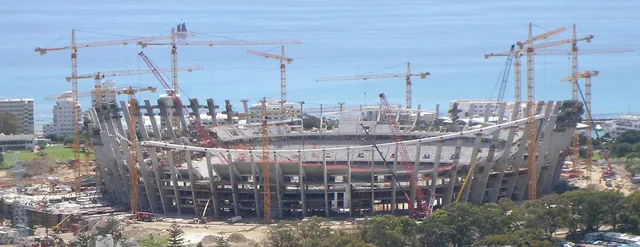
 Cape TownCape Town Stadium
Relocate
South Africa: Travel guide, visas and free housing · 2026
Residents trade evening walking habits for private transport and fortified home perimeters, running their standard monthly life on $1,100.
EntryPick a passport
Month of living$1,100Places on the map176Exchange rateR 16.64as of Nov 2, 2026Language on siteEnglish
≈ $1,100
- Housing
- ≈ $478
- Food
- ≈ $190
- Other
- ≈ $432
Sources: 2 · As of September 5, 2026
Source: Cost of Living in South Africa (2026) — Monthly Budget Breakdown · Cost of Living in South Africa 2026 | South Africa Living Costs - Wise
Highlights of the country
Cape TownCape Town Stadium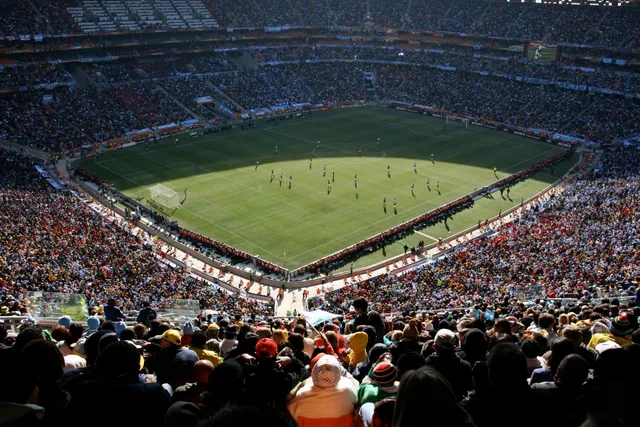 JohannesburgFNB Stadium
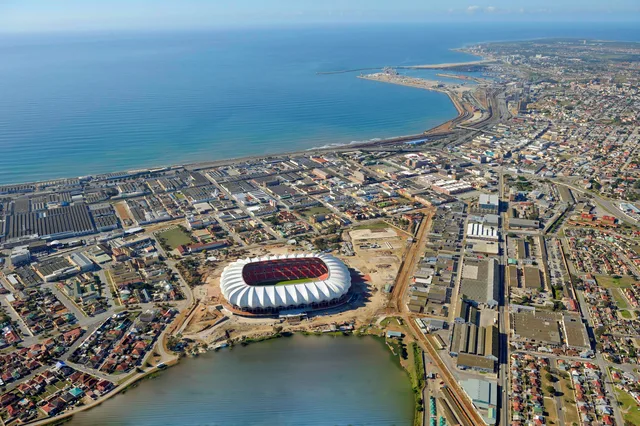 GqeberhaNelson Mandela Bay Stadium
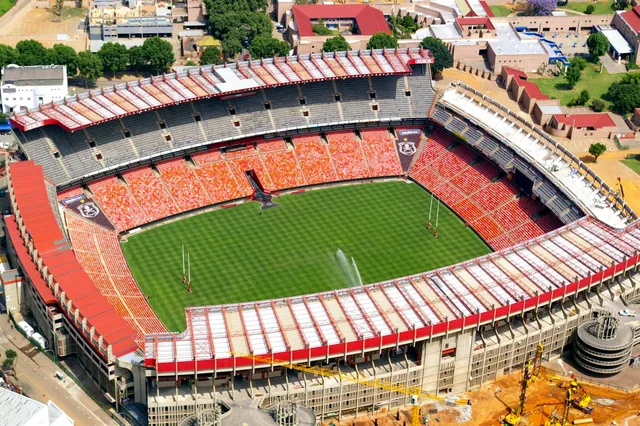 JohannesburgEllis Park Stadium
 PretoriaLoftus Versfeld Stadium
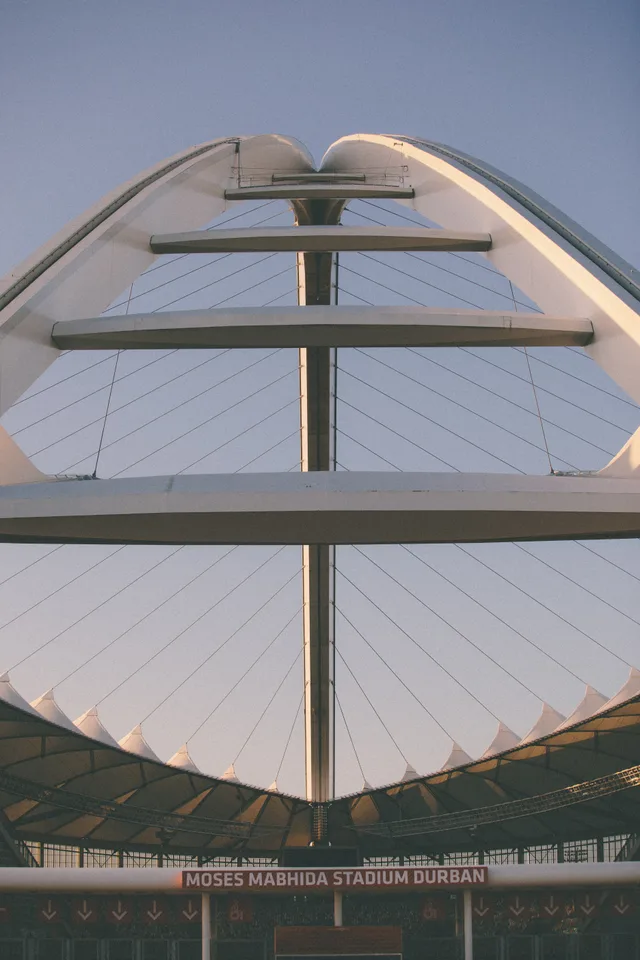 DurbanMoses Mabhida Stadium
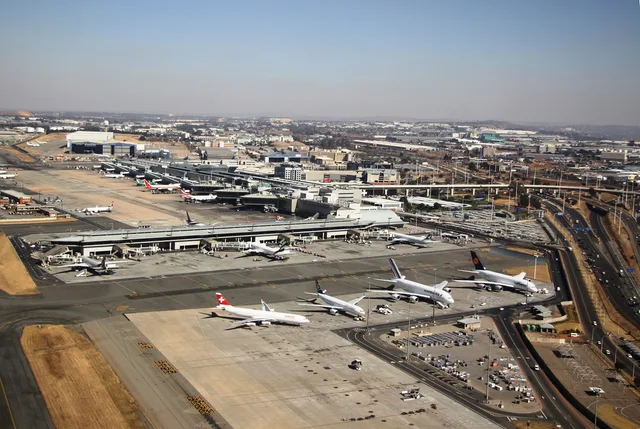 BenoniOR Tambo International Airport
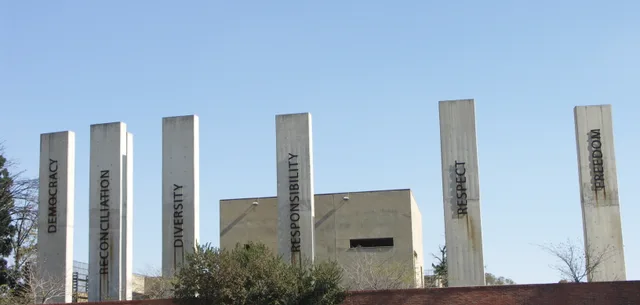 JohannesburgApartheid Museum
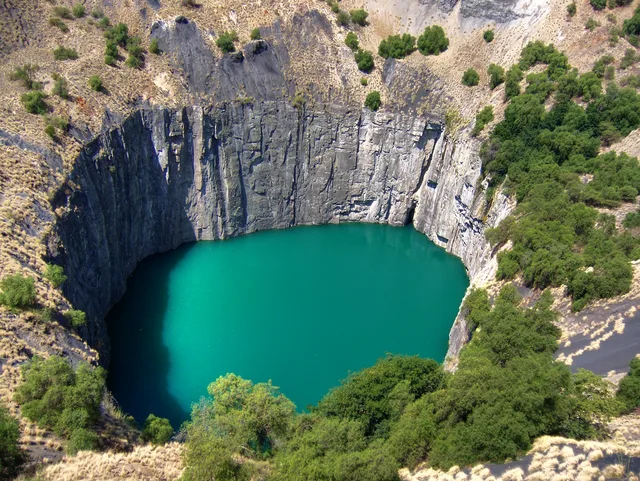 KimberleyBig Hole
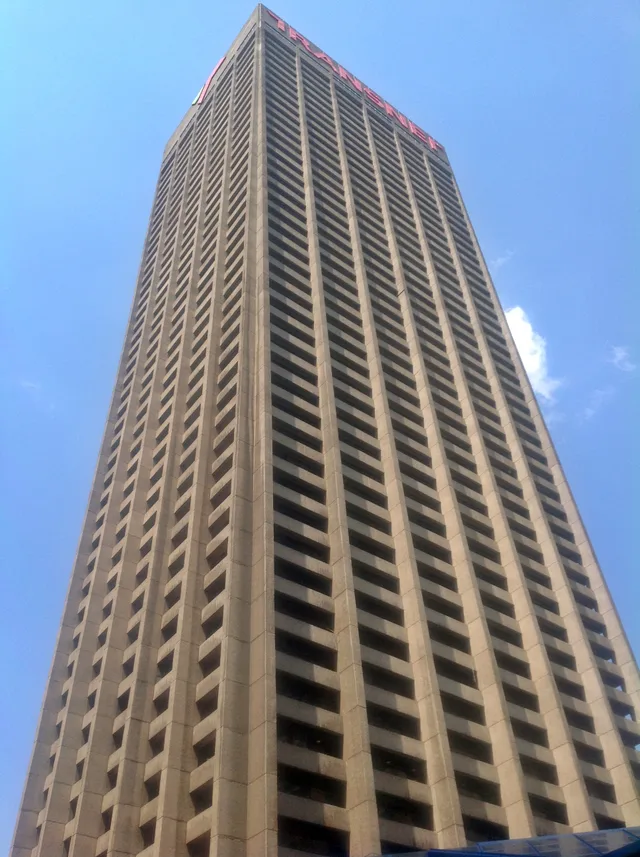 JohannesburgCarlton Centre
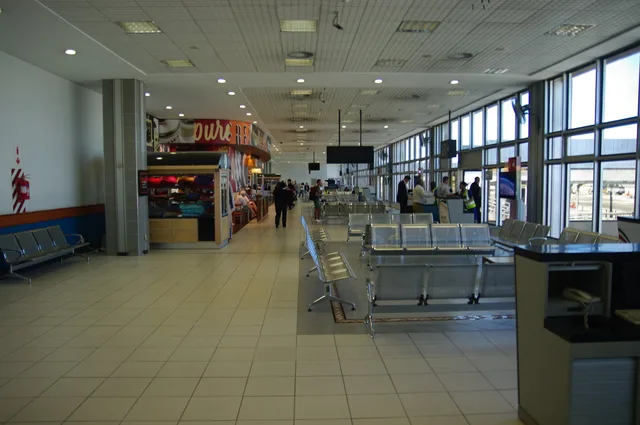 GqeberhaChief Dawid Stuurman International Airport
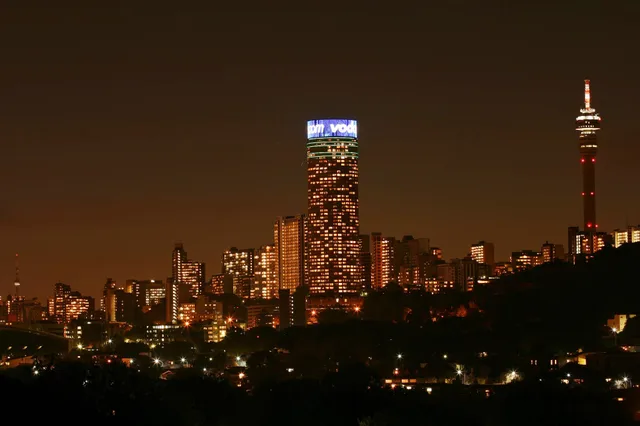 JohannesburgHillbrow Tower
- Coffee at the counter
- $2
- Lunch at a canteen
- $11
- Beer at a bar
- $2.50
- Water, 0.5 l
- $0.92
- Taxi, per km
- $0.89
Sources: 3 · As of September 5, 2026
Source: Cost of Living in South Africa 2026 | South Africa Living Costs - Wise · Cost of Living in South Africa (2026) — Monthly Budget Breakdown · Cost of Living in South Africa - Prices & Expenses. Aug 2026 | CityCost
About the place
Settling into the country pairs advanced urban infrastructure with persistent daily security precautions.
The country functions as an industrial powerhouse with deep financial markets, modern shopping centres, and extensive domestic flight corridors connecting major hubs. Everyday living relies on sophisticated private banking and retail chains. Yet broad structural unemployment and sharp wealth divides shape urban boundaries. Prosperous suburbs rely on private security patrols, electric fencing, and guarded access gates.
Read on
Navigating between regions requires scheduled highway buses, regional flights, or private vehicles, as standard intercity passenger rail has largely ceased operating. Inside metropolitan areas, personal cars and ride-hailing services substitute for pedestrian travel. Walking after dark is uncommon and carries severe mugging risks. Drivers keep vehicle doors locked and hide belongings to prevent opportunistic roadside thefts.
Social routines revolve around the braai, where friends gather to grill meat over wood coals. Staple foods include cornmeal porridge, dried biltong, and spicy farm sausage. English serves as the dominant language across supermarkets, news media, and commercial services, coexisting with indigenous tongues. Supermarkets stock comprehensive hot food buffets, making self-catering straightforward for newly arrived tenants.
Associations
- Braai
- Street Crime
- Biltong
- Minibus Taxis
- Cradle of Humankind
Facts
- The country completely encloses the independent kingdom of Lesotho.
- Commercial broadcasting and national publications operate primarily in English.
- Regular long-distance passenger rail travel has largely ceased across the national rail network.
- Purchasing a local cellular card requires presenting identity documentation and residential proof.
Source: Wikipedia · Wikivoyage · SIM Cards in South Africa: Plans (2026) | SIM Guide Travel
Money
≈ $1,100
- Room in a shared flat
- ≈ $478
- Food, cooking at home
- ≈ $190
Price examples
- Coffee
- $2
- Lunch at a canteen
- $11
- Beer at a bar
- $2.50
- Single transit ticket
- $1.61
- Room, per month
- $478
- SIM card
- $7
- Bottle of water
- $0.92
- Taxi, per km
- $0.89
- Part-time earnings, per hour
- R 182.15
IEC ID points
Up to 50% of exchange programmes, internships and other IEC services can be paid with points.
+300+100
Points programme rules4 sources · As of September 5, 2026
Source: Cost of Living in South Africa (2026) — Monthly Budget Breakdown · Cost of Living in South Africa 2026 | South Africa Living Costs - Wise · Cost of Living in South Africa - Prices & Expenses. Aug 2026 | CityCost · SIM Cards in South Africa: Plans (2026) | SIM Guide Travel
Getting there and staying
From the airport to the centre
- Gautrain from OR Tambo International Airport to Sandton
- R 248
Transit tickets
- Single ticket
- $1.61
- Monthly pass
- $50
Step by step on arrival
- 01Register personal identity documents and accommodation paperwork at an airport provider desk to secure a SIM card.
- 02Obtain domestic banknotes from an airport automatic teller for transport operators that do not take cards.
- 03Take the Gautrain rail link directly from the airport terminal into the central business district.
3 sources · As of November 3, 2026
Source: TravelHub · Public transport prices in Gauteng for 2026: What commuters really pay | Joburg ETC · SIM Cards in South Africa: Plans (2026) | SIM Guide Travel
Visa and practicalities
Choose a passport
Set your passport — processing time, fee and documents differ between passports.
Internships, au pair and study programmes have a different visa category and a different set of documents. Applications go through CMO International Programmes.
IEC international programmesGood to know
- Inbound travellers must present a confirmed return ticket and a passport with consecutive blank pages and post-departure validity, or border control will deny entry.
- Short-term entry permits cannot be reset by crossing into adjacent land neighbours such as Botswana, Eswatini, Lesotho, Namibia, or Zimbabwe.
- Purchasing a domestic SIM card requires statutory RICA registration involving verified passport identification and proof of residential address.
Small things
- SIM card
show more
These cards provide domestic phone numbers and direct voice call capabilities.
- eSIM
show more
These profiles deliver cellular data only and omit local telephone numbers.
- Wi-Fi
Frequently asked
Is municipal tap water safe to drink?
Municipal tap water is generally safe to consume across urban centers. In select rural communities and near specific dams, boiling tap water remains standard practice before drinking. Bottled water is readily available in grocery stores.
Source: WikivoyageWhat personal safety measures should travellers take after dark?
Walking through streets at night carries severe personal safety risks and is widely avoided. Travellers should rely on pre-arranged private transport or metered cabs rather than wandering on foot or boarding informal minibuses. Keeping vehicle doors locked and stowing personal belongings out of sight reduces opportunist crime.
Source: WikivoyageWhat paperwork is required to register a local mobile SIM card?
Purchasing a physical SIM card requires statutory RICA verification. Travellers must provide an official passport and valid documentation of local lodging, such as a confirmed accommodation voucher. Major airport arrival terminals maintain carrier kiosks that complete this verification immediately.
Source: SIM Cards in South Africa: Plans (2026) | SIM Guide TravelCan visitors depend on passenger rail services for travel between cities?
Long-distance passenger trains have largely ceased regular operations, offering infrequent departures and limited routes. Most domestic travellers rely on scheduled coaches, domestic flights, or personal vehicles instead. Urban commuter lines exist in major metropolitan centers, though suburban transit can face overcrowding.
Source: WikivoyageWhat are the rules regarding tourist entry visas?
Entry prerequisites depend strictly on nationality, travel documentation, and length of visit. Refer to the official visa section to verify entry eligibility, application protocols, and required passport validity before travelling. Work schemes and exchange programmes require separate permits that differ from standard visitor entries.
Source: WikivoyageWhat road conditions should motorists anticipate outside major metropolitan areas?
Rural highways and regional roads frequently lack artificial lighting, making night driving hazardous. Domestic livestock and wild animals regularly wander into driving lanes without warning. Motorists should schedule journeys during daylight hours and exercise caution regarding unpredictable driving behavior.
Source: Wikivoyage · WikivoyageWhich local food specialities are characteristic of traditional dining?
Open-flame grilling, known locally as braai, forms a central element of social dining. Staples include cornmeal porridge served with savory relishes, spiced dried meats, and slow-cooked stews prepared in cast iron pots over wood fires. Regional variations incorporate fragrant curries and spiced baked dishes.
Source: WikivoyageWhich languages are predominantly used for daily communication?
South Africa recognizes multiple official tongues, including indigenous African languages such as isiZulu and isiXhosa, as well as Afrikaans. English serves as the dominant language across commerce, national media, and administrative environments. Visitors navigate urban centers easily using English.
Source: Wikidata · Wikipedia3 sources
Source: SIM Cards in South Africa: Plans (2026) | SIM Guide Travel · Cost of Living in South Africa - Prices & Expenses. Aug 2026 | CityCost · Wikivoyage
Safety and health
Safety · official adviceour data as of Nov 3, 2026
Motorists must avoid picking up hitchhikers or stopping for roadside breakdowns, which are frequently exploited for staged robberies.
Police stations certify photocopies of passports at no cost, providing valid temporary documentation for banking and local identification.
Vehicle doors should remain locked and valuables concealed while driving to deter smash-and-grab thefts at urban road intersections.
Source: UK FCDO Foreign Travel Advice · US Department of State Travel Advisory · Wikivoyage
Getting here
Getting here
Public transport$1.61
People who have been here
🌍 Ready to make a REAL impact? Volunteer in South Africa and support kids, protect wildlife, help communities, and explore a country full of culture and adventure. ✨ Programs from 2–12 weeks — just enough time to change the world and yourself. This isn’t just a trip—it’s your chance to create real change from day one! Volunteering in South Africa | Agency IEC


Yesterday, August 9th, was a holiday in South Africa. Women's Day, or International Women's Day. I was wandering around, waiting for a call from the club where I wanted to get a job. It never came. My mood was really, really not great. Although, some nice guys at a shop gave me a pink badge that says "I am a super extraordinary woman!" It's a small thing, but it was nice. By the evening, I felt really sad because everyone around was celebrating, and I was just wandering the city alone. I got to the hostel and started complaining about life to my friends. It's embarrassing, honestly. I'm here in South Africa and still complaining. But what can you do! Anyway. A new roommate moved in. A very sweet girl from Brazil named Lígia. And what do you think? My sadness was blown away like the wind! Because she invited me to go out and have fun)) I'll tell you about our night out in the next post)

It is WINTER in Africa right now. Yes, winter. And it is quite cold here! It happens. When I first arrived, it was sunny and warm. When I went to explore the beaches, the weather was perfect) I was in shorts! The locals passing by in down jackets were giving me strange looks... oh well! Now it has gotten colder. It is impossible to go out without a leather jacket. There has been a very strong wind for the last two days! I was almost blown off my feet on the coast today. But the waves are so beautiful... the ocean is angry! It is funny that closer to our winter, the long-awaited warming will begin in South Africa, but I will be heading to Russia just then. Back to the cold weather) So, the weather is not great, it is too cold to swim and sunbathe. Consequently, there are no tourists. Almost. No tourists - no work! That is how it is. Adding my photos. By request of Irych, who seems to have missed me)


Hey guys! Sorry for the long break. I just couldn't bring myself to write anything. Right now, I'm sitting in a hostel, watching some silly horror movie with all my roommates. We're like one big family! We've all sprawled out on the sofas watching it. Nationalities? You name it! A couple from Poland, a Brazilian, a South African, a German, an Englishman, a Spaniard, and me, a Russian. It's all pretty funny, don't you think? Yesterday, I was cooking goulash in the shared kitchen, and a German, a Spaniard, and a South African were cooking there with me. It's so much fun talking to them; it's like talking to people from another planet! And imagine my feelings when suddenly, in a kitchen in South Africa, I heard the song "Dark Eyes" being performed by a Spaniard! Amazing! Then everyone got interested, I showed them the lyrics, and everyone decided to learn it. So, I'm promoting Russian culture, my friends! Now, a little about the English language. Once again, I'm convinced that knowing a foreign language is a miracle! I suddenly understand people who are completely unlike me or anyone I know. English unites us; I love this language! Of course, I realized that my upper-intermediate level consists mainly of knowing grammar and various nuances, rather than speaking. But that's okay, I think I'll catch up. Learn languages, my friends, learn them! That's my advice to you. And by the way, in South Africa, EVERYONE knows English. It's an official language. There are a million other languages here. As many tribes as there are, there are that many languages. BUT, everyone still knows English. Even the minibus drivers who came from Kenya!


We received this list at the International Exchange Center when applying for the program, but Marina (our coordinator) warned us right away that the South African embassy is a bit strange and often asks for something new. We confirmed this later on, but here are the details about the documents: 1. Application form - nothing complicated here, just another form in English :)))) 2. 1 passport size photo - a passport-style photo; you will need 2 more later for the embassy. 3. Copy of passport - international passport + national passport (a copy of the registration page is mandatory). 4. Letter of motivation - time to use your imagination and write about how much you want to see penguins and get to know such a beautiful country as South Africa))) and don't forget to have someone check it, since it's all written in English. 5. CV - resume, write about how wonderful and hardworking you are, also in English. 6. Proof of student status (full time students) (if graduated copy of Diploma not later than half a year after graduation) - actually, I study in the evening department, so I asked them to just state 'full time student in evening' in the translation, and this certificate must also include the university graduation date. 7. Medical report - this is a very funny document. The form is provided by the International Exchange Center; it has a huge list of diseases and is all in English. You need to find a place where they can stamp it to confirm you aren't sick... yeah... doctors wave their hands when they see it =) 8. Copy of the police clearance report - this is one of the longest documents to get, it takes from 3 weeks, so as soon as you decide to join the program, run to get this certificate! You don't need an apostille, a translation is enough. 9. Insurance details - insurance, done at the International Exchange Center, costs about $300. 10. Bank statement about sufficient funds - a bank statement for the last 3 months, valid for 2 weeks, and it's only needed at the embassy. I want to note that the statement can only be from your own account or your parents' account... Meaning neither a brother, sister, nor grandmother can be your sponsors... Also, you need to provide a 2-NDFL form (also valid for 2 weeks) to the embassy, flight reservations, and at the time of visa issuance, you need to bring purchased tickets and a sponsorship letter (in English). I hope I didn't forget anything... It took me almost 6 months to collect all these documents, but I wasn't in a hurry. Thanks to Marina for not letting me give up in early September and cancel the trip!

I have been a volunteer for over a year now, but I have always wanted to gain such experience abroad. My choice fell on South Africa. Quite unusual, isn't it? But there were reasons for that. Our university has many international students, including those from Africa. I have been their mentor for 2 years, I enjoy working with them and helping them adapt, which is why I became interested in Africa specifically. Besides, Russian citizens do not need a visa to go there, and the costs are much lower compared to Europe. It is also a great way to practice English and gain teaching experience! The journey is very long; unfortunately, there are no direct flights from Moscow to Cape Town, so I had to fly via Qatar.
The program ended several months ago, and I've only just gotten around to processing all the materials, but as they say, better late than never. Here is the link to the YouTube video: https://youtu.be/Sllo-8dDavk If you are planning to go to Cape Town for the Work in South Africa program, this video will be twice as interesting for you! Enjoy guys ;) And good luck to you all in your trips!
So much has happened to me today that I don't even know where to start. Cape Town! An amazing city. With right-hand traffic and funny traffic lights that locals for some reason call robots. The first thing that struck me was the politeness. Everyone around says hello, smiles, and tries to help. After our gloomy Russia, this seems somewhat unnatural. When I was looking for the office of my sponsoring company (SATS), strangers approached me several times to offer help just like that. And they helped as much as they could! One kind young man even called the SATS office to find out the way! Yeah, take note, people. The second thing is, of course, the view of Table Mountain. Its peak was covered in clouds, but even in that state, it seemed surprisingly beautiful to me. I lived in Zlatoust for most of my life, it is surrounded by mountains. And it seems I should have gotten used to them, but... Table Mountain is a miracle. Throughout the day, I dreamed of seeing the ocean. And for some reason, I just couldn't get to it. And then, almost at six in the evening local time, fate led me to the embankment. It was fate, because I couldn't have timed it for the sunset, but I arrived exactly for it. Here I run out of words... because I don't know how to describe this beauty. The bright, vibrant sun slowly sinks into the blue waters of the Atlantic Ocean. The moment I saw this, I suddenly realized clearly: this is the reason why Ksyusha Doroeeva came to the other end of the world. To see THIS. The sky on the other side turned gently purple. And the mountains around darkened and stood out even more. It is incredibly beautiful. It's worth living for this. So what is the irony of fate, you ask? It lies in the fact that I met some Russian guys today. And they turned out to be not just Russians, they are my fellow countrymen! The Chelyabinsk region is conquering South Africa. Why are we drawn there?) Guys from Chelyabinsk, Magnitogorsk, Ust-Katav, and me, a girl from Zlatoust) It's quite funny. Cape Town attracts the Urals) And now some background information about my stay in Africa. I live in the safest area of South Africa, it's touristy, located on the coast. The ocean is a 20-minute walk from my hostel. The Atlantic, naturally. The hostel is a small hotel, the name translates to Russian as "Big Blue Backpack". There are no Russians here, except for me. It seems! I know there are Africans, French, English, Chinese, and Poles. Surely there are representatives of other countries too, but I don't know for sure yet. The atmosphere is quite cheerful and friendly. Everyone helps me all the time) And again - everyone always says hello! And asks how I'm doing) Half an hour's walk away live the Russian guys. From the Chelyabinsk region) In the other direction is the center. It's better not to walk there in the evening, but during the day... mmm! Interesting) Small streets, people everywhere, life is boiling) Today in the center, we accidentally heard Russian speech behind us. I was very happy) Our tourists! I will look for work in hostels and hotels. Our guys have already explained to me how everything works and why. I got fired up with the idea of buying a bicycle and riding it to work and around the city! I think it's very convenient. The streets here are suitable. Besides, a used one doesn't cost that much. I'll come back from South Africa with a bicycle) In the store today, I didn't find curd snacks! I'll check for dumplings tomorrow)) Oh yes, they also have three-hole sockets here. This is important information, I know)
Stay longer on a programme
Work and Travel, internships, au pair and volunteering in South Africa: visa, invitation and on-site support are handled by CMO International Programmes.

1
Cities of South Africa
Places in South Africa
Countries nearby
Frequent questions about South Africa
Can’t find the place you need? Search understands any language. Open search