
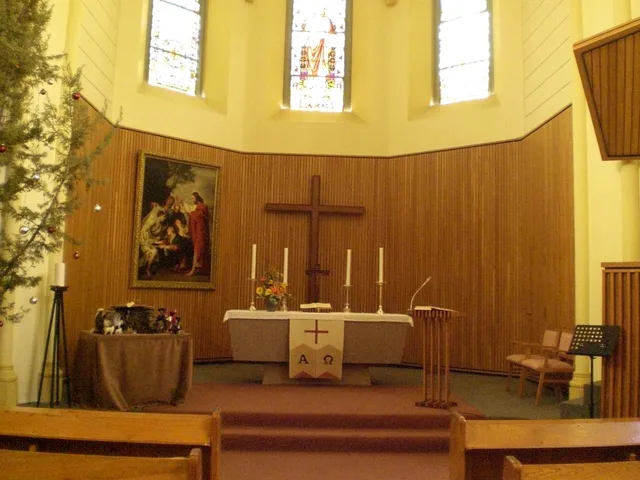
 WindhoekChrist Church, Windhoek
Overland
Namibia: Travel guide, visas and free housing · 2026
Namibia requires planning daily life around vast driving distances and imported supplies rather than quick public transit.
Now in the cityNamibia
EntryPick a passport
Places on the map34Exchange rate$16.61as of Nov 2, 2026
Language on siteEnglish
Highlights of the country
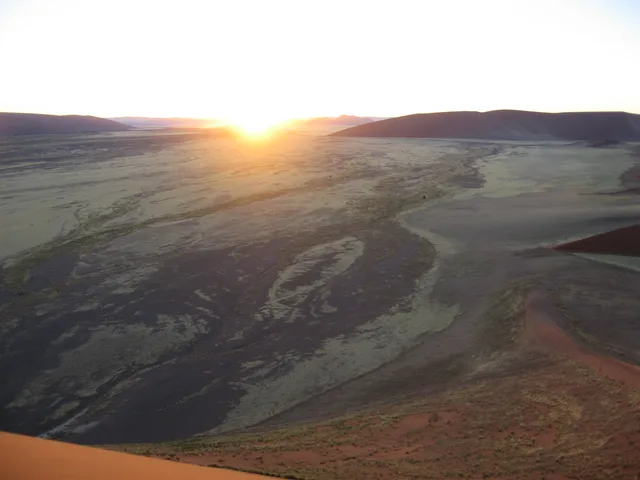
About the place
Life across Namibia unfolds against vast gravel corridors, communal braais, and severe resource planning.
Settling in the country means adapting to an import-driven economy where supermarkets stock South African goods and fresh vegetables carry steep prices. Everyday social life centres on the braai, driven by abundant local meat production. In the capital and major towns, retail chains and modern banking provide reliable services, though long-term residents quickly learn to plan grocery runs around limited rural supplies.
Read on
Daily logistics outside urban centres depend entirely on personal vehicles capable of handling unpaved gravel tracks. The vast distances between settlements require carrying spare tyres, extra water, and backup fuel. Road travel demands constant caution due to wildlife crossings, loose stone chipping, and high accident rates. Public rail transport is absent for daily commuting, leaving private cars as the sole reliable option.
The country pairs strong institutional press freedom with severe income inequality and a distinct divide between formal districts and informal settlements. While peaceful and stable, urban areas experience property crime, making evening walks and unvetted taxis inadvisable for newcomers. Living here comfortably requires clear security routines, an awareness of economic contrasts, and respect for local social dynamics.
Associations
- Braai Culture
- Gravel Corridors
- Press Freedom
- High Food Import Costs
- Severe Income Disparity
Facts
- The capital and largest urban centre of the country is Windhoek.
- The nation takes its name from the coastal Namib desert.
- English serves as the official national language.
- The national currency is the Namibian dollar.
- Scheduled national passenger rail operations are inactive.
Source: Wikipedia · Wikidata · Wikivoyage
Namibia in pictures24 photos
Visa and practicalities
Choose a passport
Set your passport — processing time, fee and documents differ between passports.
Good to know
- Travellers must carry valid personal identification to present upon request by police or border officials.
- Transporting meat across the veterinary cordon fence from the northern territory southward is prohibited.
- Adults travelling with minors must provide complete birth certificates and written consent from non-accompanying parents.
3 more rules
- Retail stores are prohibited from selling takeaway alcohol during designated weekend periods and public holidays.
- Entering visitors must hold confirmed onward travel tickets and provide a local lodging address.
- Passports presented at entry must possess sufficient blank pages and unexpired validity.
Small things
- Cards
- Cash
- Tipping
Frequently asked
What should drivers know before navigating roads in Namibia?
Vehicles travel on the left side of the road. Major highways are paved, while secondary routes consist of graded gravel where loose stones frequently damage tires and windscreens. Driving after dark poses serious hazards because wild animals regularly cross unlit routes.
Source: WikivoyageWhat documentation is required for road checkpoints and travel with minors?
Travellers must produce valid identification such as a passport or driver licence upon request by officials. Visitors travelling with children must carry full birth certificates, along with written parental consent if a parent is absent. Moving south across the national veterinary border with raw meat is strictly prohibited.
Source: WikivoyageWhat general entry regulations apply to arriving visitors?
Immigration authorities require arriving travellers to present a valid passport, confirmed accommodation details, and proof of onward transit. Entry permissions vary significantly depending on nationality and trip purpose, so verify specific requirements in the visa section before travelling.
Source: WikivoyageWhat should travellers expect regarding food and dining options?
The local diet relies heavily on meat such as beef and game, with social life frequently centred on wood-fired barbecue meals known as braai. Coastal towns serve fresh ocean fish, while dried meats and porridge form dietary staples inland. Fresh fruits and vegetables are mostly imported and can be difficult to find outside major urban supermarkets.
Source: WikivoyageWhat personal safety precautions should visitors observe?
Urban areas experience noticeable rates of theft, making tourists carrying visible bags prime targets for opportunistic street crime. Foreigners should avoid walking alone or using street taxis after sunset. Keeping personal items inside clothing pockets helps minimize attention when moving through city centres.
Source: WikivoyageWhat rules and customs govern alcohol purchases in Namibia?
Takeaway alcohol sales from supermarkets and formal retailers are prohibited on weekend afternoons and public holidays. Social drinking commonly takes place in casual neighborhood venues known as shebeens or around communal grills. Traditional drinks include fermented millet beverages alongside locally produced commercial lagers.
Source: Wikivoyage5 sources
Source: Wikipedia · Wikivoyage · Wikipedia · Wikivoyage · Wikivoyage
Safety and health
People who have been here

South Africa is a country in the south of Africa. It borders Namibia to the northwest, Botswana and Zimbabwe to the north, Mozambique and Eswatini to the east, and the Kingdom of Lesotho is an enclave in the eastern part of the country. It is washed by the Indian Ocean in the east and south, and by the Atlantic Ocean in the west. The total area is 1.22 million square kilometers. South Africa is a land of breathtaking contrasts, amazing wonders, and rich wildlife, intoxicating with its beauty. It is truly a whole world in one country, whose borders frame an exceptional variety of landscapes: from the lush evergreen thickets of the subtropical forests of the eastern highlands to the arid deserts in the west, from majestic mountain peaks to coastal regions bathed in sun and drowning in greenery and gold. South African national parks and marine reserves are unparalleled in the world, and the abundance and variety of plants and flowers make the country the botanical garden of Africa. In the shadow of Table Mountain, Cape Town awaits you — the center of the Western Cape province, the very first city in South Africa — one of the most beautiful cities in the world. Here you can watch whales, see their calves being born, witness the meeting of two great oceans — the Indian and the Atlantic, and also allow yourself to enjoy wonderful wines. (Translation continues for all sections...)


 +2

What can I say? Of course, I went to salsa on Friday. Many promised to join me, but it didn't work out. Some were on a date, some were drinking vodka, some got offended) Only Dima agreed. So we arrived, two total newbies. Newbies, because we can't dance at all) We just stood there. Then some nice guys asked me to dance, BUT they quickly realized I was a total amateur and got rid of me)) So we sat there for the first half of the salsa night. Then we went to practice in a room where there were few people. We came back and tried to dance) We added a lot of Russian elements to the salsa. The main thing is that it was fun) But then! There was this guy, a dancer. A bit chubby, bald. BUT! The way he looked at everyone! The way he danced! The moves he did with his feet! WOW! Dima kept pushing me to go up to this guy and ask him to teach us a little. In the end, he went himself) The guy turned out to be Nikolai from Bulgaria. He works in Namibia and came here for the weekend. He showed us the basic steps, turns, and all that. Dima and I felt like professionals and got so proud)) After the official salsa, we headed to the unofficial one. Simply put - to a club)) We danced to Shakira there. Danced salsa, naturally) That's how my third dance Friday turned out!
Can’t find the place you need? Search understands any language. Open search