Skip to content
TravelHub

Your settings

Language, currency and passport are remembered on this device and apply across the whole service.

Prices are shown in your currency with the exchange-rate date next to them.

Not chosen

Visa answers depend on your passport. This is not legal advice: check the official source linked next to each answer.

Live

Kyoto: Travel guide, prices and free housing · 2026

Renters who look beyond the historic central wards can secure a room for ¥50,000, trading direct subway access for daily commutes on crowded municipal buses.
Map of places
Price anchorsall prices
Coffee at the counter
$3.28
Lunch at a canteen
¥114,000
Dinner out
¥390,200
Beer at a bar
$3.14
Water, 0.5 l
$0.71
Sources: 2 · As of September 5, 2026
Source: Cost of Living in Kyoto. Jun 2026. Prices in Kyoto · Cost of Living in Kyoto. Updated Prices May 2026.
Language on the groundphrases
Municipal buses and trains
English and Japanese. Displays and audio announcements operate in English.
Hosts who speak English
46

«お会計をお願いします»Use to request the bill at dining establishments.

What fits initineraries
1 day
Gion, Kiyomizu-dera, Hokanji Temple
3 days
+ Nijō Castle, Kinkaku-ji, Arashiyama
7 days
+ Fushimi, Uji, Heian-jingu Shrine
Within two hours
Travel times marked “≈” are distance-based estimates, not timetables
About the place

Kyoto functions as an ancient imperial seat and a modern industrial capital simultaneously. Preservation laws protect hundreds of temples while global electronics corporations run their operations from the outer wards.

The urban layout retains the grid established when the court ruled from the Heian basin. Beyond the concentration of preserved temples and designated national treasures, the local economy relies on precision technology and traditional manufacturing. Global hardware corporations maintain corporate bases in the outer wards alongside long-standing textile operations that produce woven silk garments and Fushimi sake breweries.

Read on

Daily transit relies heavily on municipal bus routes because the subway network consists solely of the Karasuma and Tozai lines. Surface routes connect the main railway terminal to peripheral residential districts, though municipal drivers turn away oversized luggage to ease passenger crowding. Long-term tenants living outside the central grid depend on street-level buses or private railway branches for their commutes.

Social routines reflect traditional customs alongside commercial barriers. High-end kaiseki dining rooms routinely require introductions from established patrons and settle bills exclusively in cash. Nightlife centres on compact bars along the Kiyamachi corridor rather than dance clubs, prompting late-night clubgoers to travel toward Osaka. Local speech retains distinct honorific phrasing that sets the basin apart.

Associations
  • Kaiseki diningMany elite dining rooms reject direct foreign bookings without local introductions.
  • Municipal busesVehicles face heavy passenger crowding and prohibit passengers with large luggage.
  • NintendoThe global gaming corporation maintains its worldwide headquarters in the city.
  • Gion MatsuriHistoric festival traditions culminate in grand ritual processions through downtown.
  • Fushimi sake brewingSouthern industrial district houses major historic breweries including Gekkeikan.
Facts
  • The national government operates the Agency for Cultural Affairs from Kyoto instead of Tokyo.
  • City bus operators enforce restrictions prohibiting travelers from boarding with large luggage.
  • The municipal subway system consists of the Karasuma Line and the Tozai Line, which intersect at Karasuma Oike Station.
  • Corporate headquarters for video game developer Nintendo and electronics manufacturer Kyocera are based within the city limits.
Source: Wikipedia · Wikivoyage
Kyoto in pictures8 photos · 1 place
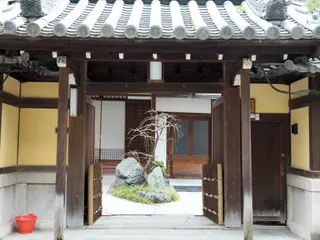
Honnō-ji Temple
Jim Gateley · cc-by-3.0 · Nov 1, 1993
Honnō-ji Temple
Sorasak boontohhgraphy · cc0 · May 5, 2017
Honnō-ji Temple
Andre Benz trapnation · cc0 · May 2, 2017
Honnō-ji Temple
P Fan Net · cc-by-3.0 · Apr 12, 2004

Frames are tied to places on the map: every photo has an author and a licence. Look-alike shots from another city never appear here — if there are no photos of the place, there is no strip.

Money

What a month really costs and what everyday things are priced at

Price examples
Coffee
$3.28
Lunch at a canteen
¥114,000
Dinner at a café
¥390,200
Beer at a bar
$3.14
Room, per month
¥5,000,000
Bottle of water
$0.71
IEC ID points

Up to 50% of exchange programmes, internships and ecosystem services can be covered with points.

+300for registering with IEC ID+100for signing in to TravelHub
Points programme rules
3 sources · As of September 5, 2026
Source: Cost of Living in Kyoto. Jun 2026. Prices in Kyoto · Cost of Living in Kyoto. Updated Prices May 2026. · Cost of Living in Kyoto 2026: Rent, Food & Monthly Expenses
Compare with Osaka

Getting there and staying

Free first, paid second

Free stays with hostsSee hosts
In the city99hosts welcome guests
Private room13%the rest offer a couch or a mattress
Speak English46
Verified profile15%with a confirmed profile

Host languages: japanese, english, spanish, chinese, and french · Exact addresses open in the conversation with the host.

Flight

Set your departure city and we will show flight prices by month from our cache.

Day trips
  • Osaka1 hrFrequent commuter trains link directly to this culinary and entertainment center.
  • Hiroshima3 hr 35 minBullet trains provide rapid connections to the peace memorial park and historic bay landmarks.
  • Tokyo3 hr 40 minHigh-speed rail connects travelers directly to the sprawling districts of the national capital.
Step by step on arrival
  1. 01Pick up a local data SIM card at the airport arrival terminal.
  2. 02Withdraw Japanese yen from an airport automated teller machine for cash transactions.
  3. 03Purchase a municipal transit pass at the ticket counter or automated kiosk.
  4. 04Board the Haruka limited express train directly to Kyōto Station.
3 sources · As of September 5, 2026
Source: TravelHub · OurAirports (public domain) · Overview | 京都市交通局

Visa and practicalities

Choose a passport

The visa answer is computed for the pair “passport → country”: timing, fees and documents differ by passport. Pick a passport and the answer opens here.

Good to know
  • City buses discourage or deny boarding to passengers with large suitcases, requiring travelers to use the subway or luggage transfer services.
  • Kaiseki restaurants routinely reject direct bookings from international visitors, demanding an introduction from an established patron.
  • Kyoto imposes a municipal accommodation tax on lodging that may be excluded from initial rate quotes.
1 more rule
  • Temple lodgings enforce rigid curfews and check-in times, with front desks rarely offering English language assistance.
Frequently asked
How do you reach Kyoto from the nearest airport?

Kyoto lacks its own commercial airport and relies on air hubs located in Osaka. The Haruka limited express train connects Kansai International Airport directly to Kyoto Station, supported by scheduled highway limousine buses. Domestic arrivals landing at Itami Airport reach the city via airport bus links or monorail transfers to private rail lines.

Source: Wikipedia · Wikivoyage
Can passengers bring large luggage onto Kyoto city buses?

Transit operators discourage travelers from bringing large suitcases onto municipal buses, and drivers may refuse boarding during congested periods. Subway lines and trains accommodate oversized baggage without similar restrictions. Dedicated baggage forwarding services also ship luggage directly between transit stations and local hotels.

Source: Wikivoyage
Is tap water safe to drink in Kyoto?

Municipal tap water in Kyoto is potable and safe for everyday consumption. Public drinking fountains located across the city offer convenient points to refill reusable bottles.

Source: Wikivoyage
How do dining reservations work for traditional kaiseki meals in Kyoto?

Many high-end kaiseki establishments decline direct booking requests from independent foreign guests and require introductions through regular diners. Luxury hotel concierges can often secure reservations on behalf of their registered guests. Most traditional dining rooms operate exclusively on cash and do not accept credit cards.

Source: Wikivoyage
Should visitors rely on the subway or buses to travel around Kyoto?

The municipal subway operates along crossing north-south and east-west corridors, providing rapid movement through the central districts. Reaching outlying temples and historical sites requires city buses, which provide extensive coverage beyond the reach of the rail grid. City buses feature multilingual electronic displays and automated stop announcements to assist travelers.

Source: Wikipedia · Wikivoyage
Can visitors use contactless IC transit cards in Kyoto?

Rechargeable smart cards such as ICOCA function across municipal subways, regional trains, and city buses throughout Kyoto. Cardholders pass through station ticket barriers and board transit vehicles using these stored-value cards. Ticketing machines situated at railway stations provide reload and purchase facilities.

Source: Wikivoyage
Can travelers stay overnight in Kyoto temples?

Certain Buddhist temples in Kyoto operate lodgings known as shukubo situated directly on or near temple grounds. Overnight guests are typically invited to join resident monks for early morning prayer ceremonies. These accommodations observe strict evening curfews and check-in schedules, and staff generally communicate only in Japanese.

Source: Wikivoyage
3 sources
Source: Wikivoyage · Wikivoyage · Wikivoyage

Getting here

Airports, distances and public transport

Getting hereOurAirports (public domain)
Osaka Itami International Airport ITM39 km from the centre
Kobe Airport UKB65 km from the centre
Kansai International Airport KIX81 km from the centre
Public transport¥110,000Monthly pass

When to go and itineraries

When to come and what fits into a day, three days and a week

Ready-made itineraries
Higashiyama Heritage Walk4 stops
  1. 09:00Hokanji TempleExamine the historic timber pagoda towering over the stone-paved lanes.
  2. 10:30Kennin-jiTour the Zen halls and stroll around the dry landscape gravel courtyards.
  3. 13:00EntokuinView the preserved tea rooms and historic rock arrangements.
  4. 15:00Chion-inAscend the colossal wooden entrance gate to inspect the temple grounds.
Shogunate and Imperial Legacies3 stops
  1. 09:30Former Imperial Villa Nijō CastleInspect the historic palace architecture and fortified perimeter walls.
  2. 12:00Honnō-jiVisit the central temple grounds reconstructed along historic avenues.
  3. 14:30Heian-jingu ShrineWalk through the grand shrine courtyard commemorating ancient imperial history.

Language and culture

Phrases that change the price and the tone, and where you cannot do without the language

English suffices for navigation on public transit and at major railway terminals. Train signage and municipal bus announcements provide English guidance.

Five phrases you really need
  • お会計をお願いしますO-kaikei o onegaishimasu
    Check, pleaseUse to request the bill at dining establishments.
  • すみません、英語のメニューはありますかSumimasen, eigo no menyū wa arimasu ka
    Excuse me, do you have an English menu?Use when arriving at restaurants to verify available materials.
  • 部屋の見学は可能ですかHeya no kengaku wa kanō desu ka
    Is it possible to view the room?Use when contacting housing agencies or landlords.
  • おすすめは何ですかOsusume wa nan desu ka
    What do you recommend?Use at food counters or markets to ask for local specialties.
  • クレジットカードは使えますかKurejitto kādo wa tsukaemasu ka
    Can I use a credit card?Use before ordering, as many traditional venues accept cash only.
2 more phrases
  • 助けていただけますかTasukete itadakemasu ka
    Could you please help me?Use to request immediate assistance from staff or bystanders.
  • おおきにŌkini
    Thank youUse in local shops and markets across Kyoto to acknowledge service.
Where you will need the language
SituationLanguage
Municipal buses and trainsEnglish and Japanese. Displays and audio announcements operate in English.
Major railway stationsEnglish and Japanese. Directional signs feature Latin lettering and English text.
Traditional ryokan and temple lodgingsJapanese. Staff rarely speak English, and reservations require Japanese.
Neighborhood eateries and barsJapanese. Venues cater primarily to local patrons and expect Japanese.
Internet and manga cafesJapanese. Written materials and computer interfaces are in Japanese.
Fine dining and kaiseki venuesJapanese. Establishments generally decline direct international bookings without a local intermediary.

Similar nearby

Where else people look after Kyoto

Did not find the place you need? Search understands any language and builds the page in 10–15 seconds. Open search

Some links are affiliate links and are marked as such.