Aller au contenu principal
TravelHub

Vos paramètres

La langue, la devise et le passeport sont mémorisés sur cet appareil et s'appliquent à l'ensemble du service.

Les prix sont affichés dans votre devise avec la date du taux de change à côté.

Non sélectionné

Les réponses concernant les visas dépendent de votre passeport. Ceci ne constitue pas un conseil juridique : consultez la source officielle liée à côté de chaque réponse.

Vivre

Kyoto: Guide de voyage, prix et hébergement gratuit · 2026

Renters who look beyond the historic central wards can secure a room for ¥50,000, trading direct subway access for daily commutes on crowded municipal buses.
Carte des lieux
Points de repère tarifairestous les prix
Café au comptoir
3,28 $
Déjeuner à la cantine
114 000 ¥
Dîner au restaurant
390 200 ¥
Bière au bar
3,14 $
Eau, 0,5 l
0,71 $
Sources : 2 · Au 5 septembre 2026
Source : Cost of Living in Kyoto. Jun 2026. Prices in Kyoto · Cost of Living in Kyoto. Updated Prices May 2026.
Langue localeexpressions
Municipal buses and trains
English and Japanese. Displays and audio announcements operate in English.
Hôtes parlant français
7

«お会計をお願いします»Use to request the bill at dining establishments.

Ce qui est inclusitinéraires
1 jour
Gion, Kiyomizu-dera, Hokanji Temple
3 jours
+ Nijō Castle, Kinkaku-ji, Arashiyama
7 jours
+ Fushimi, Uji, Heian-jingu Shrine
À moins de deux heures
Les temps de trajet marqués « ≈ » sont des estimations basées sur la distance, pas des horaires
À propos du lieu

Kyoto functions as an ancient imperial seat and a modern industrial capital simultaneously. Preservation laws protect hundreds of temples while global electronics corporations run their operations from the outer wards.

The urban layout retains the grid established when the court ruled from the Heian basin. Beyond the concentration of preserved temples and designated national treasures, the local economy relies on precision technology and traditional manufacturing. Global hardware corporations maintain corporate bases in the outer wards alongside long-standing textile operations that produce woven silk garments and Fushimi sake breweries.

Lire la suite

Daily transit relies heavily on municipal bus routes because the subway network consists solely of the Karasuma and Tozai lines. Surface routes connect the main railway terminal to peripheral residential districts, though municipal drivers turn away oversized luggage to ease passenger crowding. Long-term tenants living outside the central grid depend on street-level buses or private railway branches for their commutes.

Social routines reflect traditional customs alongside commercial barriers. High-end kaiseki dining rooms routinely require introductions from established patrons and settle bills exclusively in cash. Nightlife centres on compact bars along the Kiyamachi corridor rather than dance clubs, prompting late-night clubgoers to travel toward Osaka. Local speech retains distinct honorific phrasing that sets the basin apart.

Associations
  • Kaiseki diningMany elite dining rooms reject direct foreign bookings without local introductions.
  • Municipal busesVehicles face heavy passenger crowding and prohibit passengers with large luggage.
  • NintendoThe global gaming corporation maintains its worldwide headquarters in the city.
  • Gion MatsuriHistoric festival traditions culminate in grand ritual processions through downtown.
  • Fushimi sake brewingSouthern industrial district houses major historic breweries including Gekkeikan.
Faits
  • The national government operates the Agency for Cultural Affairs from Kyoto instead of Tokyo.
  • City bus operators enforce restrictions prohibiting travelers from boarding with large luggage.
  • The municipal subway system consists of the Karasuma Line and the Tozai Line, which intersect at Karasuma Oike Station.
  • Corporate headquarters for video game developer Nintendo and electronics manufacturer Kyocera are based within the city limits.
Source : Wikipedia · Wikivoyage
Kyoto en images8 photos · 1 lieu
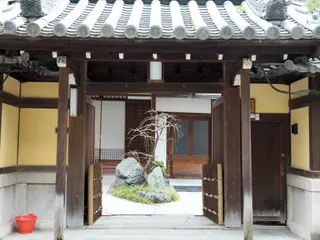
Honnō-ji
Jim Gateley · cc-by-3.0 · 1 nov. 1993
Honnō-ji
Sorasak boontohhgraphy · cc0 · 5 mai 2017
Honnō-ji
Andre Benz trapnation · cc0 · 2 mai 2017
Honnō-ji
P Fan Net · cc-by-3.0 · 12 avr. 2004

Les images sont liées aux lieux sur la carte : chaque photo a un auteur et une licence. Aucune image ressemblante provenant d'une autre ville n'est affichée ici ; si aucune photo du lieu n'est disponible, aucune section n'est présentée.

Argent

Le coût réel d'un mois et le prix des choses du quotidien

Exemples de prix
Café
3,28 $
Déjeuner à la cantine
114 000 ¥
Dîner dans un café
390 200 ¥
Bière dans un bar
3,14 $
Chambre, par mois
5 000 000 ¥
Bouteille d'eau
0,71 $
Points IEC ID

Jusqu'à 50 % de programmes d'échange, de stages et de services écosystémiques peuvent être couverts par des points.

+300pour votre inscription avec IEC ID+100pour votre connexion à TravelHub
Règles du programme de points
3 sources · Au 5 septembre 2026
Source : Cost of Living in Kyoto. Jun 2026. Prices in Kyoto · Cost of Living in Kyoto. Updated Prices May 2026. · Cost of Living in Kyoto 2026: Rent, Food & Monthly Expenses
Comparer avec Osaka

Arriver et se loger

Gratuit d'abord, payant ensuite

Séjours gratuits chez l'habitantVoir les hôtes
Dans la ville99hôtes accueillent des invités
Chambre privée13 %les autres proposent un canapé ou un matelas
Parle anglais467 of them speak français
Profil vérifié15 %avec un profil confirmé

Langues parlées : japonais, anglais, espagnol, chinois et français · Les adresses exactes sont communiquées dans la conversation avec l'hôte.

Vol

Définissez votre ville de départ et nous vous montrerons les prix des vols par mois depuis notre cache.

Excursions d'une journée
  • Osaka1 hFrequent commuter trains link directly to this culinary and entertainment center.
  • Hiroshima3 h 35 minBullet trains provide rapid connections to the peace memorial park and historic bay landmarks.
  • Tokyo3 h 40 minHigh-speed rail connects travelers directly to the sprawling districts of the national capital.
Étape par étape à l’arrivée
  1. 01Pick up a local data SIM card at the airport arrival terminal.
  2. 02Withdraw Japanese yen from an airport automated teller machine for cash transactions.
  3. 03Purchase a municipal transit pass at the ticket counter or automated kiosk.
  4. 04Board the Haruka limited express train directly to Kyōto Station.
3 sources · Au 5 septembre 2026
Source : TravelHub · OurAirports (public domain) · Overview | 京都市交通局

Visa et aspects pratiques

Choisir un passeport

Les informations sur le visa sont calculées pour le couple « passeport → pays » : les délais, les frais et les documents varient selon le passeport. Choisissez un passeport pour afficher les résultats.

Bon à savoir
  • City buses discourage or deny boarding to passengers with large suitcases, requiring travelers to use the subway or luggage transfer services.
  • Kaiseki restaurants routinely reject direct bookings from international visitors, demanding an introduction from an established patron.
  • Kyoto imposes a municipal accommodation tax on lodging that may be excluded from initial rate quotes.
1 règle supplémentaire
  • Temple lodgings enforce rigid curfews and check-in times, with front desks rarely offering English language assistance.
Questions fréquentes
How do you reach Kyoto from the nearest airport?

Kyoto lacks its own commercial airport and relies on air hubs located in Osaka. The Haruka limited express train connects Kansai International Airport directly to Kyoto Station, supported by scheduled highway limousine buses. Domestic arrivals landing at Itami Airport reach the city via airport bus links or monorail transfers to private rail lines.

Source : Wikipedia · Wikivoyage
Can passengers bring large luggage onto Kyoto city buses?

Transit operators discourage travelers from bringing large suitcases onto municipal buses, and drivers may refuse boarding during congested periods. Subway lines and trains accommodate oversized baggage without similar restrictions. Dedicated baggage forwarding services also ship luggage directly between transit stations and local hotels.

Source : Wikivoyage
Is tap water safe to drink in Kyoto?

Municipal tap water in Kyoto is potable and safe for everyday consumption. Public drinking fountains located across the city offer convenient points to refill reusable bottles.

Source : Wikivoyage
How do dining reservations work for traditional kaiseki meals in Kyoto?

Many high-end kaiseki establishments decline direct booking requests from independent foreign guests and require introductions through regular diners. Luxury hotel concierges can often secure reservations on behalf of their registered guests. Most traditional dining rooms operate exclusively on cash and do not accept credit cards.

Source : Wikivoyage
Should visitors rely on the subway or buses to travel around Kyoto?

The municipal subway operates along crossing north-south and east-west corridors, providing rapid movement through the central districts. Reaching outlying temples and historical sites requires city buses, which provide extensive coverage beyond the reach of the rail grid. City buses feature multilingual electronic displays and automated stop announcements to assist travelers.

Source : Wikipedia · Wikivoyage
Can visitors use contactless IC transit cards in Kyoto?

Rechargeable smart cards such as ICOCA function across municipal subways, regional trains, and city buses throughout Kyoto. Cardholders pass through station ticket barriers and board transit vehicles using these stored-value cards. Ticketing machines situated at railway stations provide reload and purchase facilities.

Source : Wikivoyage
Can travelers stay overnight in Kyoto temples?

Certain Buddhist temples in Kyoto operate lodgings known as shukubo situated directly on or near temple grounds. Overnight guests are typically invited to join resident monks for early morning prayer ceremonies. These accommodations observe strict evening curfews and check-in schedules, and staff generally communicate only in Japanese.

Source : Wikivoyage
3 sources
Source : Wikivoyage · Wikivoyage · Wikivoyage

S'y rendre

Aéroports, distances et transports en commun

S'y rendreOurAirports (public domain)
Osaka Itami International Airport ITM39 km du centre
Kobe Airport UKB65 km du centre
Kansai International Airport KIX81 km du centre
Transports en commun110 000 ¥Monthly pass

Quand partir et itinéraires

Quand venir et que faire en une journée, trois jours ou une semaine

Itinéraires prêts à l'emploi
Higashiyama Heritage Walk4 escales
  1. 09:00Hokanji TempleExamine the historic timber pagoda towering over the stone-paved lanes.
  2. 10:30Kennin-jiTour the Zen halls and stroll around the dry landscape gravel courtyards.
  3. 13:00EntokuinView the preserved tea rooms and historic rock arrangements.
  4. 15:00Chion-inAscend the colossal wooden entrance gate to inspect the temple grounds.
Shogunate and Imperial Legacies3 escales
  1. 09:30Former Imperial Villa Nijō CastleInspect the historic palace architecture and fortified perimeter walls.
  2. 12:00Honnō-jiVisit the central temple grounds reconstructed along historic avenues.
  3. 14:30Heian-jingu ShrineWalk through the grand shrine courtyard commemorating ancient imperial history.

Langue et culture

Des phrases qui changent le prix et le ton, et où vous ne pouvez pas vous passer de la langue

English suffices for navigation on public transit and at major railway terminals. Train signage and municipal bus announcements provide English guidance.

Cinq phrases indispensables
  • お会計をお願いしますO-kaikei o onegaishimasu
    Check, pleaseUse to request the bill at dining establishments.
  • すみません、英語のメニューはありますかSumimasen, eigo no menyū wa arimasu ka
    Excuse me, do you have an English menu?Use when arriving at restaurants to verify available materials.
  • 部屋の見学は可能ですかHeya no kengaku wa kanō desu ka
    Is it possible to view the room?Use when contacting housing agencies or landlords.
  • おすすめは何ですかOsusume wa nan desu ka
    What do you recommend?Use at food counters or markets to ask for local specialties.
  • クレジットカードは使えますかKurejitto kādo wa tsukaemasu ka
    Can I use a credit card?Use before ordering, as many traditional venues accept cash only.
2 phrases supplémentaires
  • 助けていただけますかTasukete itadakemasu ka
    Could you please help me?Use to request immediate assistance from staff or bystanders.
  • おおきにŌkini
    Thank youUse in local shops and markets across Kyoto to acknowledge service.
Où vous aurez besoin de la langue
SituationLangue
Municipal buses and trainsEnglish and Japanese. Displays and audio announcements operate in English.
Major railway stationsEnglish and Japanese. Directional signs feature Latin lettering and English text.
Traditional ryokan and temple lodgingsJapanese. Staff rarely speak English, and reservations require Japanese.
Neighborhood eateries and barsJapanese. Venues cater primarily to local patrons and expect Japanese.
Internet and manga cafesJapanese. Written materials and computer interfaces are in Japanese.
Fine dining and kaiseki venuesJapanese. Establishments generally decline direct international bookings without a local intermediary.
Séjournez plus longtemps

Vous pouvez venir une semaine par vos propres moyens. Pour vivre et travailler ici, optez pour un programme.

Le visa, l'invitation de l'employeur, l'assurance et le soutien sur place sont gérés par l'équipe des programmes internationaux IEC. Selon nos données, ce sont ces programmes qui permettent de vivre et travailler dans Japon, et pas seulement d'y faire du tourisme.

11 programme dans le pays

Destinations similaires à proximité

Autres destinations consultées après Kyoto

Vous n'avez pas trouvé le lieu souhaité ? La recherche comprend toutes les langues et génère la page en 10 à 15 secondes. Ouvrir la recherche

Certains liens sont des liens d'affiliation et sont indiqués comme tels.