 ≈ 20 min awayTiananmen Square
- Distance
- 1.3 km
 TravelHub
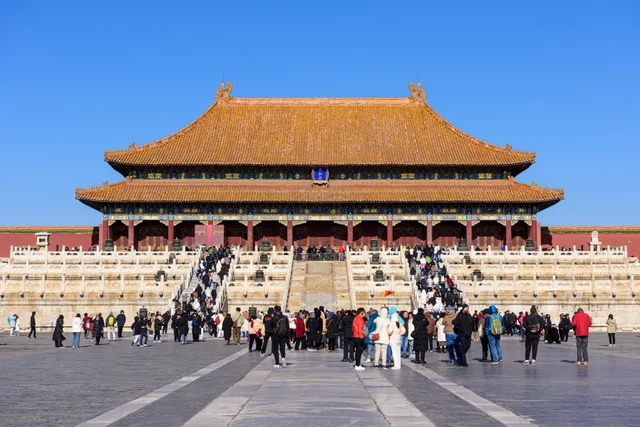
Anyone settling into the hutongs around the palace moat navigates daily security cordons and dense crowds before reaching the quiet of their own courtyard.
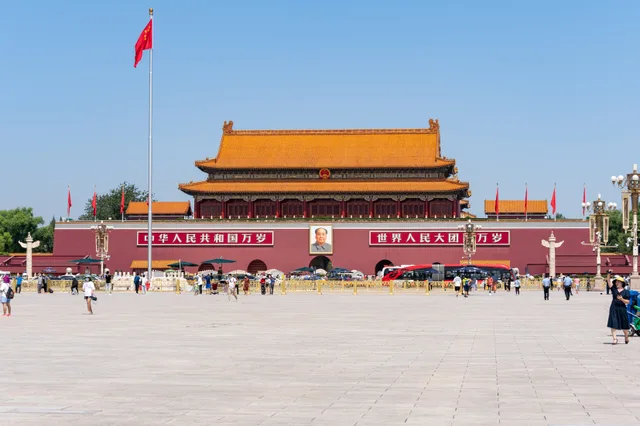
 Tiananmen Square
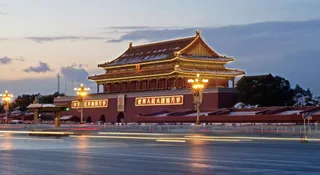 Tiananmen
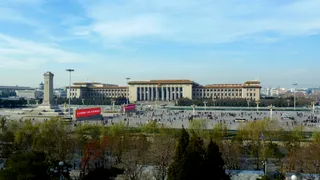 Great Hall of the People
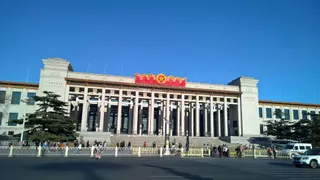 National Museum of China
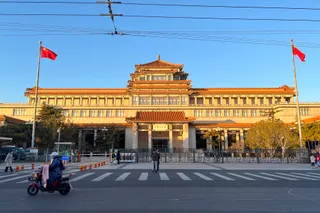 National Art Museum of China
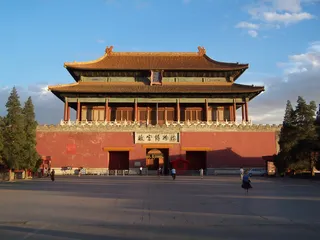 The Palace Museum
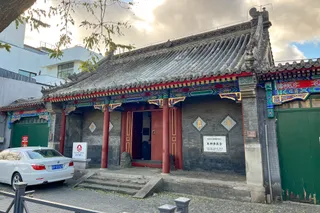 Dongsi Mosque
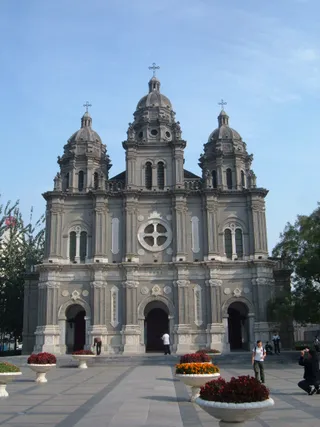 St. Joseph's Church, Beijing
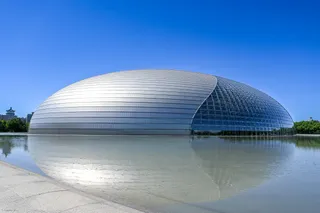 National Centre for the Performing Arts
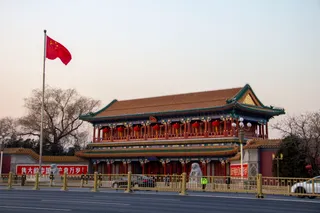 Zhongnanhai
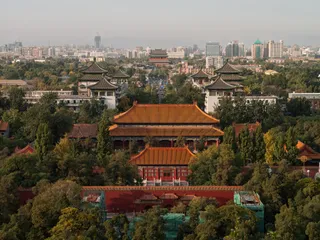 Central Axis of Beijing
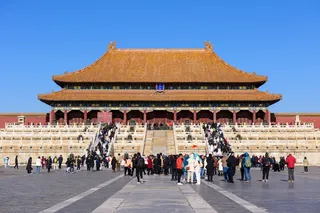 Hall of Supreme Harmony
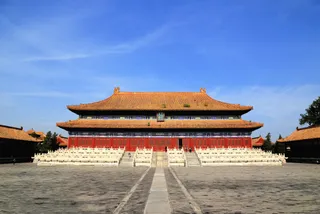 Imperial Ancestral Temple
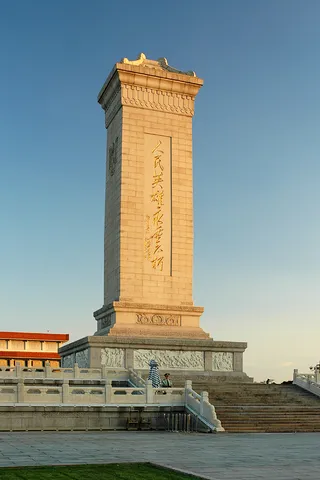 Monument to the People's Heroes
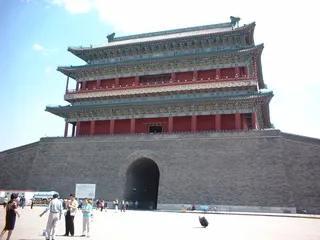 Zhengyangmen
 Beihai Park
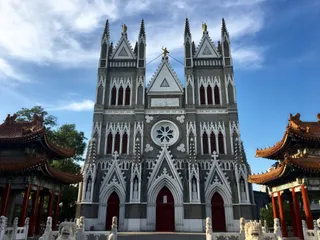 Church of the Saviour
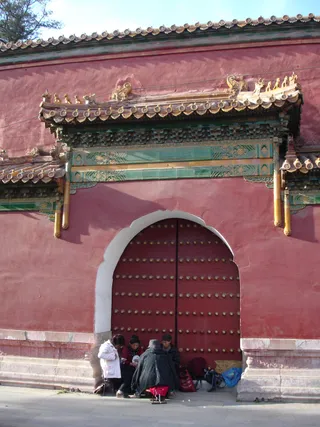 Jingshan Park
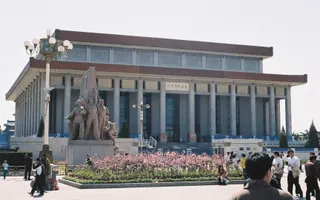 Mausoleum of Mao Zedong
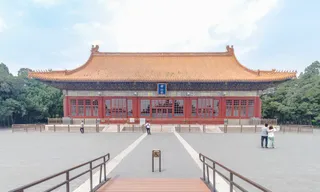 Zhongshan Park (Beijing, China)
The imperial complex was established after the imperial capital shifted north from Nanjing. Builders assembled whole trunks of rare phoebe zhennan timber from southwestern forests, quarried regional marble, and laid specialized Suzhou paving bricks across the main courtyards. Following the fall of the Ming court, incoming Qing rulers altered ceremonial hall titles toward themes of harmony and introduced bilingual Manchu signage.
Political functions ended when the final emperor abdicated, temporarily dividing the grounds between residential inner quarters and public outer courtyards before total eviction occurred. Wartime threats later scattered the imperial collections, sending significant holdings toward southern vaults and eventually across the strait to Taiwan. Military guards protected the timber pavilions from destruction during revolutionary unrest.
Modern administration by the museum authority focuses on restoring the wooden architecture to late imperial standards while opening peripheral palace wings. Recent conservation works made the Shoukang Palace, the Cining sculpture halls, the Yanyin Building, and the Donghua Gate accessible to the public. Long-term residents experience the perimeter as a tightly secured enclave where movement remains bounded by stone moats.
What visitors say on Google Maps
Rating and recent reviews from Google Maps load on request.
Can’t find the place you need? Search understands any language. Open search