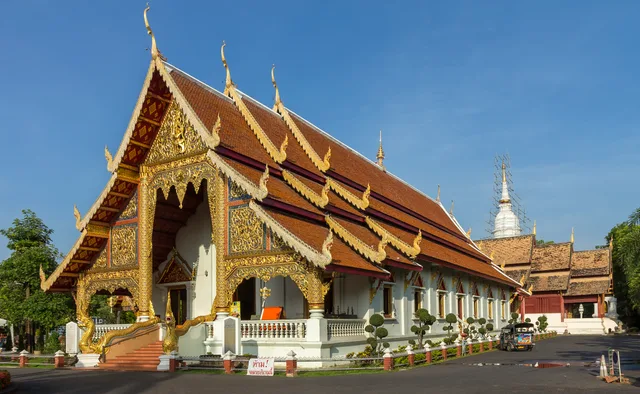
 距离 ≈ 10分钟帕邢寺
- 距离
- 800米
 TravelHub
Residents inside the old city moat trade vehicle convenience for quiet alleys where morning bells replace street noise. Renting near the compound keeps central markets on foot while ruling out car ownership.
 帕邢寺
 Wat Chang Taem
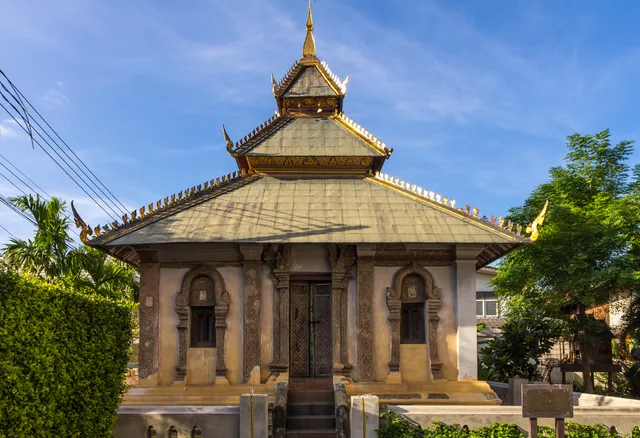
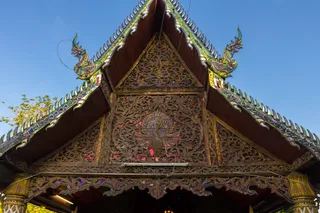 Wat Muen Larn
King Mueang Kaeo of the Mangrai Dynasty established the compound under the earlier name Wat Ton Mak Nua. The complex later took the name Wat Duang Di, translating to the temple of good fortune. None of the original wooden architecture survives from that founding era. The halls and stupas standing on the grounds today were erected during later reconstruction periods across subsequent generations.
Residents beside this active Buddhist temple occupy Chiang Mai's historic core within the walled old city. Monks maintain daily devotional routines on the grounds, creating a regular cadence of morning rituals instead of commercial noise. Long-term tenants in the surrounding urban grid navigate tight residential lanes where vehicle parking is scarce and walking is standard.
此处暂无免费住宿的房东 — 最近的此类城市为:
曼谷访客在 Google 地图上怎么说
Google 地图的评分和最新评价将按需加载。