Skip to content
TravelHub
London · United Kingdom

London Bridge: what's nearby, how to get there and when to go · 2026

Residents crossing on foot learn quickly to match the relentless pace of rush-hour rail commuters moving between Southwark and northern office blocks.

London Bridge · CC BY-SA 4.0

Map of places
About the place

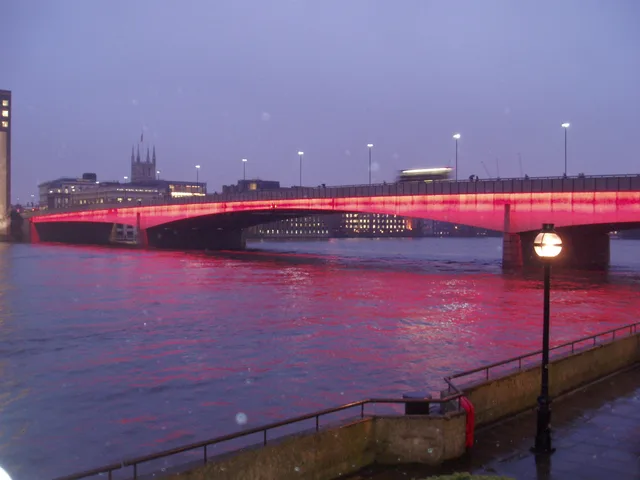
Modern London Bridge is an unadorned concrete commuter artery carrying daily workers between Southwark and the financial district.

The present crossing is a functional box girder structure of prestressed concrete and steel spanning between the City of London and Southwark. Built to replace earlier stone arches, it handles continuous vehicular traffic and heavy foot flow between major rail connections. Commuters board underground lines at Monument on the northern end and interchange with National Rail services directly at the southern river approach.

Read on

Engineers established the initial timber river crossings during the Roman conquest to connect arterial roads from southern ports to northern tribal territories. The settlement of Londinium expanded around the northern bridgehead on dry ground, while Southwark formed along the southern marsh causeway. A later stone crossing supported entire rows of residential buildings and shops, guarded at the southern approach by a fortified gate.

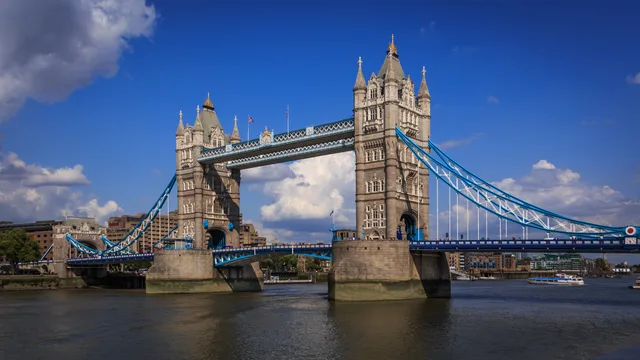
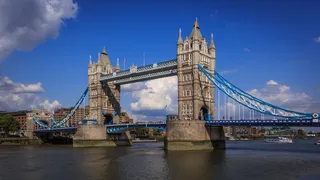
Visitors frequently mistake the structure for the ornate twin towers of nearby Tower Bridge downstream, expecting historic masonry instead of utilitarian concrete. The crossing represents routine transit rather than ornament, inspiring nursery rhymes and poetry about marching office crowds. Daily life here revolves around transit surges, keeping the wide pavements tightly packed during morning and evening rush hours.

Associations
  • Rush hour congestionDense pedestrian flows pack the walkways during weekday morning and evening rush hours.
  • Tower Bridge confusionTourists frequently mistake this modern concrete crossing for the ornate gothic bridge.
  • Nursery rhyme folkloreTraditional folklore commemorates the repeated historical collapses of past crossings.
  • Inhabited medieval bridgeEarlier stone spans carried multi-storey houses, retail shops, and a fortified gate.
Facts
  • The modern crossing is a box girder bridge constructed from prestressed concrete and steel.
  • Monument underground station serves the northern bridgehead, while a major railway terminus sits at the south.
  • The medieval stone predecessor carried an extensive community of houses and shops secured by a fortified gate.
  • Roman engineers constructed the earliest timber crossings to link southern supply ports with northern arterial roads.
Source: Wikipedia
London Bridge in pictures7 photos · 1 place
London Bridge
burge5000 · cc-by-2.0 · Jan 3, 2006
London Bridge
Rept0n1x · cc-by-sa-3.0 · Aug 10, 2009
Mark Ahsmann · cc-by-sa-3.0 · May 31, 2011

Getting there and staying

No free-housing hosts here yet — the nearest city with them:

Paris5,030 hosts · 3 hr 35 min
2 sources · As of November 3, 2026
Source: TravelHub · OurAirports (public domain)

People who have been here

Aliaksandra Aitakayevahinato44ka · Read
Yes, in London! You know, the place with fish, chips, and awful weather...

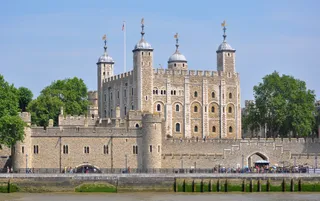
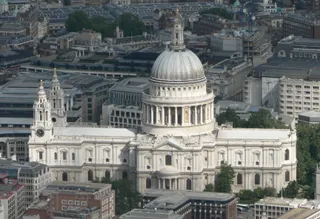
...Although the weather was surprisingly sunny and warm all week that I spent in London. Walking around London is a special pleasure. Tower Bridge is the most famous bridge in London, being one of the city's symbols. Tower Bridge differs from all other London bridges and indeed all bridges over the Thames in the following way: it is the lowest bridge on the Thames and the only one of all the bridges that is a bascule bridge. The bridge got its name due to its proximity to the Tower of London: the northern end of the bridge is located near the southeast corner of the Tower. St. Paul's Cathedral is located at the highest point in London. This largest Anglican church in Europe is the seat of the Bishop of London. The cathedral's dome has become one of London's main attractions. Traditionally, St. Paul's is the burial place of the most famous citizens of Great Britain, including the architect Christopher Wren, who built this cathedral. There is no monument on his grave, only an inscription on the tombstone: "Reader, if you seek his monument, look around you." You don't have to have royal roots, but you always want to see a luxurious palace. Especially if it's Buckingham Palace in London! The palace is unique not only for its grandeur but also because it hosts official ceremonies and events of the Royal Family, and tourists come here for tours. Although, it is almost always closed to the public. There are many museums in London: the British Museum, the Westminster Abbey Museum, the Victoria and Albert Museum, the Natural History Museum in London, and the Sherlock Holmes Museum. Admission is almost free everywhere. According to the works of Arthur Conan Doyle, Sherlock Holmes and his friend Dr. Watson lived in an apartment at 221b Baker Street between 1881 and 1904. At the time these works were written, such an address did not exist in London. But later, when Baker Street was extended to the north, a house with that address appeared, where the Sherlock Holmes Museum is currently located. Having lived in London for a week, I still didn't manage to see all the sights of this city. Too many museums, too many places to visit, too little time. But my journey didn't end there. Ahead are Liverpool, Blackburn, Chester, and Manchester.

  • Photo from a post by Aliaksandra Aitakayeva
  • Photo from a post by Aliaksandra Aitakayeva
  • Photo from a post by Aliaksandra Aitakayeva+2
45posts by participants about London Bridge — from housing and visas to weekend routes.Read all

Google reviews

What visitors say on Google Maps

Rating and recent reviews from Google Maps load on request.