Pāriet uz saturu
TravelHub
Phonsavana · Laosa

Krūžu līdzenums: kas ir apkārt, kā nokļūt un kad doties · 2026. g.

Long-term fieldwork across the Xiangkhoang Plateau requires adapting to remote upland valleys where ancient megalithic sites border active agricultural plots.

Par vietu
Tagad pilsētāKrūžu līdzenums+21 °CMākoņains ar skaidrām debesīmatjaunināts 08:59
Valūtas kurss22 353,3 ₭par 1 $LAK — valsts valūtauz 2026. gada 2. nov.
Par vietu

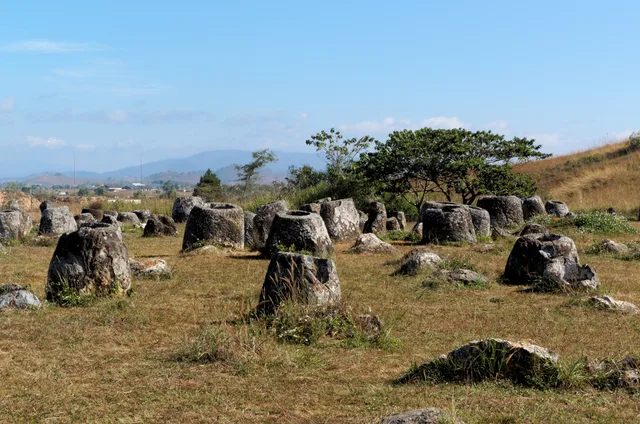
Megalithic stone vessels stand grouped across the upland valleys of the Xiangkhoang Plateau.

Stone vessels remain grouped across the upland valleys and lower foothills of the Xiangkhoang Plateau. These megalithic remnants form distinct clusters across the central plains. Fieldwork here demands extensive travel between isolated rural settlements, where ancient archaeological relics occupy open ridges and agricultural ground alongside daily farming routines.

Lasīt tālāk

Local traditions attribute the masonry to ancient giants led by King Khun Cheung following a victorious battle against Chao Angka. Folklore recounts that the jars served to ferment and preserve celebratory rice wine known as lau hai. Regional lore also suggests the containers were molded from a mixture of clay, sand, sugar, and animal matter rather than carved entirely from bedrock.

Asociācijas
  • Xiangkhoang PlateauHighland landscape framing the scattered megalithic clusters across valleys.
  • King Khun CheungMythical ruler linked in regional folklore to the creation of the vessels.
  • Lau HaiTraditional rice wine associated with legendary victory celebrations here.
  • Chao AngkaDefeated adversary named in the plateau lore surrounding the jar sites.
Fakti
  • The megalithic stone vessels are arranged in clusters across upland valleys and lower foothills of the Xiangkhoang Plateau.
  • Regional folklore identifies King Khun Cheung as the creator of the vessels following a victory over Chao Angka.
  • According to local tradition, the massive containers were utilized to brew and store celebratory rice wine called lau hai.
  • Local lore describes the vessels as being molded from a blend of clay, sand, sugar, and animal products.
Avots: Wikipedia
Krūžu līdzenums attēlos7 fotoattēli · 1 vieta
Jakub Hałun · cc-by-sa-4.0 · 2017. gada 15. nov.
PTD Phonsavan · cc-by-3.0
Chaoborus · cc-by-sa-3.0 · 2011. gada 3. dec.
User: (WT-shared) Drewsloan at wts wikivoyage · pdm · 2011. gada 20. aug.

Nokļūšana un apmešanās

Šeit vēl nav bezmaksas izmitināšanas saimnieku — tuvākā pilsēta, kurā viņi ir:

Bangkoka868 saimnieki · 4 st. 10 min
2 avoti · Uz 2026. gada 4. novembris
Avots: TravelHub · OurAirports (public domain)

Līdzīgi tuvumā

Nevarat atrast vajadzīgo vietu? Meklēšana saprot jebkuru valodu. Atvērt meklēšanu