Saltar al contenido
TravelHub
Phōnsavan · Laos

Páramo de las tinajas: qué hay cerca, cómo llegar y cuándo ir · 2026

Long-term fieldwork across the Xiangkhoang Plateau requires adapting to remote upland valleys where ancient megalithic sites border active agricultural plots.

Sobre el lugar
Ahora en la ciudadPáramo de las tinajashora local en el destino
Tipo de cambio22.353,3 ₭por 1 $LAK — la moneda del paísa fecha de 2 nov 2026
Sobre el lugar

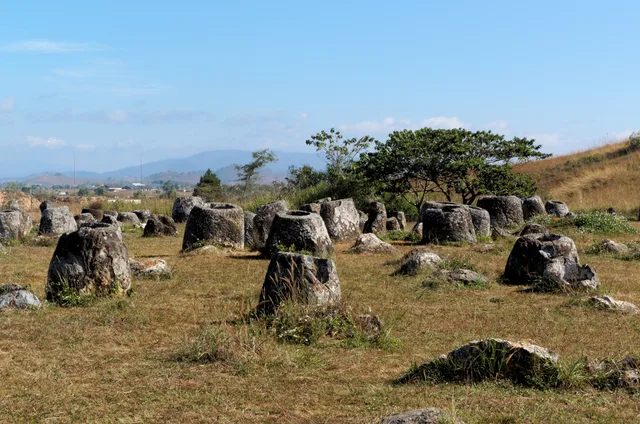
Megalithic stone vessels stand grouped across the upland valleys of the Xiangkhoang Plateau.

Stone vessels remain grouped across the upland valleys and lower foothills of the Xiangkhoang Plateau. These megalithic remnants form distinct clusters across the central plains. Fieldwork here demands extensive travel between isolated rural settlements, where ancient archaeological relics occupy open ridges and agricultural ground alongside daily farming routines.

Seguir leyendo

Local traditions attribute the masonry to ancient giants led by King Khun Cheung following a victorious battle against Chao Angka. Folklore recounts that the jars served to ferment and preserve celebratory rice wine known as lau hai. Regional lore also suggests the containers were molded from a mixture of clay, sand, sugar, and animal matter rather than carved entirely from bedrock.

Asociaciones
  • Xiangkhoang PlateauHighland landscape framing the scattered megalithic clusters across valleys.
  • King Khun CheungMythical ruler linked in regional folklore to the creation of the vessels.
  • Lau HaiTraditional rice wine associated with legendary victory celebrations here.
  • Chao AngkaDefeated adversary named in the plateau lore surrounding the jar sites.
Datos
  • The megalithic stone vessels are arranged in clusters across upland valleys and lower foothills of the Xiangkhoang Plateau.
  • Regional folklore identifies King Khun Cheung as the creator of the vessels following a victory over Chao Angka.
  • According to local tradition, the massive containers were utilized to brew and store celebratory rice wine called lau hai.
  • Local lore describes the vessels as being molded from a blend of clay, sand, sugar, and animal products.
Fuente: Wikipedia
Páramo de las tinajas en imágenes7 fotos · 1 lugar
Jakub Hałun · cc-by-sa-4.0 · 15 nov 2017
PTD Phonsavan · cc-by-3.0
Chaoborus · cc-by-sa-3.0 · 3 dic 2011
User: (WT-shared) Drewsloan at wts wikivoyage · pdm · 20 ago 2011

Cómo llegar y dónde quedarse

Aún no hay anfitriones de alojamiento gratuito aquí; la ciudad más cercana que los tiene:

Bangkok868 anfitriones · 4 h 10 min
2 fuentes · A fecha de 3 de noviembre de 2026
Fuente: TravelHub · OurAirports (public domain)

Lugares cercanos similares

¿No encuentras el lugar que necesitas? La búsqueda entiende cualquier idioma. Abrir búsqueda