

Governors Island, New York Just 5 minutes from Manhattan lies the small Governors Island, a piece of the 19th century frozen in time. One fine Sunday, after reading about it in a brochure, we headed downtown and caught the ferry. That day, as part of a summer festival, there was a Shakespeare play—an amateur open-air theater. There are no cars or crowds of tourists with cameras on this island. People come here to cycle on traffic-free roads, have a picnic, and gaze at the Manhattan skyscrapers, which look like miniature models right in the palm of your hand. But that's not all. When you arrive, you immediately feel lost and don't even realize why at first. An atmosphere of past centuries reigns there. All the buildings on the island are low-rise and built long ago; with columns, stucco, and surrounded by sprawling trees and winding paths that aren't constrained by straight concrete sidewalks, they look like European estates with a dusty touch of antiquity. Who lives in them? What was there? I read about it later. At the time, we walked around a bit enchanted and surprised. A Shakespeare play, people sitting on the grass, the sun, old buildings—whoever says there is no nature in New York simply hasn't seen everything. So, Governors Island lies one kilometer from the southernmost point of Manhattan, and, by the way, it is legally part of the borough of Manhattan. In the summer, the island is open to the public, and you can get there by taking a free ferry. Ferries run every half hour or hour from the southern tip of Manhattan; they depart from the Battery Maritime Building, which is next to the Staten Island Ferry. Many people bring their own bicycles, and while waiting to board, the crowd splits roughly in half—"pedestrians" and "people with transport," with separate lines for each. On Fridays, you can rent a bike for free on the island (a system that also exists in some places in Manhattan—you take a bike, swipe your plastic card just to leave your details in case of non-return, and if you return it on time, no money is charged). From the 18th to the 20th century, the island served military purposes. There were forts, military fortifications, and, accordingly, houses for the command staff. Before the construction of the first city airport, Floyd Bennett Field, in Brooklyn, it was assumed it would be built on Governors Island. And indeed, from 1950 to 1960, a small runway for military aircraft was located there. In 1985, the island was officially recognized for its historical value. In December 1988, a meeting between Ronald Reagan, George H.W. Bush, and Mikhail Gorbachev took place there. In 2003, the military transferred control of the island to the New York state authorities for a symbolic sum of $1, and Governors Island was opened to the public. More facts and stories in English (or Ukrainian) can be found on Wikipedia: http://en.wikipedia.org/wiki/Governors_Island. I will add once again that this place is little known to ordinary tourists; you can find completely deserted lawns even on weekends. Excellent views, a postcard panorama, one of the best views of Manhattan. And a brood of geese wandering through a field with skyscrapers in the background is an unforgettable experience! P.S. I also met an American girl—a Chucky bride—whose dad is in the military, which is why such families move very often; in her 20 years, she has managed to live in or visit almost every state, but she was born and raised on this island!
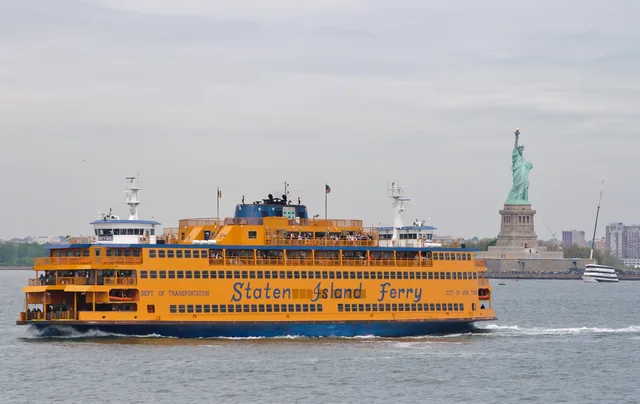
Staten Island Ferry: cosa c’è intorno, come arrivare e quando andare · 2026
Commuters cross New York Harbor between Manhattan and Staten Island without paying a fare, relying on round-the-clock water departures instead of a direct subway tunnel.
Cosa c'è nei dintorni17
 Wall Street
 World Trade Center
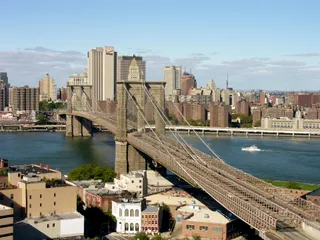 ponte di Brooklyn
 7 World Trade Center
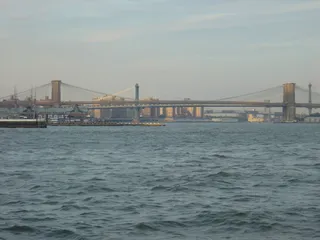 ponte di Manhattan
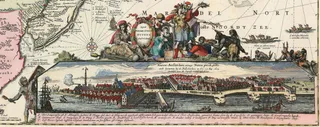 Nuova Amsterdam
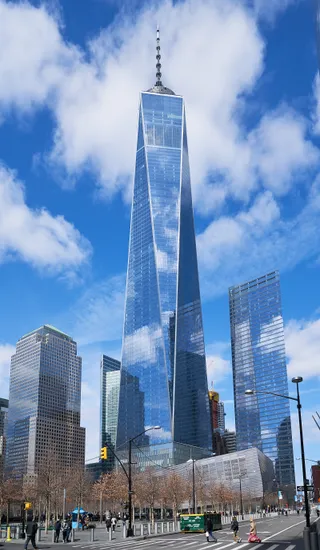 One World Trade Center
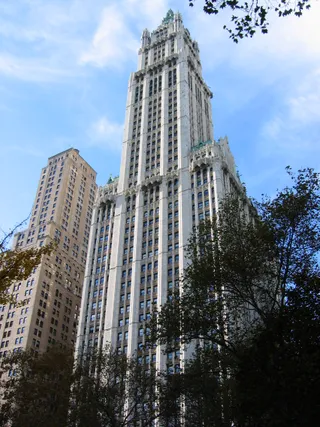 Woolworth Building
 National September 11 Memorial & Museum
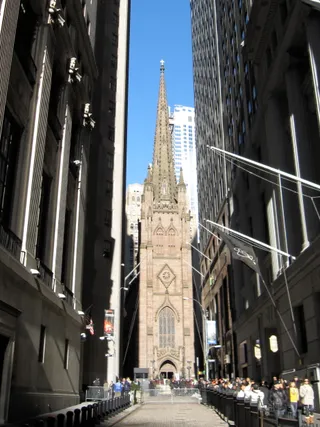 Trinity Church
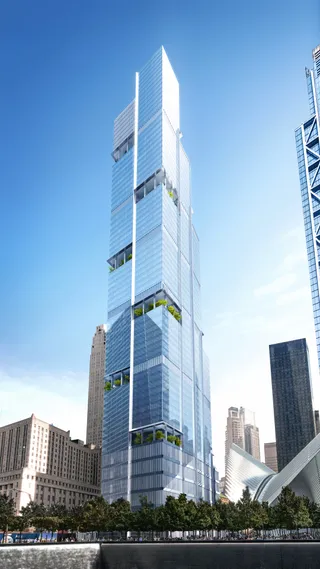 Two World Trade Center
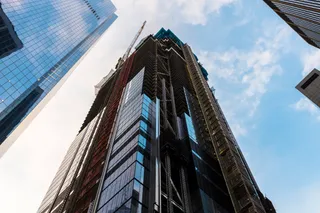 Three World Trade Center
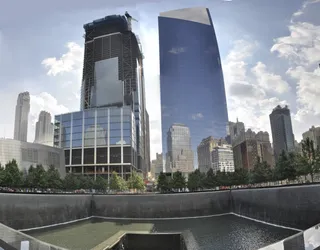 150 Greenwich Street
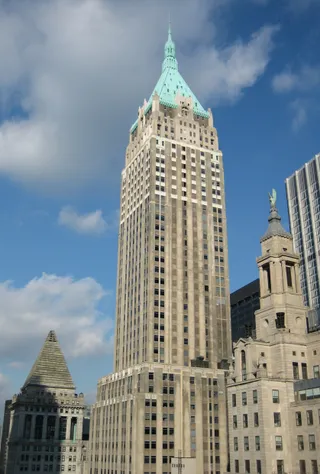 Trump Building
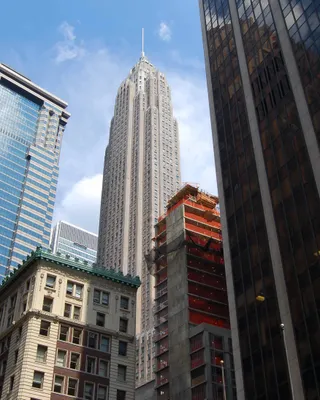 American International Building
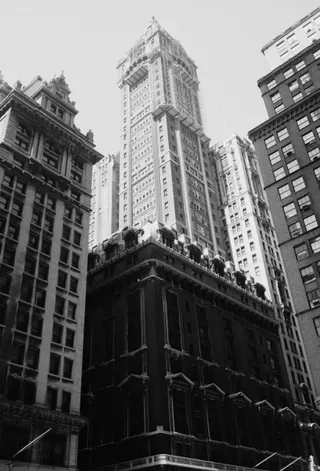 Grattacielo Singer
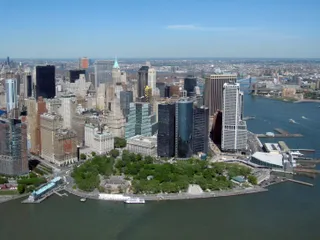 Battery Park
The municipal ferry runs continuously across New York Harbor without tickets.
New York City operates the municipal ferry between the southern edge of Manhattan and Staten Island under the management of its Department of Transportation. Boats run day and night on continuous harbor loops, providing one of the few mass-transit options directly connecting the two boroughs without road bridges.
Continua a leggere
Early harbor travel relied on shallow-draft sailing periaugers operated by private watermen, including Cornelius Vanderbilt before steam engines transformed the route. The municipal authority later eliminated all passenger fares, maintaining the crossings as an accessible transit asset independent of private networks.
- Zero-fare boarding
- Harbor weather delays
- Continuous service
- The municipal crossing between Manhattan and Staten Island operates entirely free of charge for passengers.
- Boats run continuously across New York Harbor under the oversight of the New York City Department of Transportation.
- Sailboats called periaugers carried passengers across the harbor before motorized vessels entered regular service.
Arrivare e soggiornare
2 fonti · Al 4 novembre 2026
Persone che sono state qui

Simili nelle vicinanze
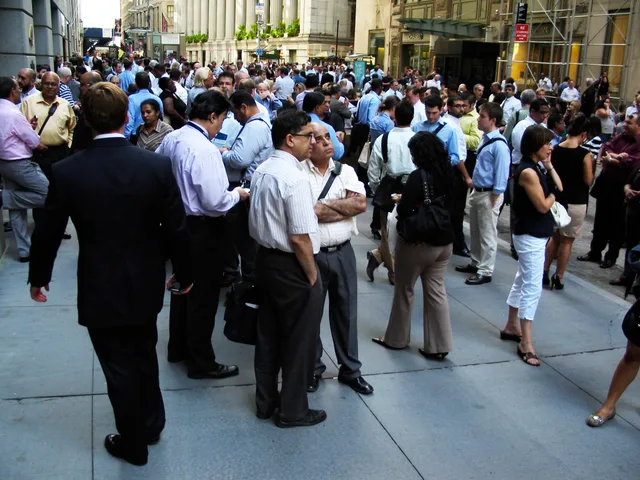 A ≈ 10 min di distanzaWall Street
- Distanza
- 600 m
 A ≈ 15 min di distanzaWorld Trade Center
- Distanza
- 1,1 km
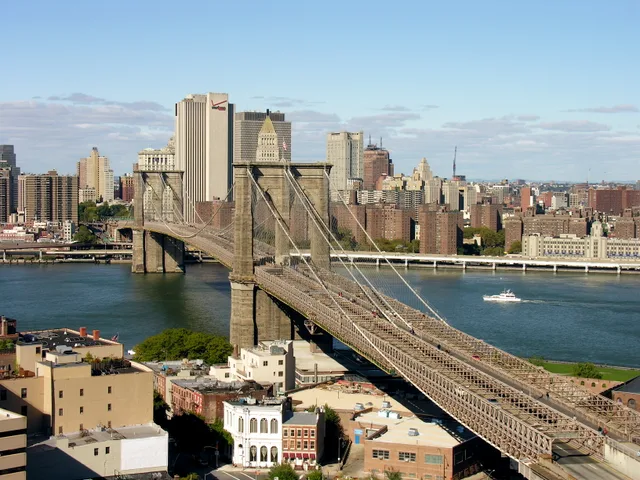 A ≈ 20 min di distanzaponte di Brooklyn
- Distanza
- 1,5 km
Città di Stati Uniti d'America
Luoghi a Staten Island Ferry
Paesi vicini
Domande frequenti su Staten Island Ferry
Non trovi il posto che cerchi? La funzione di ricerca comprende qualsiasi lingua. Apri ricerca