
Eating the way we are used to (cooking for ourselves) is expensive here. Well, expensive by Belarusian standards. Obviously, comparing our grocery prices to American ones is the same as comparing salaries. For someone living here by local standards, it is very cheap. We are used to stuffing ourselves in a canteen for 5 rubles ($2.5). Americans themselves do not just eat fast food (oh, those stereotypes), but eat simple dishes like potatoes with chicken or pasta with ground meat. The cost also depends on the state, as tax is added to the final price, unlike back home where it is already included. But not all products are expensive; on the contrary, there are some that are cheaper than ours. Here is an example of local prices for the most popular products: Milk – $1.99 for 1.5 L Apple – $1.5 for 450 g Eggs – $3 for a dozen Yogurt – minimum $1.5 Banana – 69 cents each, but mango is 65 cents Loaf of bread – from $1.5 Water – 80 cents for 3 L Sausages – from $1 for 8 pieces (there is even meat in the ingredients) As for cafes, on average, it is about $10 per person; one of the pluses is the huge portions, which are enough for two people at once. What do we eat? Unfortunately, we don't have a stove in our room, so if we want to cook something, we do it in the microwave. One of the cheapest and quite healthy ways to eat is consuming semi-finished products. These can be canned dumplings with tomato sauce or a full meal. It is surprising that before coming to the USA, I never even looked at such food, but here, it is a fairly popular way of eating. Interestingly, the composition of such portions is quite clean, with some spices and additives of purely plant origin. The cost of such portions is about $1.5 each. And I will honestly tell you – it is delicious. Another separate plus is the availability of concentrated soups. You cannot imagine how much I want these to be sold back home! It is just a highly concentrated soup that needs to be diluted with water and heated: chicken broths with chicken and vegetables are a special love :) Also, thanks to these conditions, I learned how to cook in the microwave. Omelets, dumplings, chicken, pasta with sausages are also present in our diet, although it takes more time than just heating up a portion. Our usual diet: Breakfast: Cereal/muesli with milk + coffee/tea with a sandwich Lunch: soup + portion + vegetables Dinner: Portion + vegetables + yogurt In total, it comes to about $8 per person per day. Sometimes we treat ourselves to a huge rotisserie chicken from the store ($5) and have a protein feast. And looking at my diet, I keep asking myself the question: where do I eat better? In Minsk, with one meal a day, catching up with all sorts of junk, or here with a stable (!) 3-meal-a-day diet?
Sansanné-Mango: Guía de viajes, precios y alojamiento gratuito · 2026
Mango, formerly Sansanné-Mango, is a city in northern Togo. It is situated on the Oti River in the Savanes Region.
Cómo llegar y dónde quedarse
2 fuentes · A fecha de 3 de noviembre de 2026
Visado y aspectos prácticos
Elegir un pasaporte
Establece tu pasaporte: el tiempo de procesamiento, la tarifa y los documentos varían según el pasaporte.
Seguridad y salud
Cómo llegar
Personas que han estado aquí

A few more things I'd like to know in advance: 1. I love Chicago. I love Chicago more than life itself, more than Orhan Pamuk and cinnamon, I love the people—God, if you ask me what to get me for Christmas, I'll say: Chicago. On my first day in Chicago, I ate a mango, not even realizing how severely allergic I was to it. As a result, I spent the whole day lying in the hostel, hugging my knees and slowly fading away. The takeaway: experiment, but keep a catalyst on hand (simply put: stock up on pills). 2. Arrive at the airport in big cities at least two hours early (not one hour, as many suggest). I almost got stuck in Miami just because I stood in the security line for two and a half hours. 3. Dunkin Donuts – try it! It's delicious! 4. Buy yourself an American SIM card. They are by no means expensive, but you'll feel safe knowing you can make a call at any moment. 5. Perhaps, if you're going, go for the whole summer. If you plan to fill yourself with experience to the brim, one month (or even two) won't be enough.


 +2
*A few tips* - Look for a second job if your first one doesn't give you more than 40 hours a week; you'll be working for yourself and won't have to deny yourself anything; - Speak English a lot! Run away from your Russian-speaking peers))) Seriously! YES, it's more comfortable with them and you trust them, I know from experience. But if you're worried about your English, you won't improve it if you're shy and stay silent or don't talk much. Talk, talk, and don't stop; - Rest, but don't be lazy. Use your free time wisely. Get on a bike and explore the local landscapes, head to the beach, or go to the market for fruit, visit a neighboring town, or at least go to the bank to cash a check and buy yourself some sunglasses or an iPhone) - Arrange weekends with friends, go to neighboring cities, states, concerts, or plan a trip to the ocean to admire the whales - Learn everything; for example, I learned to dance bachata and to pronounce a few Spanish words; - Don't get carried away with fast food. Yes, try it, confirm for yourself what you've heard—that our fast food is tastier—and stop eating that junk. It (FF) isn't cheaper; who even said it's cheap? Nothing of the sort. Eat something juicy, rich in vitamins, fresh—something that will give you strength. A burger will just make you want soda, then fries, then to eat again... it's not a solution at all; - There is crime there too, be careful. If, for example, your money gets stolen, don't get too upset and don't give up!!! An acquaintance of ours had $1000 stolen on the plane. Can you imagine? She arrived in America with no money at all!!! But students helped her, and soon she earned good money. But it's better to watch your things like a child... remember... you are a MULTIFUNCTIONAL ORGANIZER xD; - Brush up on American slang, it will come in handy; actually, I think that's all I spoke; - You don't have to plan everything from A to Z; spontaneity is the highlight of travel, but everything should be reasonable. If you don't like extreme travel and feel calmer when you plan everything, that's your right=) *In America, there are many useful and inexpensive things brought from South America, whereas in Russia they cost crazy money (like mango; I just fell in love with it, it's so juicy, soft, and fragrant... and cheap!)* *I remembered swimming in the ocean at night with plankton. Yes, that very plankton—it's still looking for the Krabby Patty secret formula. It's like thousands of neon flashes in the water, unforgettable and magical! But there are predators in the ocean at night, watch your feet)* What else should I tell you, future travelers or those who have already been in my shoes? Don't be afraid of anything. It's stress, but it's useful stress)) Traveling is so great. When you live in one city, in one country, and all the days blur into a gray mass, it seems like there is no other life. But the world is so big and so different. America will broaden your horizons. It is a very interesting and beautiful country. You will definitely find something to entertain yourself with there. Choose any state, any city, and go—it's a huge heap of emotions, impressions, and experience for a lifetime. If you want to ask me anything, write to me. Addresses below. Thanks for your attention. Good luck in all your endeavors and take care of yourself! Bye ^_^ viktoriya.hrapova.94@mail.ru vikacula@gmail.com id45715582


July 2nd, 2011. I look up and see a large arch with a welcome sign in Mexico. Opposite me is a man I have known for 4.5 years, and he is smiling. We loaded the bags, and Hector decided to give me a car tour of the city. He is an excellent driver, but at one of the turns, he makes a very sharp maneuver and heads in a completely different direction. I turn around and see something that struck me to the core... From my Afghan father, I heard many stories about tanks, weapons, and soldiers. But I was not prepared to encounter this in our relatively peaceful time. It turned out to be the opposite. A peaceful weekday city of Matamoros, with a huge number of cars and people. But here, the street is empty, and in the middle of it stands a huge armored vehicle with a turret, on which there is a machine gun and gunners... What is this? It is war. The kind they sometimes talk about on the news and never in the local press. But everyone knows anyway: the only truthful news comes from people's mouths. Journalists are not held in high esteem there; they keep silent themselves. Hector's sister loved one such man, and he is no longer with us... The neighborhood where I lived was populated by local intellectuals—teachers and other civil servants; there was always night security, only one entrance and exit. Teachers are especially respected and are given houses in neighborhoods like Fovissste (where I lived). There are their own shops, free courts, everything is clean and beautiful. Icons are painted on the walls of the houses, and mangoes and avocados grow on the streets. The Feds and the mafia do not go there and treat the residents with respect. At night, you won't be robbed, but outside such walls, you are very vulnerable... each neighborhood has its own unofficial "authority." Buses, unlike American ones, run until late at night. But they stop going to the border at 8 PM—it becomes very dangerous, and the whole city empties out. Whatever happens, it definitely happens at night... bursts of gunfire at dusk in late August and a corpse thrown near the city hall, which was immediately removed, made me realize that. During the day, Mexico is the most welcoming and lively country. People do not like to sit at home, socializing is their main joy, and Facebook is the most visited site. Mexicans do not live to work, but work to live. The city's fleet consists of accessible, ancient buses, as gasoline is very cheap. If in Brownsville they had air conditioning and cost a dollar (students with an ISIC card got a discount—25 cents), then in Mexico they lack special amenities and cost a student about 20 American cents. I usually took these to get to the border for work. A common sight was a mariachi who would enter the bus and play beautiful Mexican motifs for free; then the bus would quiet down and listen attentively, the driver would turn off the radio, and the youth would take off their headphones to hear the romantic classics. The mariachi never paid for the ride with money, exclusively with his talent. Be careful with Mexican flora and fauna: once, while running across a field, I crashed into a huge cactus. Huge centimeter-long thorns baptized me into this amazing country, and tweezers added to the pleasure... Everywhere I was accompanied by my friend, and for a long time, I could not understand why. But over time, my eyes opened wider. On the buses to and from the border, certain people constantly traveled who leaked information to their "masters" about the movements of necessary and "suspicious" people. Apparently, I fell under some criteria; I was constantly photographed under the guise of talking on a mobile phone, or they would simply go quiet when I spoke English. After the ominous cracking of Hector's fingers, everyone would start minding their own business and no longer paid attention to me. Their own, so to speak. Another rule—at the border, try to speak Spanish, less English. Almost everyone there is Mexican, and it is necessary for work.


 +2
The airport has a lounge, power outlets, and free Wi-Fi. I've been on my feet for 2 days, and there have been no luggage lockers since 9/11. Turning on good old Skype, I found my Mexican friend Hector, who kindly watched my bags via webcam while I slept peacefully with headphones on so he could report the situation to me:) Never lose hope for the best - open your heart and eyes: you will see happiness in simple things, you will appreciate them and rejoice. And I found my happiness. Where I least expected it and barely hoped for it. That's how my greatest life journey began. Mexico is a country known for its illegal immigrants, drugs, and wars. But only part of that is true. I saw another side. If you enter Mexico for no more than 32 kilometers, it's a free economic zone for which you don't legally need a visa. If your US visa is multientry, you are very lucky. The checkpoint doesn't require documents, and bags are rarely checked. You just pay 75 cents and walk into a completely different country, from which you must return by September 6th. There is also a rule that from the moment you cross the border (which isn't recorded anyway) visa-free, you must return to the States within 30 days. The way back is more complicated. When you go from Mexico to the States, your passport and visa are checked very thoroughly, they ask a lot of questions, and they might even detain you for 3-4 hours to check documents. Sometimes it reached the point of absurdity: after a question about the circumstances of my stay in Mexico, the next one was about why I am friends with Mexicans. For all the suffering, a gift - chips and juice after the check;) It was necessary to have absolutely all documents with me, and my termination letter helped a lot here. They called my boss for a long time and checked the circumstances, questioning the invalid status of a seasonal worker (under the Work and Travel program). What was important was denying living in Mexico, so I also had an American address (Hec's friends were very kind to confirm this). Why did I decide to live in Mexico? The fact is: Prices there are significantly lower, as income is also correspondingly low. The average cost of a kilo of bananas is 20 US cents, mangoes - 40, potatoes - 50 cents per kilo. Meat is the basis of Mexican cuisine, one and a half to two dollars per kilo. I could feed myself on what was left even with low earnings... I had a friend who took me in with his family for 2 months for free - I felt like a person again who had a family and support. Mexicans are welcoming and open, very kind and responsive people, at least in their own country. It doesn't matter what city you are in - big or small, you will see style, taste, care for yourself and your family, health, and religiosity. But living in Mexico was still not easy, because the border is a hot spot in the war for influence between three forces - the southern mafia, the northern one, and the federals. I saw many dangerous situations, but there was still more that was pleasant.


 +2
I am a proponent of healthy eating. It's rare that I manage to eat properly, especially with all these travels and new places, but I try. Right now, I've switched to a healthy eating mode. Here in Africa, it's very easy (if you resist the restaurants, which cost about the same as eating healthy at home), because even the supermarkets have a ton of healthy food. The most common ones are SPAR and WoolWorth. WoolWorth is considered quite expensive. Most products are made in South Africa, and many people here are into eating right and staying in shape; you can feel it immediately. Only now did I realize how rarely you see truly overweight people here. The supermarkets are filled with an insane amount of fresh fruits and vegetables, especially exotic ones like pineapples, mangoes, and avocados, all at relatively low prices. For example, today I bought 2 slightly-smaller-than-average pineapples and paid 20 rand. These were the sweetest pineapples of my life. In Italy, I get hooked on tangerines; here, I feel like a pineapple period has started in my life. A mango costs 7 rand on average, and my favorite cherry tomatoes are 10 rand for a 200-gram pack. By the way, you can buy pâtés made from exotic animals right in the supermarket: for example, zebra or crocodile. Yesterday we tried zebra pâté. It's just like any other pâté. But again, buying groceries for home costs about the same as eating in restaurants and cafes. And the restaurants here are incredibly tempting: Italian restaurants run by Italians (like the one I work at), restaurants with authentic African cuisine (and an incredible variety of animals whose meat you can try there), as well as restaurants that offer the freshest seafood, and, of course, sushi. Well, there you go. I made myself hungry. I'm going to go boil some beets...
Lugares cercanos similares
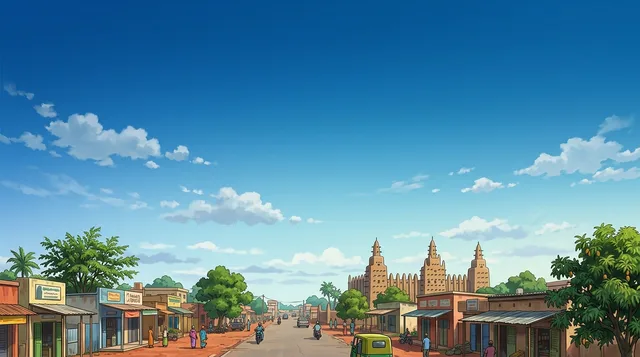 A ≈ 2 h 30 min de distanciaDjougou
- Mes
- ≈ 500 $
- Distancia
- 150 km
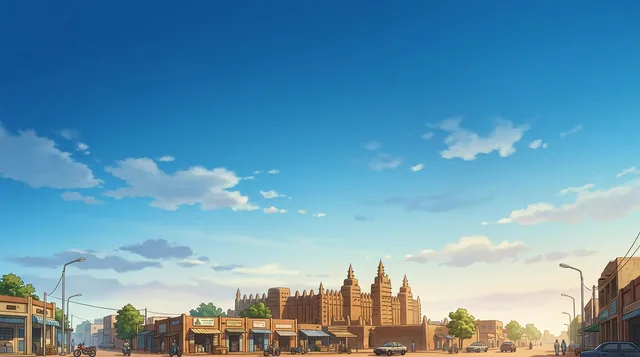 A ≈ 3 h 25 min de distanciaPouytenga
- Mes
- ≈ 500 $
- Distancia
- 231 km
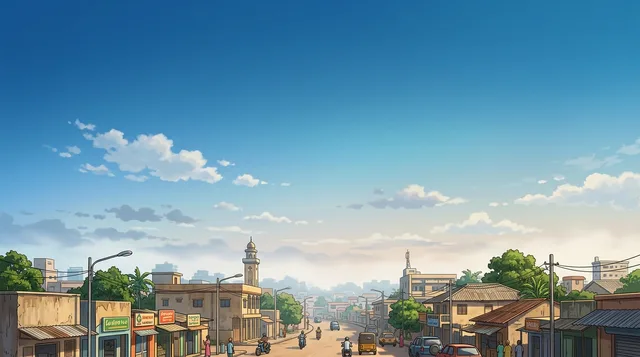 A ≈ 3 h 30 min de distanciaParakou
- Mes
- ≈ 500 $
- Distancia
- 263 km
¿No encuentras el lugar que necesitas? La búsqueda entiende cualquier idioma. Abrir búsqueda