

- 距离
- 2.5公里
巴黎 · 法国
巴黎地下墓穴: 周边有什么、如何前往、何时最合适 · 2026年
Tenants across the southern arrondissements walk above a hollow network of former limestone quarries that once collapsed under street foundations.
周边8
汇率€0.89截至 2026年11月2日
关于此地
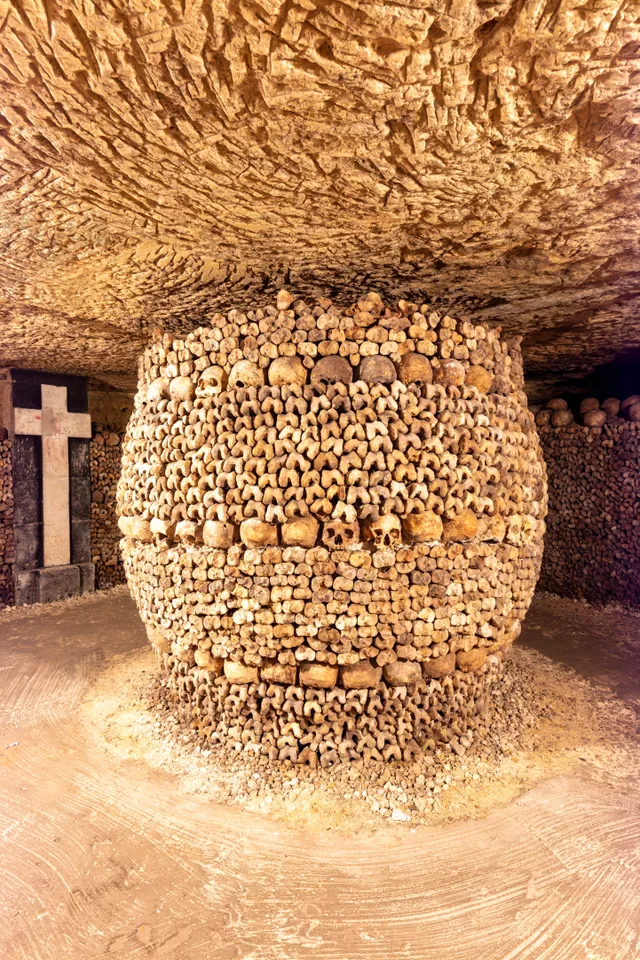
Paris rests above a vast network of subterranean limestone quarries converted into municipal ossuaries to relieve overflowing city graveyards.
The galleries originated as suburban quarries extracting Lutetian limestone to build the city above. Haphazard horizontal extraction left uncharted voids beneath the surface. As municipal borders expanded across the Left Bank, urban districts grew directly over these abandoned workings. Structural collapses prompted the crown to establish the General Inspection of Mines to consolidate the fragile underground network.
继续阅读
Urban burial grounds created an acute sanitary crisis in the historic core. The central Saints Innocents cemetery accumulated massive layers of remains alongside the central market until an adjacent cellar wall collapsed under the weight of a mass grave. Authorities banned city burials and converted the reinforced southern quarry tunnels into an ossuary. Nightly processions moved bones across the river to relieve urban churchyards.
相关组织
- Lutetian limestone
- Structural ground collapses
- General Inspection of Mines
- Saints Innocents Cemetery
- Barrière d'Enfer
事实信息
- A collapse of basement walls prompted the royal government to create a dedicated agency to inspect the Parisian underground.
- Nightly processions of covered wagons moved exhumed remains from urban cemeteries into consolidated quarry shafts.
- The underground ossuary extends southward through former limestone mines from the site of the Barrière d'Enfer city gate.
- Burials inside the municipal walls were outlawed after a mass grave breached an adjoining cellar near the central market.
巴黎地下墓穴 的影像7 张照片 · 1 个地点
交通与住宿
房主免费住宿查看所有房主
在市区5,030
2 个来源 · 截至 2026年11月4日
来源:TravelHub · OurAirports (public domain)
Google 评价
访客在 Google 地图上怎么说
Google 地图的评分和最新评价将按需加载。