 ≈ 1 soat masofadaSouth African Astronomical Observatory
- Masofa
- 4,7 km
 TravelHub
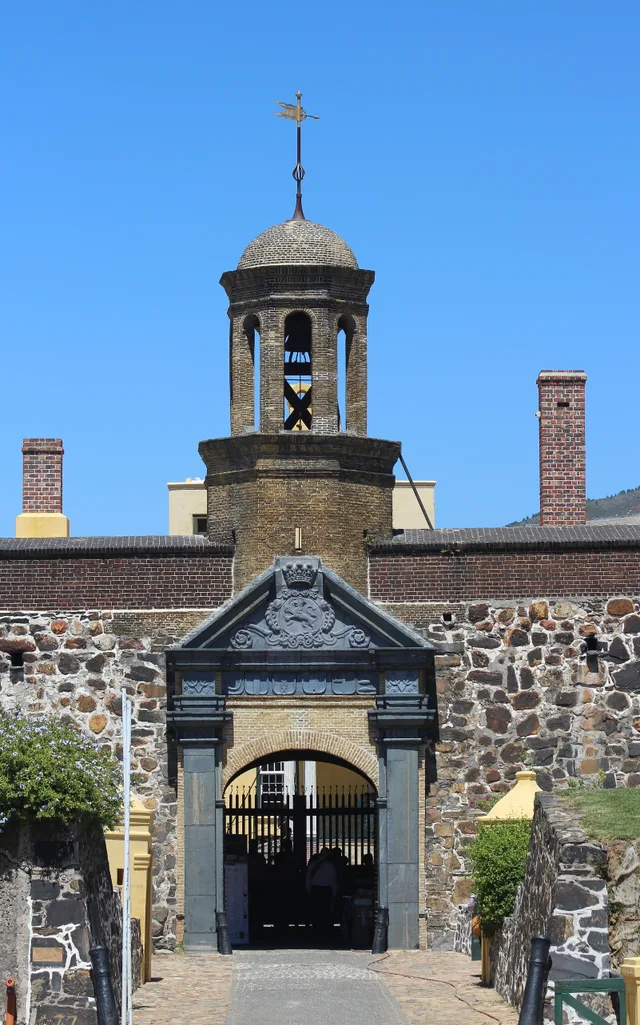
Newcomers walking past the stone bastions on the edge of Foreshore find an old coastline stranded inland, where thick walls separate the central railway tracks from the downtown street grid.
The Dutch East India Company constructed the stone citadel as a maritime replenishment station for ships sailing between Europe and the East Indies. Bastions named after titles of the House of Orange project outward in a pentagon, encircled by a defensive canal. Land reclamation across Foreshore pushed the shoreline away from the walls, leaving what was once a coastal battery stranded inland amid the modern urban road network.
Enslaved workers brought from Madagascar, Mozambique, and Asian territories completed the heavy masonry under military supervision. Yellow paint coats the exterior to deflect intense sun and reduce heat buildup inside the courtyard. Within the ramparts, a dividing wall sheltered workshops, a bakery, living quarters, and cells, while officials issued proclamations to residents and soldiers from the carved De Kat Balcony.
A bronze bell cast in Amsterdam by Claude Fremy hangs in the entrance tower, originally rung across the settlement to signal emergencies and daily work hours. The names of the individual bastions survive outside the fortress as street names across northern suburbs such as Bellville. Inside, preserved rooms now display the William Fehr Collection of historical furnishings, marking its transition from military base to provincial monument.
Tashrif buyuruvchilar Google Xaritalarda nima yozadi
Google Xaritalardagi reyting va so‘nggi sharhlar so‘rov bo‘yicha yuklanadi.
Kerakli joyni topolmadingizmi? Qidiruv tizimi har qanday tilni tushunadi. Qidiruvni ochish