
- Attālums
- 300 m
Sarajeva · Bosnija un Hercegovina
Gazi Husrev-beg Mosque: kas ir apkārt, kā nokļūt un kad doties · 2026. g.
Tenants living near the complex measure their days by the prayer calls echoing across the bazaar and accept pedestrian-only stone alleys that keep delivery vehicles away.
Par vietu
Acem Ali Tabrizi designed the mosque as the core of an expansive urban foundation.
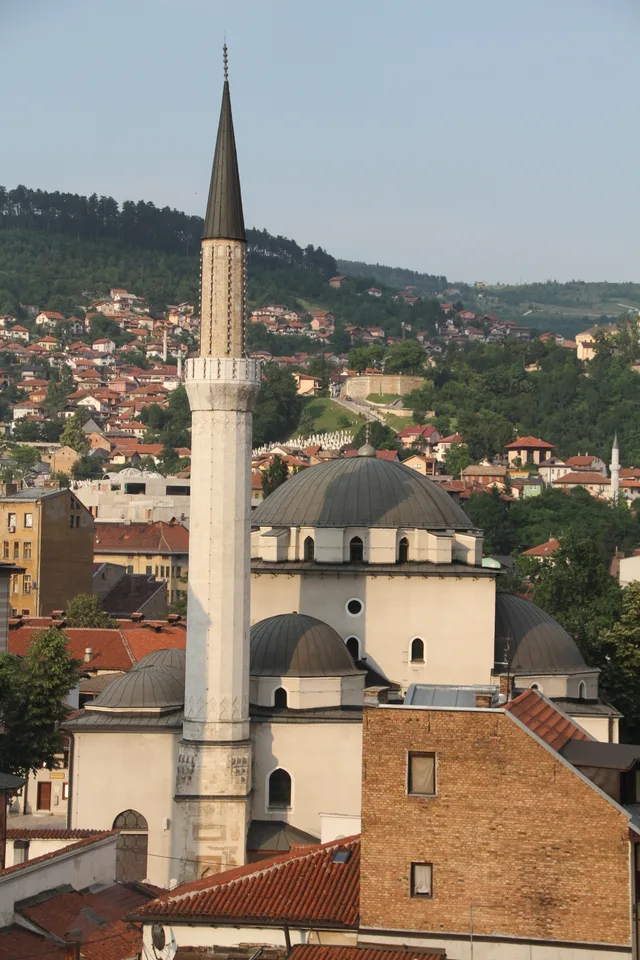
The mosque stands as the largest historical Islamic house of worship in the country and an exemplary work of classical Ottoman architecture in the Balkans. The Ottoman governor established the compound as the heart of a comprehensive endowment that shaped the growth of Sarajevo. Acem Ali Tabrizi, an imperial builder of Persian origin, planned the structure, while masons summoned from Ragusa executed the masonry.
Lasīt tālāk
The endowment integrated religious life directly into local commerce and education by surrounding the prayer hall with a primary school, a madrasa, a vaulted marketplace, and public baths. During the Austro-Hungarian administration, the building became the earliest mosque in the world to introduce electrical wiring and electric illumination. Daily life in the quarter still flows through this network of stone passages.
Asociācijas
- Austro-Hungarian electrification
- Ragusan stone masonry
- Waqf urban endowment
- Active prayer access
Fakti
- The complex represents the largest historical mosque in Bosnia and Herzegovina.
- Austro-Hungarian authorities oversaw the introduction of electric lighting to the prayer hall, making it the earliest mosque in the world with electricity.
- Masons dispatched by the government of Ragusa participated directly in the construction of the building.
- Architectural historians identify Acem Ali Tabrizi, an imperial builder of Persian origin, as the primary mimar responsible for the structure.
- The original endowment established an integrated urban foundation comprising a primary school, a college, a vaulted market, and a bathhouse.
Gazi Husrev-beg Mosque attēlos6 fotoattēli · 3 vietas
Nokļūšana un apmešanās
Lidojumi, lidostas, mājokļi un īre
Šeit vēl nav bezmaksas izmitināšanas saimnieku — tuvākā pilsēta, kurā viņi ir:
Venēcija2 avoti · Uz 2026. gada 21. septembris
Avots: TravelHub · OurAirports (public domain)
Līdzīgi tuvumā
Līdzīgs budžets un tuvu Gazi Husrev-beg Mosque
- Attālums
- 800 m
- Attālums
- 1,3 km
Bosnija un Hercegovina pilsētas
Vietas galamērķī Gazi Husrev-beg Mosque
Nevarat atrast vajadzīgo vietu? Meklēšana saprot jebkuru valodu. Atvērt meklēšanu