
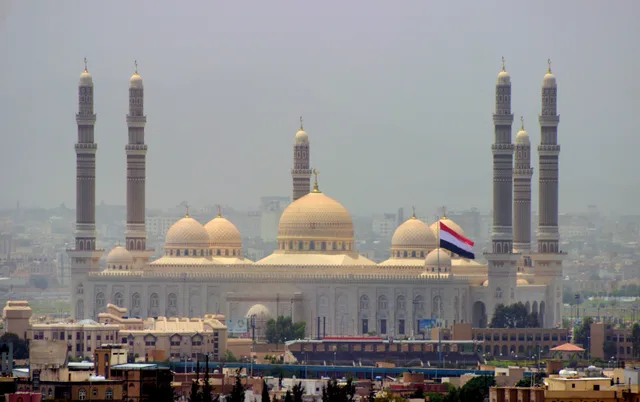
 СанаAl Saleh Mosque

Тұру
Йемен: Саяхат нұсқаулығы, визалар және тегін тұру · 2026
Residents organize entire afternoons around qat gatherings, while any journey beyond city borders demands signed permits for military checkpoints.
Қалада қазірЙемен
КіруТөлқұжатты таңдаңыз
Картадағы орындар41Валюта бағамы236,19 YER2026 ж. 02 қар. күнгі жағдай бойынша
Жердегі тілArabicЕлдің басты көрікті жерлері
- Licensed tour agencies and international organizations
- English and Arabic
- Shared taxi terminals and regional bus stations
- Arabic
- Checkpoints and administrative permit offices
- Arabic
«السلام عليكم» — Standard greeting used upon entering shops, vehicles, and checkpoints to establish respect.
Орналасқан жері туралы
Fragmented governance and severe infrastructure shortages shape daily routines across Yemen. Moving between regional hubs requires military clearance, while municipal water grids have largely collapsed.
Long-term life in the country demands careful navigation of security checkpoints and transport restrictions. Leaving the capital requires a travel permit known as a tasriih from the tourist police, stamped with approved destinations. Foreign nationals present paper copies at road checkpoints, where transit between eastern and western governorates frequently requires air travel instead of public highways.
Әрі қарай оқу
Daily business follows the rhythm of qat consumption, as afternoons clear out for communal chewing sessions. The stimulant leaf suppresses appetite and drives much of the agricultural water consumption around the Sanaa Basin. Shared meals revolve around traditional dishes like salta, a meat stew spiced with fenugreek, and clay-oven mandi, while public life remains dry under strict legal bans on alcohol.
Severe water scarcity impacts everyday living more than most logistical hurdles. Municipal tap water is unsafe for consumption, forcing households to rely on purchased bottled water or trucked supplies as regional aquifers decline. Outside the cities, the landscape shifts between the rugged Sarawat Mountains suited for alpine trekking and coastal waters around the Socotra Archipelago used for surfing and diving.
Қауымдастықтар
- Qat chewing
- Salta
- Tasriih permits
- Sarawat Mountains
- Socotra
Деректер
- Sanaa is the constitutional capital and largest urban settlement.
- The land borders Saudi Arabia to the north and Oman to the northeast.
- Public consumption of alcohol is forbidden under Islamic law.
- Domestic travel outside Sanaa requires written permits issued by the tourist police.
- The Zaraniq tribe practices traditional camel jumping on the western coast.
Дереккөз: Wikipedia · Wikivoyage
Йемен суреттерде21 фотосурет
Виза және практикалық мәліметтер
Төлқұжатты таңдаңыз
Төлқұжатыңызды таңдаңыз — өңдеу уақыты, бағасы және құжаттар тізбесі төлқұжатқа байланысты өзгереді.
Білу маңызды
- Journeys outside the capital require an official travel permit issued by tourist police, and copies must be handed over at military checkpoints.
- Foreign travellers cannot use public road transport between eastern and western regions and must travel between those areas by air.
- Certain regions are completely closed to travel, while other areas require an armed military escort.
Жиі қойылатын сұрақтар
What is the capital of Yemen and what language is spoken there?
Arabic is the official language of the country. The constitutional capital and largest urban centre is Sanaa.
Дереккөз: Wikidata · WikipediaWhat are the staple dishes of Yemeni cuisine?
The national dish is salta, a hot meat stew seasoned with fenugreek. Mandi combines meat baked in a clay oven suspended over spiced rice. Sweet dishes include bint al-sahn, a flat bread drenched in local honey.
Дереккөз: WikivoyageIs tap water safe to drink in Yemen?
Municipal tap water is unsafe for consumption and must be avoided. Commercially sealed bottled water is widely available throughout the country. Unregulated stalls serving fresh juice should be skipped if tap water is used in preparation.
Дереккөз: WikivoyageWhat rules govern alcohol in Yemen?
Public consumption of alcohol is prohibited under Islamic law and carries criminal penalties. Non-Muslim travellers may only consume imported beverages inside private residences. Appearing intoxicated in public spaces leads to legal consequences.
Дереккөз: Wikivoyage · WikivoyageAre travel permits required for internal transit?
Foreign travellers must obtain movement permits from the tourist police prior to departing the capital. Checkpoints examine these documents along regional highways. Certain transit routes between the west and east also restrict foreign nationals from using public buses, requiring air transport instead.
Дереккөз: Wikivoyage · Wikivoyage · Wikivoyage2 дереккөз
Дереккөз: Wikivoyage · Wikivoyage
Қауіпсіздік және денсаулық
Қауіпсіздік · ресми кеңестербіздің деректер 2026 ж. 03 қар. жағдайы бойынша
Consuming alcohol in public is unlawful, with consumption permitted solely on private property for non-Muslim visitors.
Same-sex sexual acts are prohibited by law and carry the death penalty.
Дереккөз: UK FCDO Foreign Travel Advice · US Department of State Travel Advisory · Wikivoyage · Wikivoyage
Тіл және мәдениет
Алғашқы күнге арналған бес фраза және тілсіз болмайтын жағдайлар
Arabic is the official language. English has minimal reach across daily life and public administration.
Алғашқы күнге арналған бес фраза
- السلام عليكمAs-salamu alaykum
- بكم هذا؟Bikam hadha?
- غالي كثير، نقص شويةGhali katheer, naqqis shwayyah
- لو سمحت، ممكن تساعدني؟Law samaht, mumkin tusa'idni?
- هل عندكم شقة للإيجار؟Hal 'indakum shaqqah lil-eejar?
2 тағы фраза
- على جنب هنا، لو سمحت'Ala janb huna, law samaht
- شكراً جزيلاً، جزاك الله خيراًShukran jazeelan, jazak Allah khayran
Тіл қай жерде қажет болады
| Жағдаят | Тіл |
|---|---|
| Licensed tour agencies and international organizations | English and Arabic |
| Shared taxi terminals and regional bus stations | Arabic |
| Checkpoints and administrative permit offices | Arabic |
| Public markets and neighborhood food stalls | Arabic |
| Hotels accommodating international travelers | English and Arabic |
Йемен қалалары
Йемен ішіндегі орындар
Іздеген жеріңізді таппадыңыз ба? Іздеу жүйесі кез келген тілді түсінеді. Іздеуді ашу