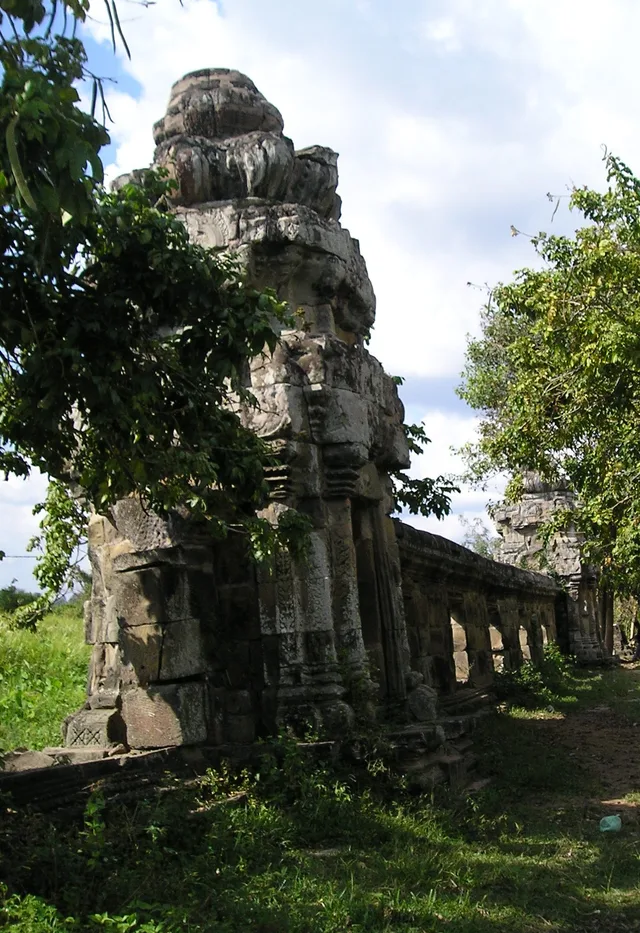
 A ≈ 45 min di distanzaMebon occidentale
- Distanza
- 3,6 km
 TravelHub
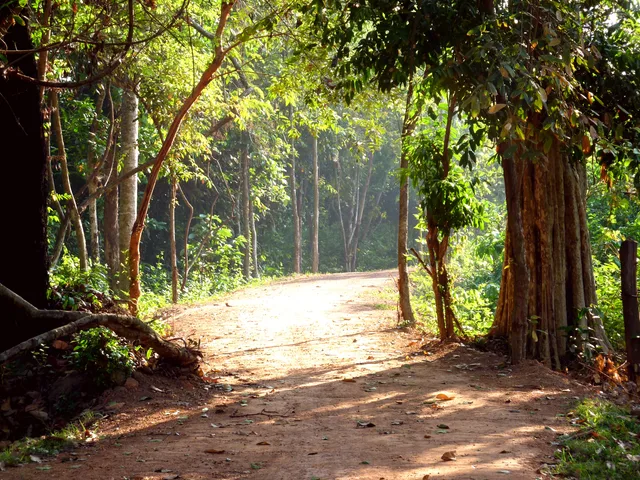
Researchers base everyday life in nearby town quarters and commute past ancient moats, because the sacred compound contains preserved sanctuaries but no surviving secular housing.
Khmer rulers governed their empire from Angkor, building vast metropolitan quarters around sacred enclosures. Secular halls, administrative offices and the royal palace were built from wood because religious custom permitted only divine residences in stone. Tropical conditions decayed the wooden settlements completely, leaving religious masonry and stone bridges as the sole architectural survivors across the cleared parkland.
Angkorian architecture arranged temple complexes as miniature cosmologies. Raised pyramids symbolized Mount Meru as the home of deities, while wide moats represented mythological oceans. Monarchs legitimized sovereign authority through the devaraja tradition, uniting personal rule with divine power. State ceremonies centered on sacred stone lingams that merged the reigning king's name with Shiva in the focal sanctuary towers.
Al momento non ci sono host che offrono alloggio gratuito qui. La città più vicina con disponibilità è:
BangkokA ≈ 45 min di distanzaMebon occidentale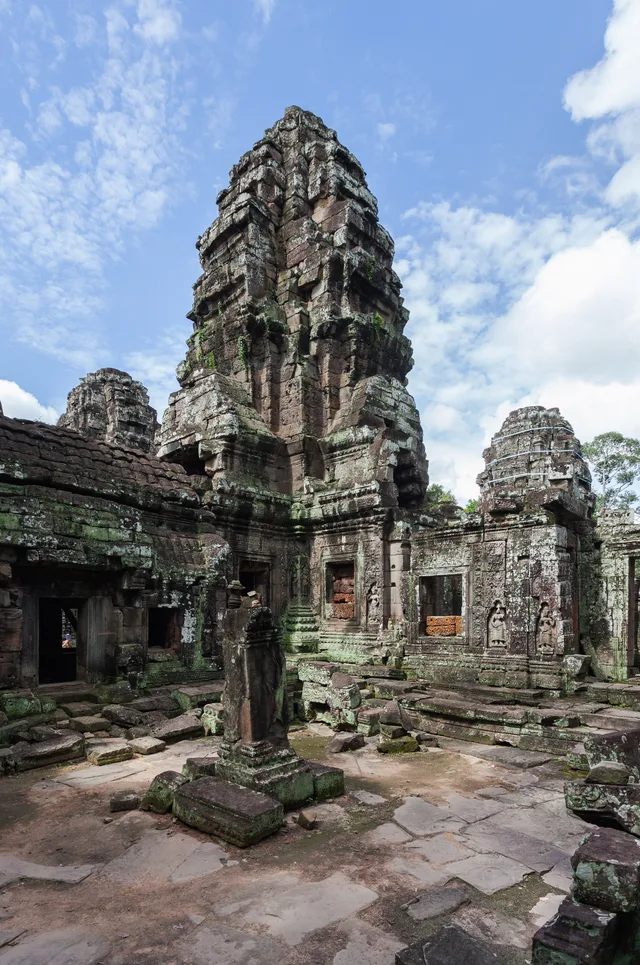 A ≈ 30 min di distanzaBanteay Kdei
Non trovi il posto che cerchi? La funzione di ricerca comprende qualsiasi lingua. Apri ricerca