
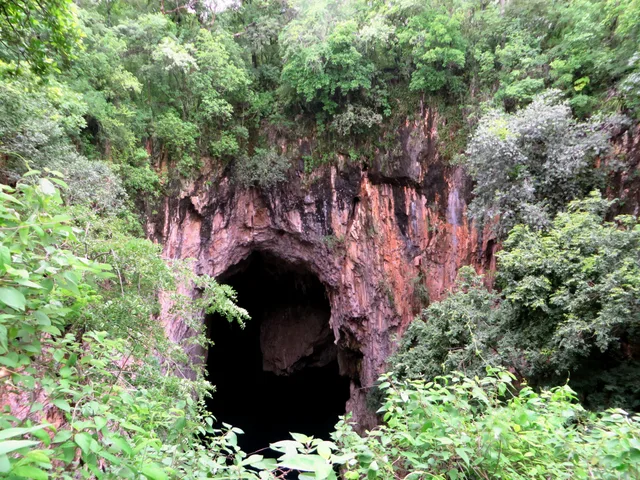
 ChinhoyiChinhoyi Caves
Vivre
Zimbabwe: Guide de voyage, visas et hébergement gratuit · 2026
Residents rely on private boreholes and solar setups to handle municipal utility cuts, making self-contained housing the first priority for any extended stay.
Actuellement sur placeZimbabwe
EntréeChoisissez un passeport
Lieux sur la carte20Taux de change14,10 Pau 2 nov. 2026
Langue sur placeEnglishIncontournables du pays
- Government offices, banks, and corporate workplaces
- English
- Harare and the Mashonaland provinces
- English and Shona
- Bulawayo and the Matabeleland provinces
- English and Ndebele
«Mhoroi» — Polite greeting used for elders, professionals, and service staff in Shona.
À propos du lieu
Landlocked between two major rivers, Zimbabwe pairs high-plateau cities with extensive savanna reserves.
Urban life centres on Harare and Bulawayo across the high plateau between the Zambezi and Limpopo basins. Masvingo anchors the southern interior near the stone ruins of Great Zimbabwe, where ancestral dry-stone architecture established regional trade routes. Modern transport routes, including the transcontinental highway from Cairo to Cape Town, intersect across these central highlands to connect mining and agricultural zones.
Lire la suite
Local arts feature soapstone and verdite carving traditions alongside recognized literature and independent theater in municipal centers. Daily food revolves around sadza, a thick cornmeal staple paired with meat stews or peanut sauces, while communal braai gatherings anchor social life around open wood grills. Tanganda tea and Mazoe citrus cordial remain household staples across both rural communities and city suburbs.
Long-term residency requires self-reliant utilities, as city houses routinely integrate rooftop solar setups and private boreholes to bypass municipal electricity and water interruptions. Intercity road journeys involve frequent police checkpoints that inspect mandatory vehicle safety gear like hazard triangles. Service stations operate on physical currency rather than bank cards, necessitating advance cash planning for travel.
Associations
- Great Zimbabwe
- Shona stone sculpture
- Sadza
- Utility interruptions
- Highway checkpoints
Faits
- The territory is bounded by the Zambezi River to the north and the Limpopo River to the south, sharing land borders with South Africa, Botswana, Zambia, and Mozambique.
- Harare serves as the national capital, while Bulawayo functions as the secondary administrative and commercial hub.
- Traditional sculptors produce stylized figures using native soapstone, serpentine, and verdite.
- Domestic filling stations generally reject payment cards, requiring motorists to settle fuel purchases with physical cash.
Source : Wikipedia · Wikivoyage
Visa et aspects pratiques
Choisir un passeport
Définissez votre passeport — les délais de traitement, les frais et les documents requis diffèrent selon le passeport.
Bon à savoir
- Motorists must carry emergency equipment including fire extinguishers, spare tyres, hazard triangles, and reflective markers to prevent police fines.
- Driving after dark outside major urban areas carries elevated collision and hijacking hazards.
Questions fréquentes
What is the staple food in Zimbabwe?
Meals in Zimbabwe center on sadza, a stiff porridge prepared from ground maize. It is commonly served alongside meat stews or vegetable relishes. Braai, a traditional wood-fired barbecue featuring various cuts of beef and sausage, is also widely eaten.
Source : Wikipedia · WikivoyageWhat safety precautions should drivers take on Zimbabwean roads?
Traffic moves on the left side of the road. Motorists must carry mandatory safety gear, including hazard triangles, a spare tyre, and a fire extinguisher, to avoid police fines. Night driving outside urban centers is discouraged due to vehicle conditions and potential road hazards.
Source : Wikivoyage · WikivoyageWhat local drinks are traditional to Zimbabwe?
Mazoe orange crush is a standard concentrated fruit beverage mixed with water. Popular alcoholic beverages include commercial lagers such as Zambezi and Chibuku, a traditional brew made from fermented maize and sorghum. Black tea with milk is also widely consumed throughout the day.
Source : WikivoyageWhat public transport options exist for travel between Zimbabwean cities?
Intercity travel relies primarily on scheduled long-distance coaches operating from terminals such as RoadPort in Harare. Minibus taxis provide transit in major urban areas. Passenger rail services remain suspended across the national network.
Source : WikivoyageHow should visitors handle electrical and water service interruptions?
Municipal power and water networks experience frequent disruptions across urban centers. Many residences and facilities rely on private boreholes, solar installations, or backup generators. Travelers should maintain extra drinking water supplies when moving through less populated regions.
Source : Wikivoyage · WikivoyageWhat countries border Zimbabwe?
Zimbabwe is a landlocked nation located in southern Africa. It shares land borders with Zambia to the north, Mozambique to the east, South Africa to the south, and Botswana to the southwest.
Source : WikipediaWhat are the prominent traditional visual arts in Zimbabwe?
Stone carving is a major artistic tradition, with sculptors working in native minerals such as soapstone, serpentine, and verdite. Other traditional crafts include intricate basketry, pottery, and textiles.
Source : WikipediaSécurité et santé
Sécurité · avis officielsdonnées au 3 nov. 2026
Pedestrians and cyclists are prohibited from using signed thoroughfares surrounding the presidential residence.
Foreign visitors should refrain from attending political demonstrations and rallies.
Vehicles drive on the left side of the roadway.
1 risque supplémentaire
Discussions regarding domestic political figures and state governance are discouraged.
Source : UK FCDO Foreign Travel Advice · US Department of State Travel Advisory · Wikivoyage
Langue et culture
Cinq phrases pour le premier jour et les situations où la langue est indispensable
English is an official language and serves as the principal medium for government, commerce, education, and public signage. Visitors and long-term residents can handle administrative procedures, banking, accommodation, and daily shopping entirely in English.
Cinq phrases pour le premier jour
- MhoroiMhoroi
- Maita basaMaita basa
- Marii?Marii?
- Ndinokumbirawo sadzaNdinokumbirawo sadza
- SalibonaniSalibonani
2 phrases supplémentaires
- SiyabongaSiyabonga
- Yimalini?Yimalini?
Où vous aurez besoin de la langue
| Situation | Langue |
|---|---|
| Government offices, banks, and corporate workplaces | English |
| Harare and the Mashonaland provinces | English and Shona |
| Bulawayo and the Matabeleland provinces | English and Ndebele |
| Minibus taxis, bus terminals, and informal retail markets | Shona or Ndebele, with English widely understood |
| Police checkpoints and official inspections | English, Shona, or Ndebele |

LangueGratuit
Anglais : transition méthodique A2 → B2StudyHub· ≈ 110 heures
Personnes ayant séjourné ici

Today I went to 4 places regarding my potential second job. It's a question - I kind of need it (to cover the trip costs), but at the same time, I'm just not feeling it. I understand, maybe these are excuses, maybe it's just laziness, but I really don't want to work 80 hours a week. Maybe the fact that my parents aren't pushing me, I have enough money, and I'm feeling a bit under the weather plays a role, although I definitely won't cover the trip with just one job. Anyway, if something works out somewhere, then we'll see. Today was the busiest day I've ever seen - 201 customers! Most likely, it's related to the closing of the advertising convention, so everyone came to us. On the other hand, the Microsoft convention started, and some Russians even came in. Naturally, I took care of them more than the others, they're our people! They left their business cards, saying, 'call if you decide to.' Now I'm full of anticipation, what if?))) At the end, the day was spoiled by 3 moments. When you clock out, if tips come into the register, they are distributed among those remaining. Therefore, they often rush everyone to 'clock out.' Today David was the manager (the one I dislike the most), and he forced me to 'clock out' when there was still a large table (=> big tips), and the head waiter said that this table was 'for him.' Then I put a plate on the tablecloth, David immediately said it was clean and I would dirty it, yet he went to eat on the tablecloth himself. In short, I wasn't very happy with that today. Actually, subconsciously comparing Atlanta and Syktyvkar, Atlanta and Moscow, you come to a few conclusions. In the first case, Atlanta definitely wins; I understand people who have only been to Syktyvkar and came here, it seems like paradise to them. Many people ask me - why don't you go anywhere? Because in Moscow I can go anywhere and it will be much more pleasant and interesting for me than here. Compared to Moscow, Atlanta is a huge village, calm, quiet, but a village. It lacks that 'fire,' that 'pulsing vein.' Live in Moscow, feel its spirit, and this Atlanta will be like Zimbabwe to an American. People here have almost everything, you work for 2 months and buy yourself a new car, you don't have to prove anything to anyone, just live like everyone else. For me, it's better in Moscow - you have nothing, you can't do anything easily, you have to hustle and spin. People here are too 'full' of the good life, they practically don't need anything, they don't strive for anything. But try to survive on a pension back home, try to live on a scholarship for more than a week? They just won't understand you here. And those who stay here, as I understood, are either those who have little future in Russia (to put it mildly, those who don't bother with studies, work, etc.), or those who purposefully want to leave Russia (marriage, out of complete adoration for America, some dissatisfaction, inability to realize themselves). Maybe I'm wrong and even mistaken, but this is my opinion, I've expressed it. Anything can happen, maybe life will show the invalidity of my conclusions about the cities, maybe on the contrary, it will prove that I was absolutely right. We'll see, we'll read these notes in 10 years, maybe I'll be Nostradamus?


I WILL WAIT A LITTLE LONGER, AND THEN I WILL PREPARE TO SET OFF! "The sun goes to the West And those who do not know That everything in this life Has a source Run after it. The sun goes to the West But to be born again, It rushes to the East, To the East!" I.V. Talkov Since circumstances have turned out such that I do not have the technical ability to finish this piece on the day of my return to Chelyabinsk, as I had envisioned in October, I am faced with a certain task: what will the ending be if my six-month journey to South Africa is not yet over? The answer was found quickly, and it turned out to be extremely simple! And even pleasant. Do you know what I came up with?! I decided this: I will just dream! I have good intuition. I will imagine for myself what and how things will be for me here, and everything will come true! I will spend the last month of my short, six-month life in South Africa in a similar way to the previous five. I will try to live a full life. If circumstances form a favorable chain, and I find a travel companion from old friends or new ones, we will still go to Victoria Falls in Zimbabwe. I would like to, of course! Maybe I'll buy myself a new camera. I will quit my job. There is not much left—I will live perfectly well without it. On Sundays, I will go for walks in the city, and I want to go to the University at least two more times. I will definitely sunbathe on the beach and take more than one walk along the mountains and the edge of the ocean waters. I will try to spend more time with friends. Once every week or two, as usual, I will go to the cinema. I will climb Table Mountain one more time when the clouds are not covering its peak. I will still have the opportunity to choose gifts for my family and buy the ones I like. What else will I fill my free time with if there is any left? Anything! THIS IS CAPE TOWN—A CITY OF CELEBRATION! I will say goodbye to it by visiting the places I want to. On March 20, 2009, I will board a flight from Cape Town to Dubai. It will soar into the sky, rising above the city. Above the Cape that I have come to love, with its center, the Waterfront, Sea Point and Clifton, mountains upon mountains, rivers, ponds, and the ocean. With cute road forks and the sandy yellowness of the earth. We will soar high, but the visibility will still be excellent. I will say goodbye. How to name the main feeling that I will have there, in the plane taking off over Cape Town? It will be STRANGE for me to leave this earthly paradise. But I will clearly understand: staying would have been even stranger for me. I will wave goodbye. And a tear will roll down my cheek. It will decide to stay here, like a piece of me. After all, I lived here. Loved. And felt many other things! And now, with all of this: with the friends left behind and the various people I interacted with; with specific places and the sensations they evoked in me—I am saying goodbye to all of this at once. I said goodbye, I felt longing—and FORWARD! I will turn my head and continue to look only in the direction of our heavenly liner's flight, all the way to Dubai. I will enjoy the view of the deserts from the porthole windows and the luxury of the city of stay again. A few hours at the airport—and back into the sky. Now heading towards our capital, the most beautiful in the world, on the Dubai-Moscow flight! We will be met by the always welcoming Domodedovo airport, and the faces of my countrymen will bring me joy (after Africa, any Russian is a countryman, regardless of whether you are from Kaliningrad or Sakhalin). A cozy bus will take me to the metro. And from there—to Zhenya and Yulka, my friends. I will stay with them for three or four days. And then home—to Chelyabinsk! During these first days of returning to Russia, I will certainly meet a conductor, or a salesperson, or... a customs officer who will definitely yell at me, growl menacingly, or scold me for no reason, which will finally sober me up and remind me that I am


 +2
South Africa is a country in the south of Africa. It borders Namibia to the northwest, Botswana and Zimbabwe to the north, Mozambique and Eswatini to the east, and the Kingdom of Lesotho is an enclave in the eastern part of the country. It is washed by the Indian Ocean in the east and south, and by the Atlantic Ocean in the west. The total area is 1.22 million square kilometers. South Africa is a land of breathtaking contrasts, amazing wonders, and rich wildlife, intoxicating with its beauty. It is truly a whole world in one country, whose borders frame an exceptional variety of landscapes: from the lush evergreen thickets of the subtropical forests of the eastern highlands to the arid deserts in the west, from majestic mountain peaks to coastal regions bathed in sun and drowning in greenery and gold. South African national parks and marine reserves are unparalleled in the world, and the abundance and variety of plants and flowers make the country the botanical garden of Africa. In the shadow of Table Mountain, Cape Town awaits you — the center of the Western Cape province, the very first city in South Africa — one of the most beautiful cities in the world. Here you can watch whales, see their calves being born, witness the meeting of two great oceans — the Indian and the Atlantic, and also allow yourself to enjoy wonderful wines. (Translation continues for all sections...)


 +2
Villes de Zimbabwe
Vous ne trouvez pas la destination souhaitée ? La recherche prend en charge toutes les langues. Ouvrir la recherche