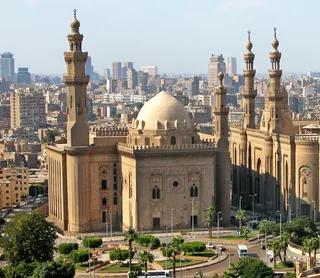
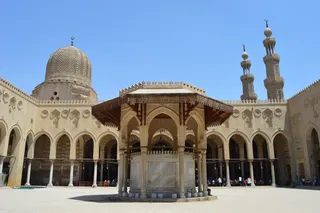
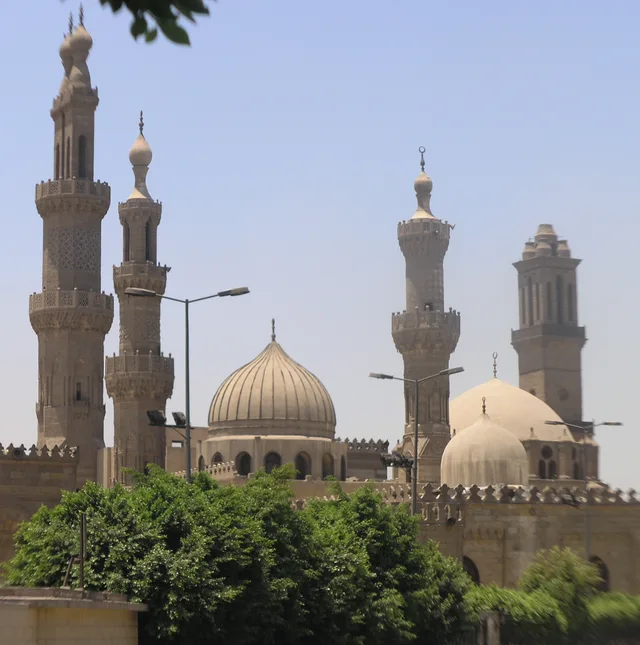
 à ≈ 15 minmosquée Al-Azhar
- Distance
- 1,1 km
 TravelHub
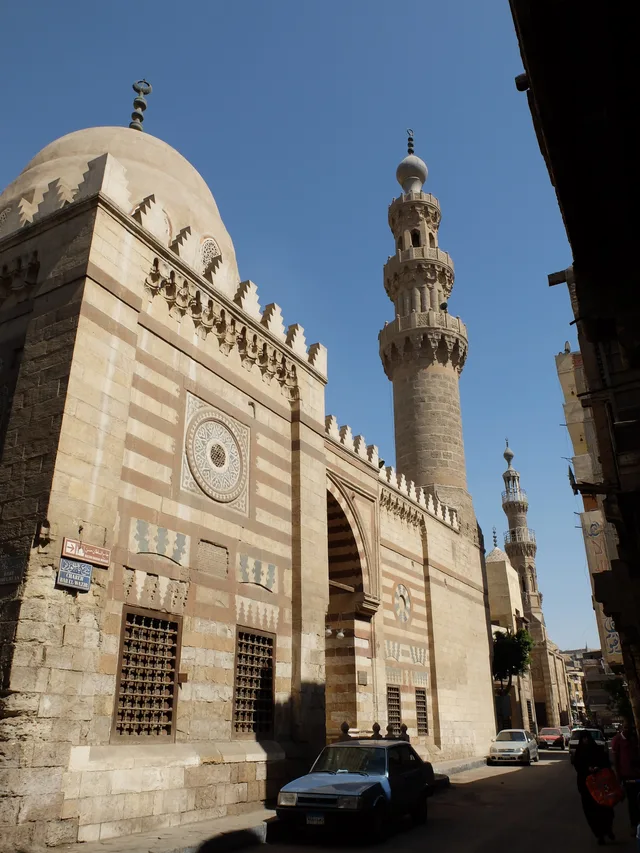
Residents in the Tabbana Quarter navigate crowded alleyways around the complex, balancing daily market traffic against prayer gatherings at the site.
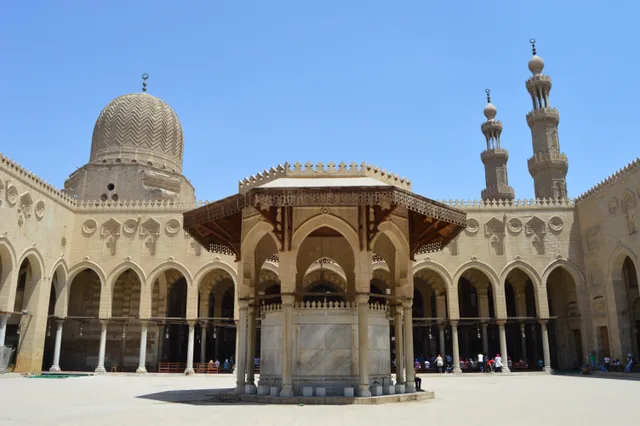
Emir Shams ad-Din Aqsunqur directed the building of the site during the Mamluk sultanate. Having served as governor in Tripoli, he incorporated Syrian architectural traditions into the layout. The structure incorporated the earlier mausoleum of Sultan al-Ashraf Kujuk, creating an irregular floor plan. Aqsunqur personally took part in the construction work and lies buried on the grounds alongside his sons.
Ottoman military commander Ibrahim Agha al-Mustahfizan carried out extensive structural repairs, securing the roof arcades and southern hall with new columns. He lined the interior with blue and green ceramic tiles imported from Damascus and Constantinople. These floral Iznik-style panels with cypress and tulip motifs earned the site its popular moniker. Ibrahim Agha also placed his own marble-adorned mausoleum within the hall.
Loss of endowment revenue previously restricted services to Friday prayers before conservation groups stepped in. An earthquake later damaged the portico arcades, prompting state reinforcements to prevent collapse. Joint preservation efforts by the Aga Khan Trust for Culture and the World Monuments Fund repaired the roof and stabilized the walls, reopening the sanctuary for community worship and international travelers.
Ce que les visiteurs écrivent sur Google Maps
La note et les avis récents de Google Maps se chargent à la demande.
à ≈ 15 minmosquée Al-Azhar à ≈ 35 minpyramide de Khéphren
 à ≈ 10 minmosquée Sultan Al-Muayyad
Vous ne trouvez pas la destination souhaitée ? La recherche prend en charge toutes les langues. Ouvrir la recherche