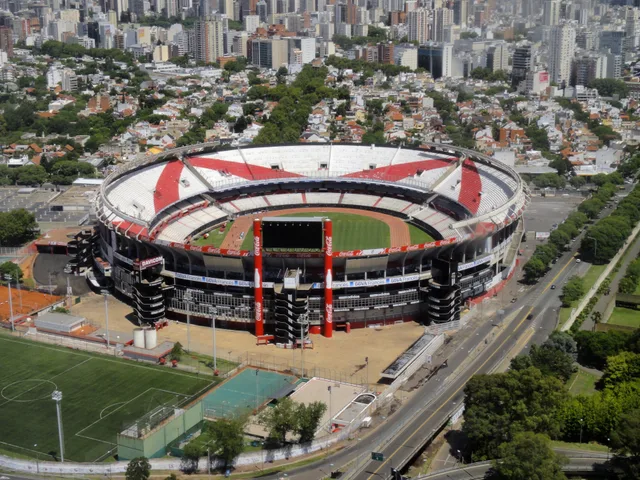
 à ≈ 30 minstade Monumental Antonio Vespucio Liberti
- Distance
- 9 km
 TravelHub
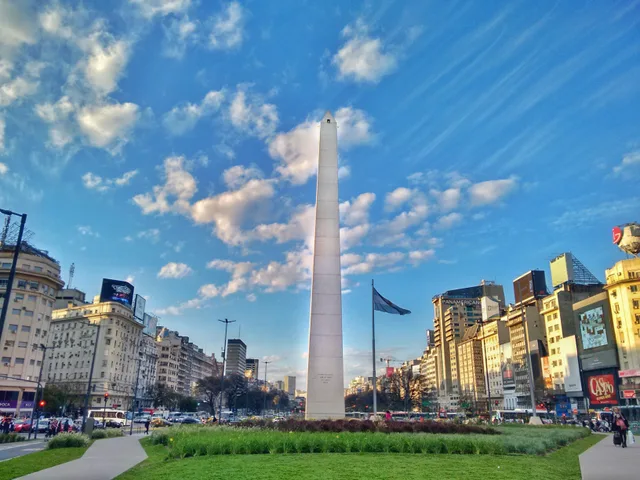
Residents crossing Plaza de la República navigate constant civic demonstrations and transit disruptions where Avenida Corrientes meets the monument plaza.
Alberto Prebisch planned the Egyptian-style reinforced concrete obelisk as a modernist civic marker. Builders originally faced the shaft with white stone quarried in Córdoba, but falling slabs after an official appearance prompted engineers to strip the panels. Polished cement replaced the original masonry, etched with grooves to mimic stone courses. A single entrance on the western face leads to internal stairs and top viewing apertures.
Municipal legislators once voted to tear down the spire over maintenance costs and urban aesthetics, but an executive veto retained the structure as national heritage. The plot originally belonged to the church of Saint Nicholas of Bari, where the national flag initially flew over the capital. Today multiple underground train routes converge beneath the plaza, making the surrounding area a central transit transfer point.
Repeated political actions and street protests shaped the landmark into a primary venue for civic expression. Protesters spilled paint from the upper windows during past clashes, prompting the city to install a protective ground fence. Activists and municipal groups periodically wrap the shaft in giant covers, turning the stone exterior into a canvas for health campaigns and public memorials.
Vous ne trouvez pas la destination souhaitée ? La recherche prend en charge toutes les langues. Ouvrir la recherche