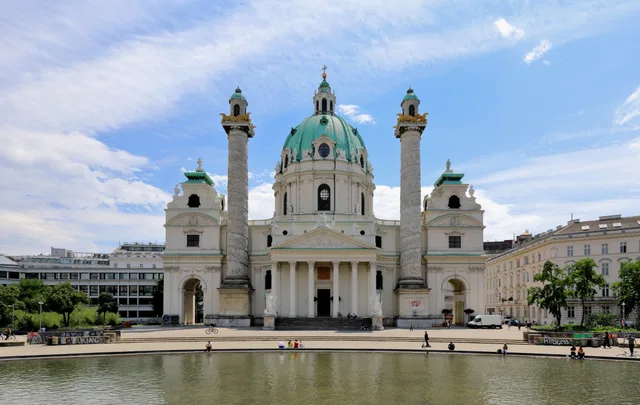
 ≈ 50 λ. μακριάΝαός του Αγίου Καρόλου
- Απόσταση
- 3,8 χλμ.
 TravelHub
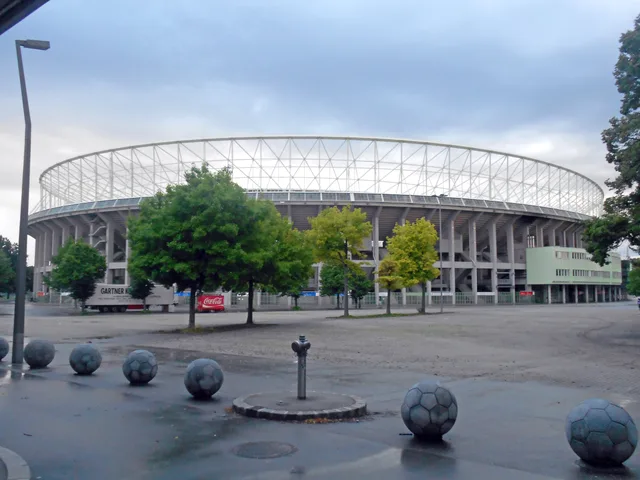
Residents sharing the Prater perimeter with the stadium plan their evenings around fixture schedules, exchanging tranquil park access for packed train carriages and crowded avenues.
The venue opened in the Leopoldstadt district as the Praterstadion for the Workers' Olympiad, following designs by architect Otto Ernst Schweizer. Schweizer paired the arena with the adjacent Stadionbad open-air swimming complex. Decades later, the city renamed the grounds to honour Austrian footballer and manager Ernst Happel. Extensive modernisation eventually added roof canopies and converted the terraces into an all-seater bowl.
The site holds a somber wartime history from the period following the Anschluss. Military authorities used the grounds as barracks and turned the passageways beneath the stands into a detention center for Polish Jewish residents before their forced deportation to Buchenwald. Bomb strikes later damaged the structures. A memorial plaque installed in the grandstand area now marks the site of the wartime detentions.
Major continental football fixtures define the modern profile of the stadium. The grounds staged multiple European Cup and Champions League finals, the European Cup Winners' Cup final, and the UEFA Euro tournament final between Spain and Germany. During tournament dates and international matches, spectator traffic fills the Prater avenues, shifting regular neighborhood transit into dedicated transport corridors.
Δεν υπάρχουν ακόμα διαθέσιμοι οικοδεσπότες για δωρεάν διαμονή εδώ — η πλησιέστερη πόλη με διαθέσιμους είναι:
ΜόναχοΤι γράφουν οι επισκέπτες στους Χάρτες Google
Η βαθμολογία και οι πρόσφατες κριτικές από τους Χάρτες Google φορτώνουν κατόπιν αιτήματος.
≈ 50 λ. μακριάΝαός του Αγίου Καρόλου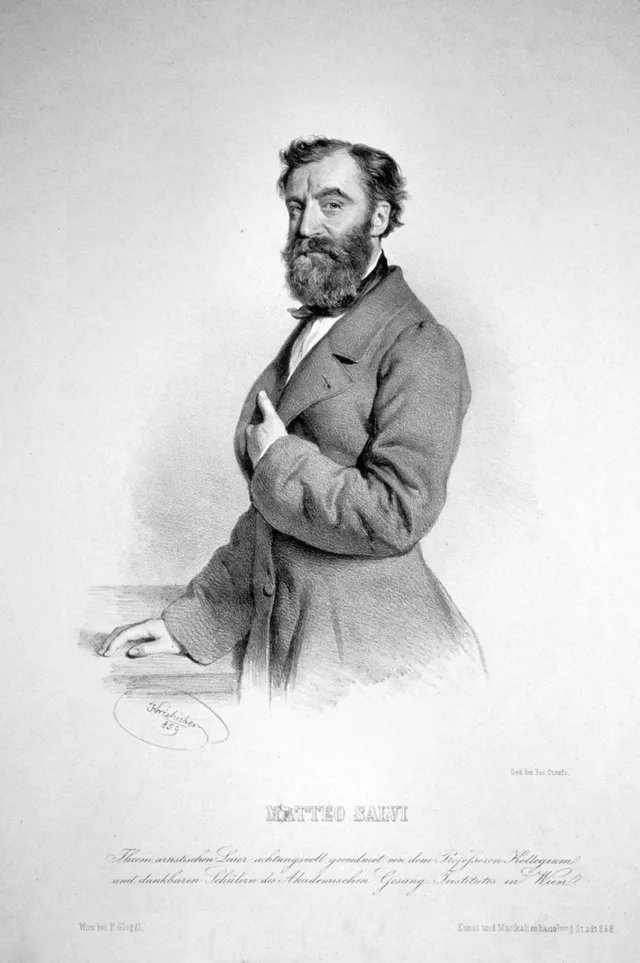 ≈ 50 λ. μακριάΚρατική Όπερα της Βιέννης
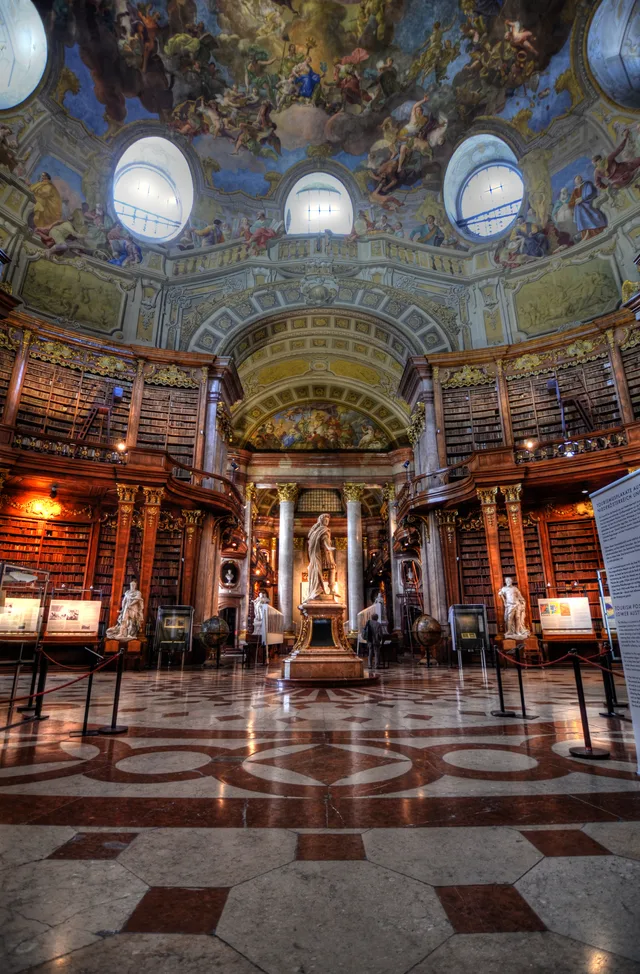 ≈ 50 λ. μακριάΕθνική Βιβλιοθήκη της Αυστρίας
Δεν βρίσκετε το μέρος που ψάχνετε; Η αναζήτηση κατανοεί οποιαδήποτε γλώσσα. Άνοιγμα αναζήτησης