






















Zum Inhalt springen
TravelHub
Vereinigte Staaten

Lassen-Volcanic-Nationalpark: was in der Nähe ist, wie man hinkommt und wann man fährt · 2026

Living and field-working around Lassen Peak demands respect for heavy mountain snow that blocks key roads well into midsummer and active volcanic vents under round-the-clock seismic surveillance.

Karte der Orte
Über den Ort

Lassen Volcanic National Park preserves an active volcanic terrain defined by Lassen Peak, extreme mountain snowfall, and all four major volcano types.

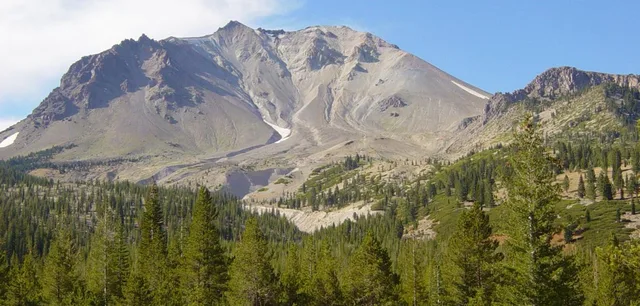
Lassen Volcanic National Park centers on Lassen Peak, the southernmost volcano in the Cascade Range and the world largest plug dome. The landscape preserves all four primary volcano varieties: plug dome, shield, cinder cone, and stratovolcano. Native Atsugewi populations inhabited the region long before European immigrants arrived.

Weiterlesen

Early immigrant routes like Nobles Emigrant Trail traversed these volcanic fields. Major twentieth-century eruptions reshaped the summit, opening fresh craters and scattering ash. Federal authorities monitor ongoing volcanic hazards with seismic arrays and gas measurements, maintaining active emergency plans against future eruptive events.

High elevation ensures extreme snowfall that blankets high roads until late summer. Lake Helen records some of the highest snow accumulation in the mountain range. Geological hazards previously forced the closure of visitor facilities near Chaos Crags, leaving rugged wilderness zones that demand total self-sufficiency.

Verbände
  • Lassen PeakThe massive plug dome forms the central feature of the park.
  • Volcano varietiesThe terrain holds plug dome, shield, cinder cone, and composite peaks.
  • Snowpack closuresPersistent high drifts keep major mountain passes blocked deep into summer.
  • Rockslide hazardsSlope risks from Chaos Crags caused visitor lodgings to be shut down permanently.
Fakten
  • The protected national park spans an area of {amount} square kilometers.
  • Lassen Volcanic National Park contains all four types of volcanoes found on Earth: shield, cinder cone, plug dome, and stratovolcano.
  • Lassen Peak is the largest plug dome volcano in the world and marks the southern terminus of the Cascade Range.
  • The United States Geological Survey maintains real-time monitoring of ground deformation, gas emissions, and seismic activity across the park.
Quelle: Wikidata · Wikipedia

Anreise und Unterkunft

2 Quellen · Stand: 5. November 2026
Quelle: TravelHub · OurAirports (public domain)

Menschen, die hier waren

Кириллstriklend · Lesen
40) RANK 22. Lassen Volcanic and Crater Lake National Parks

Who would have thought that America is so diverse... Besides the family-friendly Myrtle, posh Miami, bustling New York, and colorful Vegas, there are places here that America itself seems not to have reached yet... We were driving north from San Francisco and were surprised to learn that everything here is a zone of high volcanic activity. Not just "here," but the entire top-left corner of the USA on the map. No, we had heard about the monstrous earthquake in San Francisco at the beginning of the century and the Los Angeles tremors, but we never expected to see remnants of magma and rocks scattered by eruptions for hundreds of kilometers))) How do you know if you are far from Lassen Volcanic National Park? It's very simple!! 1) Black dots of rocks will start appearing in the usual yellow-brown landscape outside the window. Here and there. It's unclear who put them there. 2) Burnt-out gas stations will appear, selling gas three times cheaper than usual and filling you up directly from a huge pipe laid somewhere further. 3) One morning, the bed will shake along with the walls of the house so that you wake up realizing that seismology is a useful science)) At least that's how it was for us=) The park itself is a bunch of old rock-ash with a large volcano in the middle and small stinky sulfur vents on the sides. We only stopped there because it was very much on the way. Otherwise, only if you have tons of time. This landscape will get boring after 3 days)) What's cool are the mega-blue lakes with the entire periodic table inside. You shouldn't swim, but looking is fine. Without their blueness, the eye would have died of boredom. Oh, how!) Therefore, we didn't linger there (and there was nowhere to stay anyway), and we rushed to the main point of the day - Crater Lake. We didn't know then that it would be one of the main points of the entire trip... We arrived there just in time, about 2 hours before sunset, so we managed to take the best spot in the world - on the top of a volcano that exploded several thousand years ago. Impressive, right?) The story is: a long time ago (6000 years ago), the local largest volcano stood here (one of the largest in the world at that time). Then it went and erupted. And it blew off a kilometer of itself with all its insides. Groundwater rushed to extinguish it, and that's how the 9th deepest lake in the world and the first in North America - Crater Lake - was formed. 594 meters of one of the purest water treasures on the planet. Imagine. You are driving, the road is constantly going slightly up. The forest is interspersed with huge rocks. Suddenly you finally drive out to a height that the trees have not overcome in these millennia. Here is crushed stone and bare earth. Nothing else is visible. You drive up to the edge of the hill, behind which, of course, there should be another hill, and you drop your jaw. Below you is a 10-kilometer lake in a crater, with an island in the center just like in a picture. The island, as expected, is called Wizard Island.) The water reflects only the sky simply because it has nothing else to reflect. You climb to the very top of the rim left by the volcano and watch one of the most beautiful sunsets in your life. You can see far, far away, the scorched earth turns crimson red, as if reliving those events of 6000 years ago again. A giant shadow moves over the lake and poof!!! The sun is gone. Yeah)) The road to the top takes 15 minutes, with stops and photos - 40 minutes. The viewpoint is Watchman lookout. There are many of them there, but this one is definitely the coolest, be sure to visit it. And then you get in the car and drive to Yellowstone. At least, that's how it was for us...

  • Foto aus einem Beitrag von Кирилл
  • Foto aus einem Beitrag von Кирилл
  • Foto aus einem Beitrag von Кирилл+2
3
Кириллstriklend · Lesen
47) An instructive MISSION. Our main mistakes and successes

So, let me summarize the main takeaways from the trip here, which might be useful for those just planning their own journey. What we did right: - Bought a good car with A/C. The risk of breaking down during a trip is very high; it's better to overpay a little than to be stuck in Arizona for a week. Driving without A/C is bad. Very bad. We tried it)) - Developed a solid travel plan. When you're on the road, there's no time to think about where to go. And the places we visited were ones we really didn't want to miss. Or not even know about. Because they exist...)) - Sent luggage to New York. During a road trip, there's always less space in the car than when you're packing at home before leaving. - Bought a GPS; without one, you lose precious hours of time. What we did wrong: - Should have allowed for more time. Always take extra time so you don't have to rush, but instead enjoy the trip and have the chance to stay longer somewhere if you like it. This was a huge mistake that significantly affected the whole trip. - Didn't finish university assignments. Get them done at any cost; nothing gets done regarding studies in America. There's a suspicion it's magic. - Didn't withdraw all the money from the cards. It's a huge hassle later. - Sometimes didn't spend money where we should have. Don't be stingy; you'll have memories later. And $80 (for example) comes and goes. Places we would visit again: San Francisco, Monument Valley, Arches National Park, Yellowstone, Yosemite, Chicago, Grand Canyon, Florida coral reefs, shuttle launch, New York, Blue Ridge Parkway (especially in autumn), Sequoia National Park, Crater Lake, Florida Keys. Places we would skip: Key West (the city itself), Disney, Denver, Zion and Bryce Canyon, Mount Rushmore, Lassen Volcanic National Park. Everything else is cool once, but not a second time. Places we didn't visit but should have: Glacier National Park, Boston (with a whale-watching trip), Washington, Niagara, Sonoran Desert in Arizona with 15-meter cacti, Mammoth Cave, Philadelphia, HAWAII, Alaska if it works out, and the US also has islands in the Caribbean (e.g., Virgin Islands) — I'd definitely go there. Maybe Seattle and Houston (not sure). Things worth exploring deeper (off the top of my head): Wander through the neighborhoods of Chicago and New York, hike down to the Colorado River in the Grand Canyon for an overnight stay, go horseback riding with Native Americans in Monument Valley, take a boat trip on Grand Teton Lake, climb the highest rock in Yosemite via the steep rock ladder, go rafting in the Smoky Mountains. As you can see, it all comes down to the fact that you need to spend at least a day and a half in each place (to see it and do something cool). That's the essence of the unsolvable problem, so choose what you like best and do it. "You can't embrace the unembraceable." All lists will be updated as more thoughts come to mind=)

3Beiträge von Teilnehmenden über Lassen-Volcanic-Nationalpark — von Unterkunft und Visa bis hin zu Wochenendrouten.Alle lesen

Google-Bewertungen

Was Besucher auf Google Maps schreiben

Bewertung und aktuelle Rezensionen von Google Maps werden auf Wunsch geladen.

In Google Maps öffnen