

Zum Inhalt springen
TravelHub
Kyōto · Japan

Nanzen-ji: was in der Nähe ist, wie man hinkommt und wann man fährt · 2026

Tenants near the monastery trade early morning quiet among the sub-temples for crowded lanes once tour groups arrive.

Karte der Orte
Über den Ort

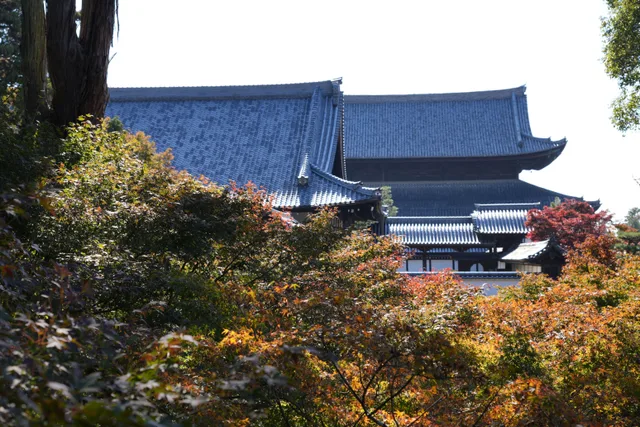
The temple complex anchors the Nanzen-ji branch of Rinzai Zen amid nationally protected grounds and historic dry gardens.

The complex originated as an imperial detached palace for Emperor Kameyama before its conversion into a Zen monastery initially called Zenrin-ji. Today the grounds operate as the headquarters for the Nanzen-ji branch of Rinzai Zen. National authorities classify the precinct as an official Historic Site, while the adjoining Hōjō gardens carry protection as a designated Place of Scenic Beauty.

Weiterlesen

Repeated fires destroyed the central halls across several eras, prompting extensive reconstructions and an expansion during the Edo period. The monastery grounds encompass a shifting cluster of subordinate temples rather than a standalone isolated hall. Renowned Zen teacher Zenkei Shibayama governed the monastic community as abbot, producing a widely studied commentary on the Mumonkan text from within these precincts.

Verbände
  • Rinzai Zen headquartersThe temple acts as the administrative base directing this monastic branch.
  • Hōjō gardensDry landscape grounds legally protected as a designated Place of Scenic Beauty.
  • Fire damage historyMultiple historic blazes destroyed early halls and required repeated rebuilding.
  • Mumonkan commentaryMonastery abbot Zenkei Shibayama authored an influential commentary on the text.
Fakten
  • Emperor Kameyama established the original monastery on the grounds of his former detached palace.
  • The complex serves as the head temple for the Nanzen-ji branch of Rinzai Zen Buddhism.
  • Government designations protect the main precinct as a Historic Site and the Hōjō gardens as a Place of Scenic Beauty.
  • Former monastery abbot Zenkei Shibayama published an influential commentary on the Zen classic Mumonkan.
  • The complex expanded its layout during the Edo era following widespread reconstruction from earlier fires.
Quelle: Wikipedia

Anreise und Unterkunft

Kostenlose Aufenthalte bei GastgebernGastgeber anzeigen
In der Stadt99Gastgeber empfangen Gäste
2 Quellen · Stand: 3. November 2026
Quelle: TravelHub · OurAirports (public domain)

Google-Bewertungen

Was Besucher auf Google Maps schreiben

Bewertung und aktuelle Rezensionen von Google Maps werden auf Wunsch geladen.

In Google Maps öffnen