
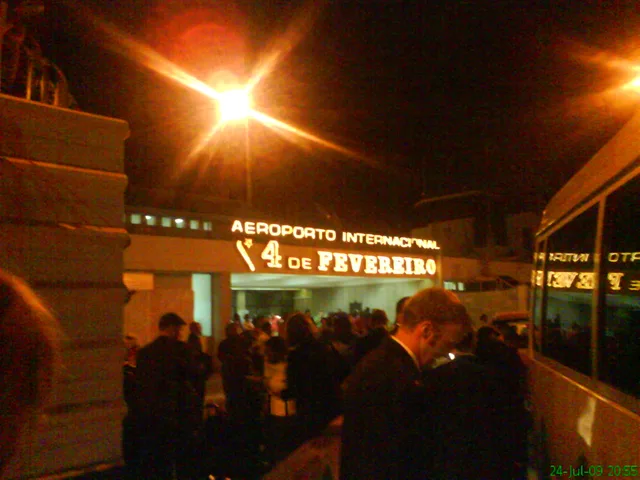
 LuandaQuatro de Fevereiro Airport

Yaşa
Angola: Seyahat rehberi, vizeler ve ücretsiz konaklama · 2026
Tenants moving into Alvalade bypass inflated supermarket shelves by purchasing fresh produce at local street stalls, keeping a comfortable baseline to $675.
Şu an şehirdeAngola
GirişPasaport seçin
Haritadaki yerler25Döviz kuruKz 941,522 Kas 2026 verilerine göre
Yerel dilPortugueseÜlkenin öne çıkan yerleri
- International hotels and business facilities in Luanda
- English and Portuguese
- Airport arrival halls and international airline counters
- Portuguese with limited English
- Railway stations and provincial bus terminals
- Portuguese
«Água mineral engarrafada, por favor.» — Drinking tap water is unsafe; always request bottled water at dining establishments.
Konum hakkında
Atlantic port commerce and mineral extraction define Angola's urban landscape, while vast rural plateaus remain largely unpaved and separated by difficult transit.
Resource wealth from offshore crude oil and diamond mining shapes the formal economy, concentrating commercial activity inside Luanda. Daily living reveals a stark divide between high-cost imported goods and affordable local staples. Expatriates settling in central districts face steep rents and pricey supermarket inventories, while open-air markets supply domestic produce at manageable rates. Bottled water remains essential everywhere.
Okumaya devam et
Moving beyond the capital requires careful logistical planning. Separate rail corridors run inland from coastal ports but do not link together. Provincial highways deteriorate rapidly during the rainy season, when flash floods wash out roads and bridges. Rural exploration demands trusted local drivers and strict adherence to marked tracks, because civil war minefields still border unpaved territory behind warning posts.
Urban life operates in Portuguese, blending colonial traditions with Bantu heritage in music and street life. Local dining centers on cassava porridge known as funge and fresh Atlantic seafood along coastal strips like Ilha de Luanda. Long-term residents must carry certified identification at all times and avoid photographing infrastructure, since state security laws penalize pictures of government buildings and transit hubs.
Dernekler
- Offshore Petroleum
- Ilha de Luanda
- Unexploded Ordnance
- Cassava Funge
- Photography Restrictions
Gerçekler
- The national men's basketball team holds more African championship titles than any other competitor.
- Crude oil and diamonds constitute the principal export commodities sustaining the national budget.
- National law requires all residents and travelers to carry official government identification at all times.
- China serves as the primary bilateral trade destination for Angolan resource exports.
Kaynak: Wikipedia · Wikivoyage
Görsellerle Angola7 fotoğraf
Ulaşım ve konaklama
Ulaşım biletleri
- Single ticket
- Kz 300
- Monthly pass
- Kz 30.000
Vardıktan sonra adım adım
- 01Buy a local SIM card at the airport arrival counters by showing your passport.
- 02Withdraw cash in local currency at the terminal bank branches or automated teller machines.
- 03Board an authorized Afritaxi vehicle outside the arrivals area to travel to your lodging.
2 kaynak · 3 Kasım 2026 tarihi itibarıyla
Kaynak: TravelHub · SIM Card at Luanda Quatro de Fevereiro Airport (LAD)
Vize ve pratik bilgiler
Bir pasaport seçin
Pasaportunuzu seçin — işlem süresi, ücret ve belgeler pasaporta göre değişiklik gösterir.
Sıkça sorulanlar
What language is spoken across Angola?
Portuguese serves as the official national language and predominates in government and major urban centres. Several indigenous Bantu languages remain widely spoken across regional communities. Navigating daily interactions without Portuguese can present substantial difficulties.
Kaynak: Wikidata · Wikipedia · Wikipedia · WikivoyageCan visitors safely drink tap water in Angola?
Tap water across the country is unsafe for drinking. Visitors must drink sealed bottled water instead. Bottled water is standard at dining establishments and grocery stores.
Kaynak: WikivoyageCan you take photos of government buildings and infrastructure in Angola?
Photographing public infrastructure, government offices, military installations, airfields, and bridges is forbidden. Angolan authorities regard unauthorized photography of strategic assets as a security threat. Persons caught taking restricted pictures risk detention and confiscation of equipment.
Kaynak: WikivoyageDo travelers need to carry identification at all times in Angola?
Angolan regulations require every person to have official identification on hand at all times. Foreign nationals should carry their national identity card or a certified copy of their passport. Local police conduct regular document checks.
Kaynak: WikivoyageAre international credit cards widely accepted in Angola?
Most restaurants and local businesses do not accept foreign credit cards. Foreign cash transactions are also restricted at many local dining spots. Visitors must carry local kwanza for standard daily transactions.
Kaynak: Wikidata · WikivoyageDoes Angola have an interconnected passenger train network?
Passenger railways run from the Atlantic coast into interior provinces on separate corridors. These distinct regional routes do not connect with one another. Rail companies operate clean modern passenger cars on the active northern and southern routes.
Kaynak: WikivoyageWhat are the main hazards when driving in rural Angola?
Severe rainstorms can wash away provincial bridges and deteriorate unpaved roads. Traveling through rural areas requires remaining strictly on clear roads due to marked landmine hazards. Drivers should travel with experienced local partners and avoid driving after nightfall.
Kaynak: Wikivoyage · WikivoyageHow do tourists register for a mobile SIM card upon arrival?
Telecom kiosks in the airport arrival hall sell prepaid mobile cards directly to arriving travelers. Presenting a valid passport is legally required to complete the in-person registration. Airport staff scan the identification document and capture a photograph to enable immediate network activation.
Kaynak: SIM Card at Luanda Quatro de Fevereiro Airport (LAD)Güvenlik ve sağlık
Güvenlik · resmi tavsiye3 Kas 2026 verilerimize göre
Carrying valid personal identification, such as a certified copy of a passport, is legally required everywhere.
Photographing military sites, government buildings, bridges, railway stations, airfields, and police personnel is strictly prohibited.
Publicly criticizing or insulting government officials, including on social media channels, is a punishable offense.
1 risk daha
Never cross boundary markers with red and white coloring or red stones, which identify active minefields.
Kaynak: UK FCDO Foreign Travel Advice · US Department of State Travel Advisory · Wikivoyage
Dil ve kültür
İlk gün için beş ifade ve dilin zorunlu olduğu durumlar
Portuguese is the sole official language of Angola. English has minimal reach in daily routines and public environments.
İlk gün için beş ifade
- Água mineral engarrafada, por favor.Agua mineral engarrafada, por favor.
- Quanto custa isto?Quanto custa isto?
- Pode fazer um desconto?Pode fazer um desconto?
- Leva-me ao centro?Leva-me ao centro?
- Tem apartamento para alugar?Tem apartamento para alugar?
2 ifade daha
- Preciso de ajuda, por favor.Preciso de ajuda, por favor.
- A conta, por favor.A conta, por favor.
Dile ihtiyaç duyacağınız yerler
| Durum | Dil |
|---|---|
| International hotels and business facilities in Luanda | English and Portuguese |
| Airport arrival halls and international airline counters | Portuguese with limited English |
| Railway stations and provincial bus terminals | Portuguese |
| Urban markets and street vendors | Portuguese |
| City taxis and informal transport | Portuguese |
Angola şehirleri
Angola içindeki yerler
Aradığınız yeri bulamadınız mı? Arama motoru her dili anlar. Aramayı aç