
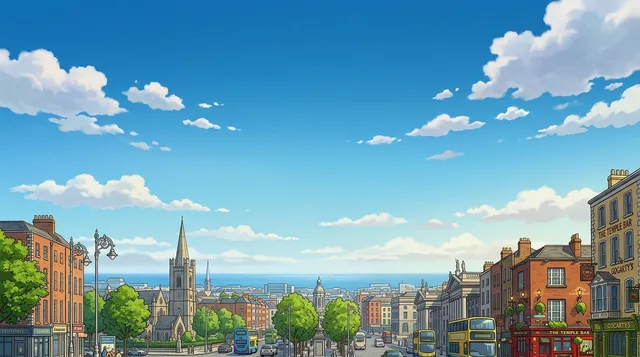
Dublin is an amazing city that captured my heart just as much as London. It is unique, unlike other capitals, colorful, small, and very soulful. It is worth noting the fickle weather; it changes many times a day, but that doesn't spoil the bright impression at all. You can probably walk across all of Dublin in one day—it is that small—but the city center deserves special attention. It is a hub of pubs and clubs; every evening, a noisy crowd of tourists and locals migrates from one drinking establishment to another, and the streets are full of musicians and other various street performers :) Here in Dublin, you will find the Guinness brewery, where the legendary Irish beer is produced; you can take a tour and observe the process of creating the drink. But more than the city's entertainment, I was struck by the surrounding nature. Ireland is a stunning country of green fields with peacefully grazing herds of sheep, picturesque mountains, crystal-clear lakes, and an abundance of places that seem untouched by civilization. On one of my three days in Dublin, I went to just such a place—Glendalough. It is located about an hour's drive from the city and is simply stunning in its beauty. We spent the whole day there, tirelessly exploring such breathtaking terrain. Returning to the city in the evening, despite the fatigue, we decided to head to the Temple Bar area—the city center, where an atmosphere of fun and carefree socializing always reigns. I haven't met such open and good-natured people as in Dublin for a long time. Unfortunately, I didn't have time to go to the ocean to see the Cliffs of Moher this time, but next time this place will be a mandatory stop on my itinerary!
Dublino: Guida di viaggio, prezzi e alloggi gratuiti · 2026
Workers around Silicon Docks quickly move out along suburban bus corridors to manage steep living expenses.
- Public transit networks including buses, Luas trams, and commuter rail stations
- English for ticket machines, driver interactions, announcements, and journey planning, with Irish displayed on station signage.
- Pubs, cafes, and dining establishments
- English exclusively for ordering meals, bar service, bill settlement, and staff interactions.
- Garda stations and emergency medical facilities
- English for reporting incidents and receiving emergency care, with administrative support legally available in Irish.
«Dia dhuit» — Standard greeting when entering independent shops or local establishments, creating immediate goodwill.
- 1 giorno
- Dublin Castle, Chester Beatty Library, Grafton Street
- 3 giorni
- + Four Courts, Dublin Zoo, Irish Museum of Modern Art
- 7 giorni
- + Dublin Port, Croke Park, Aviva Stadium
Dublin operates as the primary economic hub of Ireland, combining historic administrative quarters with modern commercial docklands.
Multinational technology and financial corporations concentrate their European headquarters in the Docklands and the International Financial Services Centre. This corporate presence drives steady job creation but places intense pressure on local accommodation and daily services. New residents face steep commercial rents and a competitive private market, making suburban neighbourhoods the standard choice for long-term housing.
Continua a leggere
Daily transit relies heavily on extensive bus routes and Luas tram corridors rather than a comprehensive metropolitan railway network. Commuters manage fares through the prepaid Leap Card, which caps travel expenses across municipal transport operators. Road traffic remains congested along orbital routes and canal bridges, prompting long-term residents to rely on dedicated bicycle lanes and walking.
Literary heritage shapes the public institutions, from Trinity College and the Abbey Theatre to municipal reading collections and designated UNESCO sites. Public art galleries and national museum branches operate without admission fees across central districts. Traditional pubs support neighborhood social life through folk music sessions, though central thoroughfares exhibit street disorder and vacant storefronts after dark.
- Silicon Docks
- Temple Bar
- Book of Kells
- Leap Card
- Urban Congestion
- UNESCO designates Dublin as a permanent City of Literature.
- Major public art galleries and national museum branches grant visitors free admission.
- The International Financial Services Centre operates as a designated financial trading district.
- Dublin Airport operates without direct heavy rail or underground transit links to the city centre.
Arrivare e soggiornare
Voli, aeroporti, host e affitti
Non ci sono ancora host che offrono alloggio gratuito qui.
- 01Connect to the terminal wireless network or purchase a local mobile connection.
- 02Withdraw cash from an airport automated teller machine.
- 03Purchase a reusable transit smart card at an airport convenience shop.
- 04Board an express coach or city bus outside arrivals to reach the centre.
2 fonti · Al 18 settembre 2026
Visto e aspetti pratici
Scegli un passaporto
Imposta il tuo passaporto: i tempi di elaborazione, le tariffe e i documenti variano a seconda del passaporto.
- Smoking is prohibited inside pubs.
- Passengers must validate transit cards before boarding trams and trains to avoid penalty fares.
- Bus drivers do not accept paper currency and do not provide change.
1 regola in più
- Taxi drivers are prohibited from picking up passengers at airport coach stops.
How do public transport fares work in Dublin?
Dublin operates buses, trams, and suburban trains under shared transit management. Fares can be paid using a prepaid card called the TFI Leap Card or exact cash in coins on municipal buses. Bus drivers do not accept paper banknotes and do not provide change.
Fonte: WikivoyageCan visitors drink the tap water in Dublin?
Mains tap water in Dublin is clean and safe to drink. The municipal drinking supply flows directly from mountain reservoirs located in the Wicklow Mountains.
Fonte: WikivoyageHow do passengers get from Dublin Airport to the city center?
Dublin Airport connects to the central city entirely by road through buses and licensed taxis. No metro or direct railway connects the airport terminals to downtown. Multiple express coaches and municipal public buses run from stops located outside the terminals.
Fonte: WikivoyageAre art museums and galleries free to visit in Dublin?
Several major public art galleries throughout Dublin do not charge admission fees. Free institutions include the National Gallery, the Irish Museum of Modern Art, and the Hugh Lane Municipal Gallery. The National Museum of Ireland also maintains multiple public branches in the city.
Fonte: WikipediaWhere do long-distance trains depart from in Dublin?
Connolly and Heuston stations operate as the primary railway terminals for the city. These stations manage commuter lines across the capital and connect Dublin with the rest of the Irish rail network.
Fonte: WikipediaHow does public bike rental work in Dublin?
Dublin provides an automated bicycle sharing scheme named Dublinbikes. Users collect and drop off bicycles at automated rental terminals positioned across the city centre. The local road network features dedicated lanes and off-road tracks for cyclists.
Fonte: Wikipedia3 fonti
Sicurezza e salute
Avvisi di viaggio ufficiali e requisiti sanitari minimi
Come arrivare
Aeroporti, distanze e trasporti pubblici
Quando andare e itinerari
Quando venire e cosa fare in un giorno, tre giorni o una settimana
- 09:00Dublin CastleHistoric fortification and former administrative headquarters of British rule in Ireland.
- 11:00Chester Beatty LibraryMuseum housing rare manuscripts, prints, and decorative arts collections.
- 13:30Christ Church Cathedral, DublinMedieval cathedral situated near traditional dining spots in the historic quarter.
- 15:30Ha'penny BridgePedestrian footbridge spanning the River Liffey between north and south quays.
- 17:00Grafton StreetPedestrianized shopping street with historic coffee houses and connections to central parks.
- 10:00General Post OfficeProminent landmark building situated along the central northern thoroughfare.
- 12:00Four CourtsHistoric judicial complex positioned directly along the River Liffey quays.
- 14:30James Joyce BridgeRiver crossing named after the Dublin writer connecting both sides of the Liffey.
- 16:00Irish Museum of Modern ArtNational institution displaying modern and contemporary art with free admission to public galleries.
- 10:00Four CourtsHistoric riverfront judicial architecture viewed from the public quays.
- 12:30Ha'penny BridgePublic pedestrian bridge over the River Liffey open without admission fees.
- 14:30Chester Beatty LibraryLibrary museum displaying global artistic and manuscript collections within castle grounds.
- 16:30Irish Museum of Modern ArtPublic art gallery offering free access to permanent modern art exhibitions.
Lingua e cultura
Cinque frasi per il primo giorno e dove la lingua è indispensabile
English is the universal working language of daily life, commerce, navigation, and public administration across Dublin. A visitor or resident requires no knowledge of Irish to lease housing, work in corporate offices, navigate transport networks, or access emergency services.
- Dia dhuitDEE-uh gwit
- Go raibh maith agatguh rev MAH uh-gut
- Le do thoilleh duh HUH-il
- Cabhair, le do thoilCOW-er, leh duh HUH-il
- Gabh mo leithscéalGOW muh leh-shkayl
2 frasi in più
- An bhfuil sé ar fáil?on wil shay air faw-il?
- Slán go fóillslahn guh FOY-ul
| Situazione | Lingua |
|---|---|
| Public transit networks including buses, Luas trams, and commuter rail stations | English for ticket machines, driver interactions, announcements, and journey planning, with Irish displayed on station signage. |
| Pubs, cafes, and dining establishments | English exclusively for ordering meals, bar service, bill settlement, and staff interactions. |
| Garda stations and emergency medical facilities | English for reporting incidents and receiving emergency care, with administrative support legally available in Irish. |
| Retail shops, pharmacies, and neighborhood convenience stores | English for purchases, product inquiries, payment processing, and transit card top-ups. |
| Commercial workplaces and multinational corporate offices | English as the primary working medium for contracts, administrative affairs, and professional meetings. |
| Residential tenancy agreements and letting agencies | English for lease contracts, landlord correspondence, and utility setup. |

Persone che sono state qui
My decision to participate in the program was quite sudden - in November 2014, the IEC center was offering special promotional terms for several programs to celebrate its anniversary. The cost of the courses was only $100, and without hesitation, I decided to go to London to improve my language skills, while of course not missing the opportunity to see the city and its surroundings. I chose the period from May 16th to 31st, which is quite favorable - the city is not yet overcrowded with tourists, and the weather is already almost summer-like. I had enough time to prepare for the trip, so after studying nearby tourist destinations, I decided to fly to Dublin for the weekend during my stay in London. So, tickets are purchased, accommodation is booked, and I am ready for an unforgettable vacation :)
Finally, the long-awaited Monday morning arrived—my first day at Edgware Academy. I chose the Covent Garden branch, though there was an alternative on Edgware Road. My schedule was Monday to Friday, 9:00 AM to 12:00 PM; I chose this to dedicate my afternoons to exploring the city. There is also an afternoon option, from 12:00 PM to 3:00 PM (I believe). No matter how hard I tried to arrive by 8:45 AM, I unfortunately ended up late, as the London Underground is quite confusing for someone from Moscow, where each station only serves one line and each platform only goes in one direction. Fortunately, my 15-minute delay on the first day was met with understanding; the lovely receptionists asked me to fill out a form and a placement test, followed by a short chat with one of the teachers, David. Based on the test and the interview, I was placed in an Intermediate group and was able to join the class for the second half of the session. Our teacher was a fantastic woman named Sarah, who managed to explain new topics with ease and clarity, engaging all students in active learning through games and discussions. Sarah has been teaching at Edgware Academy for about two years; she is a native speaker and a very skilled teacher who pays attention to every student, providing a somewhat personalized approach. Classes usually consisted of several parts—grammar, speaking, and reading comprehension—covering a wide range of topics relevant to students, such as "job hunting," "cinema," "hobbies," and more. I was surprised and pleased by the diversity of the students—there were representatives from several countries: Turkey, Italy, Kazakhstan, Switzerland, France, and I was the only one from Russia in our group. There were about 15 students in total, aged from 19 to about 45 :) The school's convenient location allowed me to walk to the city's main attractions after class. For three days in a row, I visited the British Museum—a huge collection of fascinating world masterpieces that is impossible to see in one go. On other days, it was nice to walk along Piccadilly, watching street dancers, or cycle to St. Paul's Cathedral and wander through the interesting narrow streets of this unhurried city. In general, London is very different from Moscow in its composure and measured pace of life, which is immediately noticeable. But that's all about the city by day; at night, it seems to come alive :) The countless pubs and clubs on Piccadilly, filled daily with visitors stopping by for a pint or two of beer, are also a distinctive feature of the metropolis. People come here to socialize, relax after a workday, or just unwind. My "classmates" and I decided not to fall behind the locals, and as a result, we visited more than one colorful pub during our time there :) The school also organized parties and club outings, but to my great regret, I couldn't make it to them—I had a flight to Dublin scheduled during one of them. So, after my first week at school, I flew to Ireland for the weekend, as currently, those who hold a UK visa (General class) can enter Ireland with it.
Soggiorna più a lungo con un programma
Work and Travel, tirocini, au pair e volontariato in Irlanda: visto, invito e supporto in loco sono gestiti da CMO International Programmes.

Città di Irlanda
Luoghi a Dublino
Paesi vicini
Domande frequenti su Dublino
Non trovi il posto che cerchi? La funzione di ricerca comprende qualsiasi lingua. Apri ricerca