
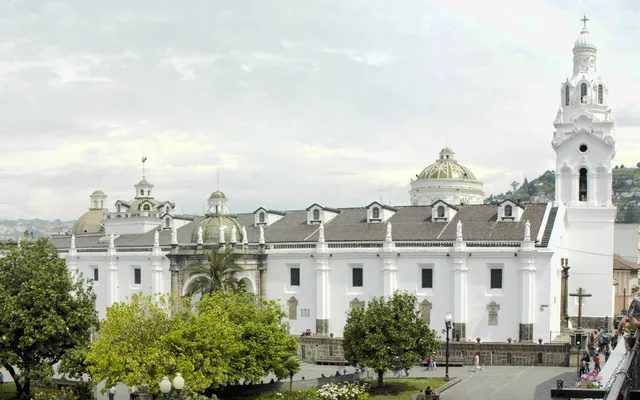
 QuitoCattedrale dell'Assunzione di Maria Vergine
Vivi
Ecuador: Guida di viaggio, visti e alloggi gratuiti · 2026
Base yourself near a municipal market to eat well on local staples, keeping basic monthly expenses down to $958 while using the US dollar.
IngressoScegli un passaporto
Costo della vita mensile958 $Luoghi sulla mappa42Tasso di cambio1,00 $al 2 nov 2026≈ 958 $
- Alloggio
- ≈ 442 $
- Cibo
- ≈ 171 $
- Altro
- ≈ 345 $
Fonti: 2 · Al 6 ottobre 2026
Fonte: Cost of Living in Ecuador 2026 | Ecuador Living Costs - Wise · Cost of Living in Ecuador 2026: Budgets & Visa Requirements
I punti forti del Paese
- Caffè al banco
- 3 $
- Pranzo in mensa
- 3 $
- Acqua, 0,5 l
- 1 $
- Scheda SIM
- 4 $
Fonti: 4 · Al 6 ottobre 2026
Fonte: Cost of Living in Ecuador 2026 | Ecuador Living Costs - Wise · Cost of Living in Ecuador 2026: Budgets & Visa Requirements · Cost of Living in Ecuador (2026): Budgets for Every Lifestyle · Welcome to Ecuador | Claro personas
Informazioni sul luogo
Ecuador combines Andean highland cities, Pacific coastal ports, and Amazon river basins under a dollarised economy.
Ecuador borders Colombia, Peru, and the Pacific Ocean while including the Galápagos Islands. The national capital sits high in Quito, whereas Guayaquil functions as the major coastal commercial center. Everyday transactions rely entirely on the US dollar, providing currency stability while linking grocery and living costs directly to local market dynamics.
Continua a leggere
Daily transit relies on extensive intercity bus terminals that connect mountain routes to the coast. Passengers flag down local buses that pick up vendors selling snacks, but severe legal penalties target unlicenced driving and speeding. Urban transit lines run through dedicated corridors, while mountain roads require high ground clearance for steep speed bumps.
Regional food divides sharply between the Andes and the coast. Highland kitchens center on potato soups like locro de papa, while coastal communities prepare fish dishes like encebollado alongside plantains. Neighbourhood eateries serve fixed-price midday meals comprising soup and main plates, keeping daily living expenses manageable away from tourist strips.
Associazioni
- Almuerzo
- Terminal Terrestre
- Muros
- Tap water
Dati
- Ecuador shares land borders with Colombia and Peru, maintains its capital at Quito, and includes the Galápagos Islands.
- The US dollar serves as the official legal tender for economic transactions across the country.
- Spanish is spoken as a first or native tongue by the vast majority of the population.
- Quito operates an integrated transit system alongside metropolitan bus routes.
Fonte: Wikipedia · Wikidata · Pasajeros por Tarifa 2026 - EPMTPQ · El Telégrafo - Alza del pasaje en Quito: estas son las nuevas tarifas y las reacciones que deja la decisión
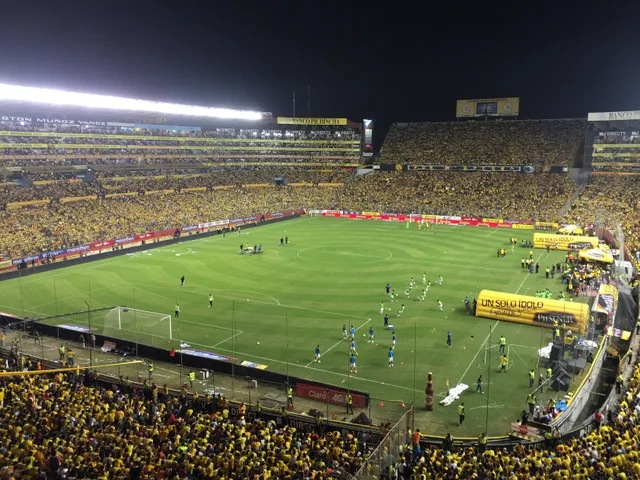
Ecuador in immagini17 foto
Denaro
≈ 958 $
- Stanza in appartamento condiviso
- ≈ 442 $
- Cibo, cucinando a casa
- ≈ 171 $
Esempi di prezzo
- Caffè
- 3 $
- Pranzo in mensa
- 3 $
- Biglietto trasporti
- 0,35 $
- Scheda SIM
- 4 $
- Bottiglia d'acqua
- 1 $
- Guadagni part-time, all'ora
- 3,01 $
Punti IEC ID
Fino al 50% dei programmi di scambio, tirocini e altri servizi IEC possono essere pagati con i punti.
+300+100
Regole del programma punti5 fonti · Al 6 ottobre 2026
Fonte: Cost of Living in Ecuador 2026 | Ecuador Living Costs - Wise · Cost of Living in Ecuador 2026: Budgets & Visa Requirements · Pasajeros por Tarifa 2026 - EPMTPQ · Welcome to Ecuador | Claro personas · Cost of Living in Ecuador (2026): Budgets for Every Lifestyle
Arrivare e soggiornare
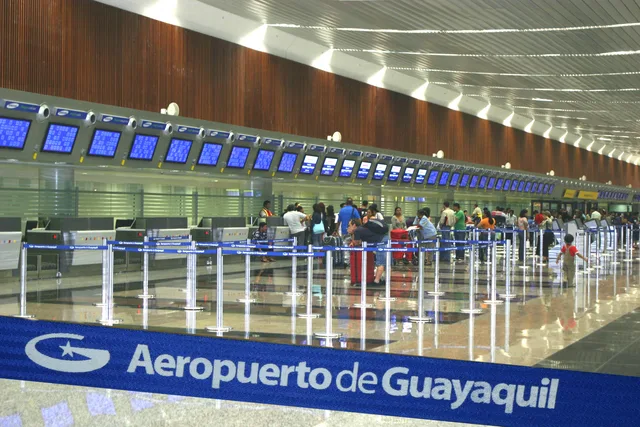
Dall'aeroporto al centro
- Public bus route from Mariscal Sucre International Airport to city terminals
- 2,45 $
Biglietti per i trasporti
- Single ticket
- 0,35 $
Passo dopo passo all’arrivo
- 01Withdraw cash from an airport terminal ATM to pay for immediate transit and small purchases.
- 02Purchase a prepaid mobile SIM card at an official provider counter.
- 03Buy bottled drinking water before leaving the airport terminal.
- 04Board the public airport bus route heading into the city terminal.
4 fonti · Al 3 novembre 2026
Fonte: TravelHub · El Telégrafo - Alza del pasaje en Quito: estas son las nuevas tarifas y las reacciones que deja la decisión · Welcome to Ecuador | Claro personas · Cost of Living in Ecuador (2026): Budgets for Every Lifestyle
Visto e aspetti pratici
Scegli un passaporto
Imposta il tuo passaporto: i tempi di elaborazione, le tariffe e i documenti variano a seconda del passaporto.
Da sapere
- Driving without a valid driver's license or exceeding the speed limit by excessive margins leads directly to mandatory detention in jail.
- Smoking is legally banned inside all enclosed public spaces and indoor dining premises.
- Entering Ecuador requires a passport that remains valid for at least six months past the intended travel window, along with proof of onward or return transport.
1 regola in più
- Cuban citizens must obtain an official invitation letter validated by the Ministry of Foreign Affairs prior to port or border entry.
Informazioni utili
- Carte
- Contanti
mostra altro
Physical cash is necessary for local markets, standard intercity and urban buses, and neighborhood dining.
- Mance
mostra altro
Tipping outside formal establishments is discretionary.
- Scheda SIM
- eSIM
- Wi-Fi
Domande frequenti
What currency is used in Ecuador?
Ecuador uses the US dollar as its official legal tender. The country transitioned to the currency following high inflation with its previous money. Day-to-day transactions throughout mainland cities and the islands are handled in this currency.
Fonte: Wikidata · WikipediaIs the tap water safe to drink?
Tap water is not safe to drink across the country. Residents and visitors rely on bottled or boiled water. Bottled water is widely available in stores and restaurants in both carbonated and still forms.
Fonte: WikivoyageWhat are the rules regarding tourist entry and visas?
Entry regulations and visa prerequisites differ depending on nationality, with some passports requiring pre-arranged entry documentation or invitation letters. Passports must remain valid for at least half a year beyond arrival, and travelers must hold proof of onward transportation. Consult the official visa section to verify exact legal entry terms.
Fonte: WikivoyageHow does intercity public transit operate?
Intercity buses run extensively across the country from central transit terminals known as terminales terrestres. Tickets can be bought directly at terminal ticket counters without advance booking outside major holiday periods. Executive bus classes offer dedicated seating and added comfort relative to standard routes.
Fonte: WikivoyageWhat basic personal safety precautions should visitors take?
Petty theft and pickpocketing can occur in dense locations, including bus stations and public transit lines like the Quito trolley system. Travel near the northern border with Colombia should be avoided. Hiking trails should be explored with groups rather than alone.
Fonte: WikivoyageWhat local dishes are customary for regular dining?
Coastal cuisine features cold seafood dishes like ceviche alongside hearty fish soups such as encebollado. Highland dining frequently includes potato preparations like locro de papa as well as roasted dishes. Neighborhood eateries standardly offer an almuerzo set featuring soup, a meat plate, and a drink.
Fonte: Wikivoyage9 fonti
Fonte: Wikidata · Wikipedia · Wikivoyage · Wikivoyage · Cost of Living in Ecuador 2026: Budgets & Visa Requirements · Cost of Living in Ecuador 2026 | Ecuador Living Costs - Wise · Cost of Living in Ecuador (2026): Budgets for Every Lifestyle · Welcome to Ecuador | Claro personas · Wikivoyage
Sicurezza e salute
Persone che sono state qui

...the airport was left far behind. In the shuttle, I meet two Cubans (or rather, they meet me...) ah, Cubans... more on that later..;) In broken English, they ask where I'm from, I say Belarus.. Belarus? Never heard of it.. The rest of the way they talk among themselves in Spanish, and one by one, first the driver and then other passengers on the "shuttle" join in.. soon the whole shuttle bus knows each other by name, everyone is laughing merrily, making jokes (judging by the glances, in my direction..) oh yes, in Spanish, of course! By the way, I came to the USA with a firm intention to improve my English, but instead, it seems I'll have to learn Spanish.. In Miami, 90% speak Spanish, it's all Latinos: Cuba (this is apparently that 90%=)), Honduras, Nicaragua, Dominican Republic, Mexico, Ecuador, Colombia, Portugal, Jamaica... but the Cubans! There are tons of Cubans! A wide selection, a rich assortment.. =) In short, you could say I wasn't in America, I was in Cuba=)) ...meanwhile, our little bus reaches Miami Beach, new acquaintances gradually get off, saying goodbye to those remaining in the "shuttle" as if they had known them their whole lives or had been best friends for an eternity! Extremely friendly people!! Here is my hostel, I pay the driver, get a few invitations to visit from the passengers as I leave, turn on my default "smile and wave" (it's amazing, but it works!! An extremely useful thing) and tired but happy, I trudge to the reception.. ..reception: hello, I would like.. no, I don't speak Spanish.. yes, my friend booked a spot for me in room #11.. no, I don't have luggage, it was lost.. I get a magnetic card, and here I am in the room... Nadya (that's my friend's name) is at work.. in the room, judging by the occupied beds, there is one more person besides us.. the setting doesn't match the $27 paid: two bunk beds, a small refrigerator without a leg, one closet for three, a shower.. air conditioner right above the bed, impossible without it, but with it - it blows.. just as I'm about to take a shower, the door opens and.. - here it is, the wonderful moment of reunion!! Nadya was let off early! We rejoice, exchange impressions.. I tell her about the lost luggage, we need to go shopping immediately.. Here we are at the store. By the way, stores in Miami Beach are divided into two types: very expensive branded ones and, no less expensive, souvenir ones, where you can buy wonderful panties with no less wonderful inscriptions ("FBI - fabulous booty inside" - the most decent of what was there), as well as t-shirts-bikes-caps-towels-shorts with screaming, no, YELLING declarations of love for Miami itself and for each of its parts individually! I love Miami! I love South Beach! I love Miami Beach! I buy shorts.. next, I need shoes.. AirFrance is paying! We go into the first shop.. And here we meet for the first time... a guy trying on stilettos.. he is keenly interested if they have the same ones, but in black.. he also likes the red ones very much, but he is more comfortable in black, it's not (!) as provocative.. yeah.. we go into a couple more shops, quickly buy everything necessary - and back to the hostel, I am terribly exhausted, the night at the airport and the time difference are taking their toll.. tomorrow we have a day off, the owner (from the restaurant) promised to take us around the shops


Paramount… ...This is perhaps one of the most interesting pages of our big adventure (for us personally!!) since this is exactly where we spent most of our summer! Everything started when we got a flat tire in the middle of a deserted Mexican neighborhood crawling with shady characters... as fate would have it, a Mexican guy named Rico helped us out and found us a place to stay for just 400 bucks a month for 5 people!!! in a family of Mexican COMMUNISTS!! Viva Che Guevara! But I'll tell you more about that later, as I want to briefly describe the neighborhood and what it's like! It's a small neighborhood in the south of Los Angeles, densely populated by Mexicans. You will never meet tourists here; they simply don't make it to such areas. Besides Paramount, this includes Downey, Norwalk, and the ever-present Compton (where only African Americans live). The latter is known as the most dangerous neighborhood in LA and for its famous natives, such as Dr. Dre, The Game, WC, and Beanie Man. There was a myth that Snoop Dogg was also from there, but as it turned out, he grew up in Long Beach. So, it felt more like the plot of GTA San Andreas than the real world! All neighborhoods are strictly divided by their gangs: African American, Mexican, and Latin (not to be confused with Mexicans... since these are from Latin America: Ecuador, Venezuela, Argentina, etc.). One gang replaces another as you move along (everyone is terribly tattooed with their gang symbols, right up to their faces, not to mention their whole bodies). So, the whole meaning of their short lives (since few live past 30, the average age of LA gangs is 18-20, or even younger!) they see in destroying members of other gangs! Watch the video about one of these shootouts in Compton in my gallery or via the link http://www.youtube.com/watch?v=-SNBUe52zYc&feature=related We learned all this from a Mexican named Edgar (he says that 10 of his 15 friends are in prison, 3 have been killed, and 2 are wanted!), with whom we lived all summer. He himself avoided such a fate because his father is a very strict COMMUNIST!! So... neighborhoods like Paramount are like villages in Russia. No, of course, there are hypermarkets (Bestway, Super-A-Food), like everywhere in America, there are huge shopping centers (Downey Landing, Lakewood Centre), but it's a village. The ocean is an hour away by bus, although if you take the subway, you can significantly shorten the path. Finding work there is also quite problematic, unless, of course, you speak Spanish. If you do, then good luck to you))) There are very few people on the streets; in the evening, you won't meet anyone at all. Police patrols usually monitor such places, and if they see some crazy tourists wandering the streets late at night, they will definitely offer to drive them to their destination, as it is not safe. Personally, we encountered this situation very often. In Compton, it's better not to appear at all. We often had cases where black guys would harass our acquaintances, and they will definitely stare at you. It's better to get used to it right away. Such guys will try in every way to provoke you and pick a fight over something. Paramount is also a fairly dangerous neighborhood. We had an incident where some guys went at 11 p.m. for gum at the nearest store at a gas station, and their bike was taken away. They just walked up with a gun and took it. To their luck or not, the police were nearby, and one of the criminals was caught; they took statements from our guys. But the matter didn't go further than that; we were politely suggested to drop the case if we didn't want problems in the future. Of course, it wasn't hard to find us; we were the only Russians in this Mexican quarter!!! And in the neighboring district of Norwalk, we met some guys who were returning home from work on bicycles and got caught in a shootout; one of them got a stray bullet in his collarbone!! So, the conclusion is quite simple: LA is far from what we see

Città di Ecuador
Luoghi a Ecuador
Paesi vicini
Domande frequenti su Ecuador
Non trovi il posto che cerchi? La funzione di ricerca comprende qualsiasi lingua. Apri ricerca