 ≈ 30 p utazásraEstadio Monumental Antonio Vespucio Liberti
- Távolság
- 9,9 km
 TravelHub
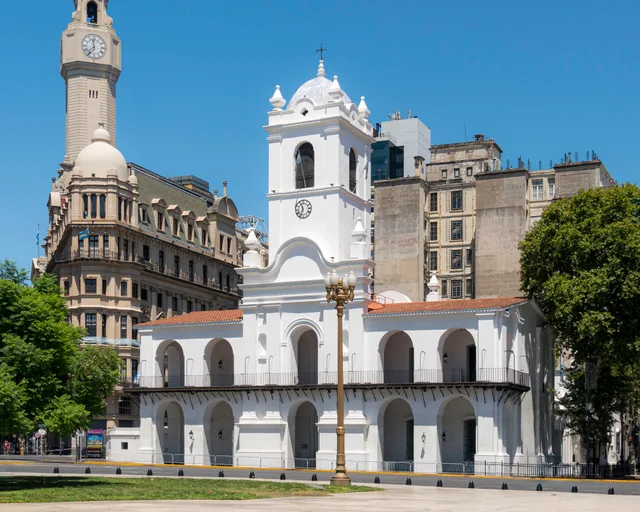
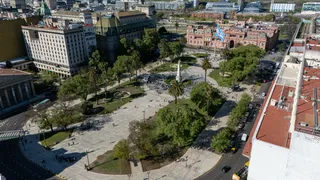
Residents crossing Plaza de Mayo learn to route their daily commutes around political gatherings outside the Cabildo, trading quiet transit through the colonial arches for the regular pulse of city protests.
Mayor Manuel de Frías initiated the original project on Plaza de Mayo to house the municipal council and the city prison. Port taxes financed the humble masonry structure, which builder Juan Méndez constructed alongside specialist roof weavers. Inadequate maintenance caused the initial walls to deteriorate and collapse, forcing administrators to convene in the governor residence until funds permitted a durable replacement.
Jesuit architects Giovanni Battista Primoli and Andrea Bianchi designed the lasting replacement, with Bianchi creating the signature arcaded facade. Later renovations led by architect Pedro Benoit stripped away colonial roof tiles, installed balustrades, and added a Nordic-style dome over an elevated central tower to impose an Italian aesthetic, transforming the municipal seat into regional civil court chambers.
Urban modernization truncated the structure during major avenue projects. Workers dismantled arches on the northern flank to cut Avenida de Mayo, while engineers removed Benoit's heavy tower to preserve structural stability. Subsequent road construction along Julio A. Roca street shaved off the southern arches despite public protest, leaving the historic monument with a compressed profile facing the civic plaza.
Nem találja a keresett helyet? A kereső bármilyen nyelvet megért. Keresés megnyitása