
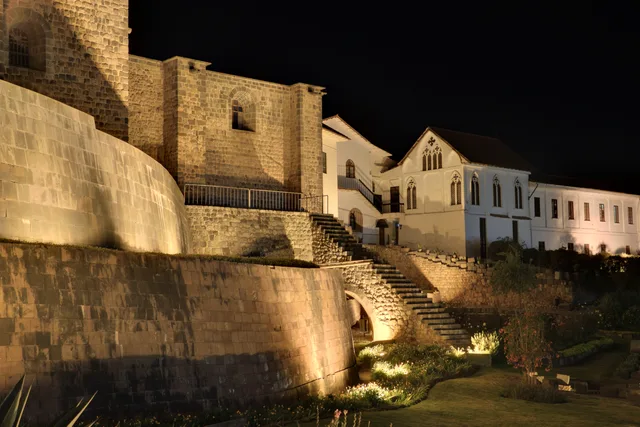
 CuscoCoricancha

Vive
Perú: Guía de viajes, visados y alojamiento gratuito · 2026
Residents inspect paper bills against the daylight at every checkout counter, and commuters learn to shout their stops aloud to disembark from moving combis.
Ahora en la ciudadPerú
EntradaElige un pasaporte
Lugares en el mapa100Tipo de cambio3,46 PENa fecha de 2 nov 2026
Idioma localSpanish
Lo más destacado del país
CuscoCoricancha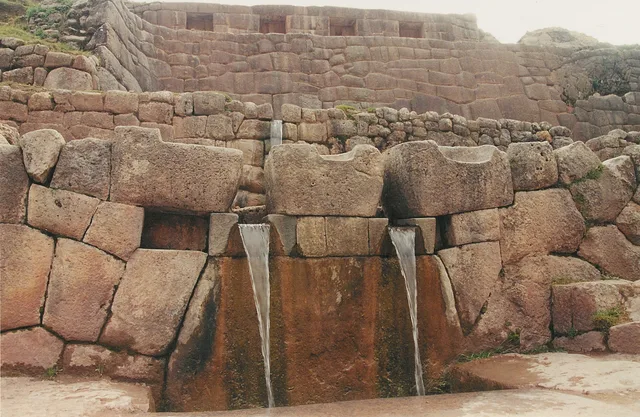 CuscoTambomachay
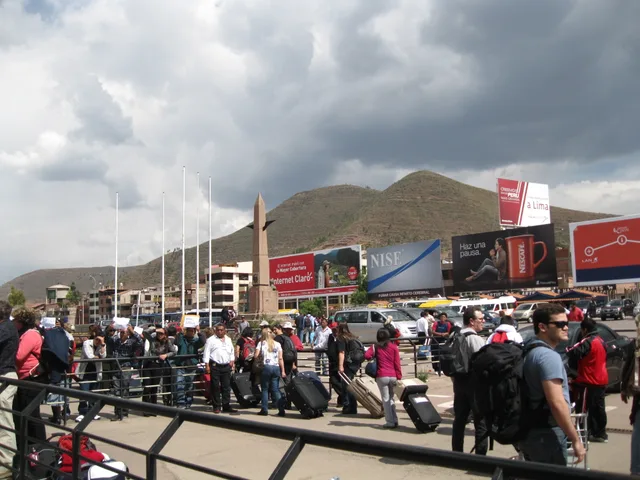 CuscoAeropuerto Internacional Alejandro Velasco Astete
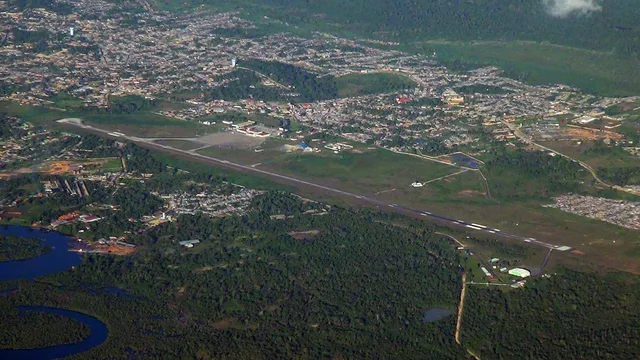 IquitosAeropuerto Internacional Coronel FAP Francisco Secada Vignetta
 PucallpaAeropuerto Internacional Capitán FAP David Abensur Rengifo
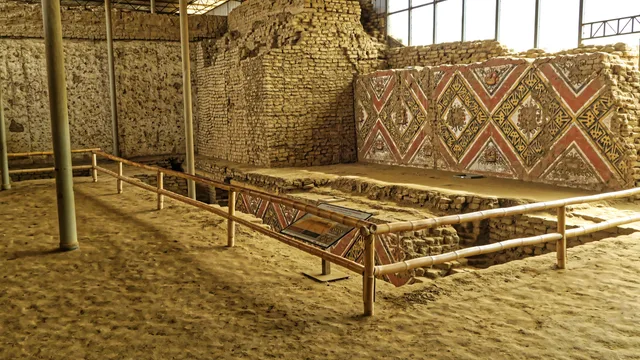 TrujilloHuaca de la Luna
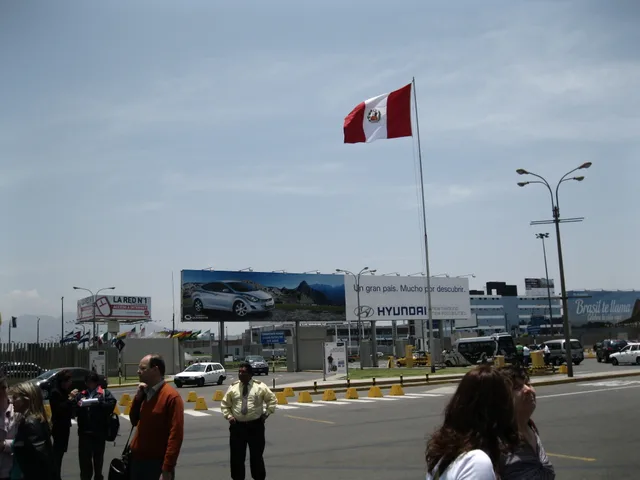 CallaoAeropuerto Internacional Jorge Chávez
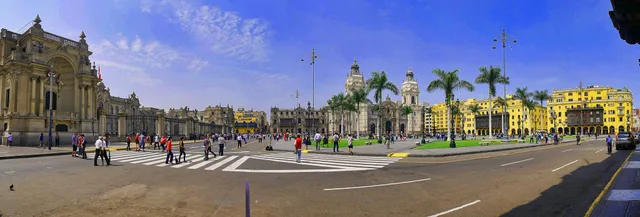 LimaPlaza Mayor de Lima
Sobre el lugar
Coastal desert plains, glaciated Andean crests, and dense Amazonian lowlands divide the country into distinct ecological zones.
The national territory spans arid Pacific coastline, high Andean ridges, and equatorial rainforest. Lima concentrates administrative and financial life, but overland travel across the interior remains slow due to rugged topography. Moving between the coast and the mountain basins often requires domestic flights. Major jungle settlements like Iquitos lack road connections entirely and depend exclusively on riverboats or aviation.
Seguir leyendo
Long before the Inca established their administrative capital at Cusco, coastal civilizations including the Moche and Chimu constructed monumental irrigation networks and walled adobe cities such as Chan Chan. Highland polities like the Wari introduced regional urban planning. Spanish rule layered Baroque architecture and religious art over these indigenous traditions, producing the syncretic painting of the Cusco School.
Daily commerce operates heavily through cash transactions and widespread informal employment. Urban commuters rely on informal combis and unmetered taxis, where passengers must agree on fares before boarding. Routine purchases require inspecting paper banknotes for counterfeits at the counter. Food habits follow regional crops: potatoes dominate the highlands, rice anchors coastal dining, and chifas provide standard lunch menus.
Asociaciones
- Machu Picchu
- Ceviche
- Counterfeit currency
- Combis
- Chifas
Datos
- Lima concentrates the primary international flight connections and ranks as the largest urban center.
- The Yanacocha deposit in Cajamarca operates as a major gold extraction site.
- The Amazonian city of Iquitos lacks overland highway connections, depending on watercraft and aviation.
- Chan Chan was constructed by the Chimu civilization as their coastal administrative capital.
Fuente: Wikipedia · Wikivoyage
Perú en imágenes19 fotos
Visado y aspectos prácticos
Elegir un pasaporte
Establece tu pasaporte: el tiempo de procesamiento, la tarifa y los documentos varían según el pasaporte.
Cosas importantes
- Tarjetas
ver más
Foreign cards encounter restrictions on domestic flight booking portals.
- Efectivo
ver más
Verify metal change to prevent substitution of local currency with invalid foreign coins. Keep cash concealed under clothing.
- Propinas
ver más
Agree on the fare before entering the vehicle.
Preguntas frecuentes
How do city taxi fares work in Peru?
Cabs operate without automated fare counters. Drivers negotiate prices directly with riders before departure. Tipping remains uncommon in local transit. Formal vehicles display registered municipal decals, while informal automobiles pose security hazards.
Fuente: WikivoyageHow can visitors identify the tourist police in Peru?
Officers in the tourist division wear white shirts instead of standard green uniforms. Personnel in this branch speak English and assist international travelers with official procedures. Standard municipal officers communicate almost exclusively in Spanish.
Fuente: WikivoyageWhat precautions are necessary when handling cash in Peru?
Counterfeit paper currency circulates widely, prompting merchants to examine banknotes closely during transactions. Visitors must inspect bills for genuine watermarks and color-shifting security features upon receiving change. Dividing funds across separate pockets reduces losses from opportunistic theft.
Fuente: WikivoyageWhat ingredients define traditional Peruvian ceviche?
Traditional ceviche consists of raw ocean fish cured in fresh citrus juice. Cooks season the seafood with sliced onions and chili peppers before plating it with Andean corn or sweet potatoes. Diners should patronize established restaurants rather than street carts to ensure proper refrigeration.
Fuente: WikivoyageHow do travelers reach the jungle city of Iquitos?
No road network connects Iquitos to the rest of the country through the surrounding rainforest. Travelers reach the settlement exclusively via scheduled commercial flights or riverboats. Air transit remains the standard option for reaching remote Amazonian outposts.
Fuente: WikivoyageWhat traditional non-alcoholic drinks are common in Peru?
Chicha morada is a sweet beverage brewed from purple maize, fruit peels, and warming spices. Coca tea provides a widespread hot infusion prepared by steeping raw Andean leaves. Street kiosks also serve emoliente, a warm herbal blend based on toasted barley.
Fuente: Wikivoyage3 fuentes
Fuente: Wikivoyage · Wikivoyage · Wikivoyage
Seguridad y salud
Seguridad · consejos oficialesnuestros datos al 3 nov 2026
Obtaining copies of police reports requires presenting proof of payment completed at Banco de la Nación during business days.
Commercial transactions involving narcotics are illegal, even though personal possession of limited quantities remains decriminalized.
Municipal Serenazgo officers handle local patrol duties without specialized tourist assistance services.
Fuente: UK FCDO Foreign Travel Advice · US Department of State Travel Advisory · Wikivoyage
Personas que han estado aquí
My trip to the USA this summer wouldn't have been this cool without all the people I met during this time. To start with, the American mentality is strikingly different from ours. Anyone visiting this country for the first time will notice this. Just arriving at the New York airport, you start to notice how smiley (positive thinking), responsive (ready to help), neat, and cautious the residents are (saying "sorry" at any accidental touch, even if they just walked by and didn't touch you at all). This time I was very lucky with my workplace; you can get there from New York in half an hour from Grand Central station. While I was on my way, I suddenly realized that because of all the early exams, the hustle, and the packing before the trip, I didn't have any information other than the location of the workplace itself. I didn't know how many students would be there, who they were, or where they were from. Later it turned out that all the guys had found each other in advance and created a group chat that I wasn't in, so no one knew about me, and I was a real surprise for everyone. I also had a dilemma in my thoughts: was it right that my friend and I decided to go to different places again for the sake of practicing English, or would it have been more fun together? I also thought that I might be the first J-1 to arrive at work this season, since it was May 29th... On the first day, when I just arrived at our Country club, there was already an event taking place. In the main building, I found my boss, and she said she would send another J-1 to take me to our housing. I was burning with curiosity: who would it be?! And then a long-haired brunette came out and asked me in English where I was from. How much happiness was in her eyes after my answer. She asked again, "Russian?!!!" and hugged me tightly. No one had ever met me so joyfully before. On the way to our house, she managed to tell me a lot, that there were already four of them here: her and her friend, as well as two Slovaks. She said they had arrived a couple of days ago and for now, her friend was living with her in our four-person girls' room, but he would move to another one tomorrow. And so we lived the three of us in that room for a whole month until two Italian girls arrived, and our macho had to move out. Yes, we were just five of us there for a whole month. In the evenings, we went to our beach to watch movies or just sit on the internet, and not because we loved the beach (it was, of course, beautiful, but by evening it was overflowing with biting midges), but because that was the only place we had WiFi. And at night, returning late to the room, we would start conversations about life. Oh yes, perhaps one of my favorite activities this summer was philosophical conversations. We often talked about the differences between American and Russian cultures, and over time, when guys from other countries arrived, we shared our observations about their culture, and sometimes we argued. By the middle of the summer, all the hired J-1 students had arrived, and there were 13 of us. Of course, not everyone was able to become friends with each other or just find a common language, but everyone was able to gain valuable experience communicating with a native of another culture. We were also very lucky with some of our colleagues. For example, we had our cheerful Peruvian Raul, who shared something useful with us at every opportunity (for example, he gave us a refrigerator) and was always ready to take us to the store whenever we asked him. And also, the American James, who was in charge of the yachts in our club's harbor, won universal love. To say he was kind to us is an understatement. When we first met him, we found support in his eyes. He was like a kind American uncle whom we all came to visit. Once he took us to his favorite seafood restaurant, which, by the way, was in another city, so he had to drive there three nights in a row so that we could all visit it, talk to him, get t


 +4
¿No encuentras el lugar que necesitas? La búsqueda entiende cualquier idioma. Abrir búsqueda