
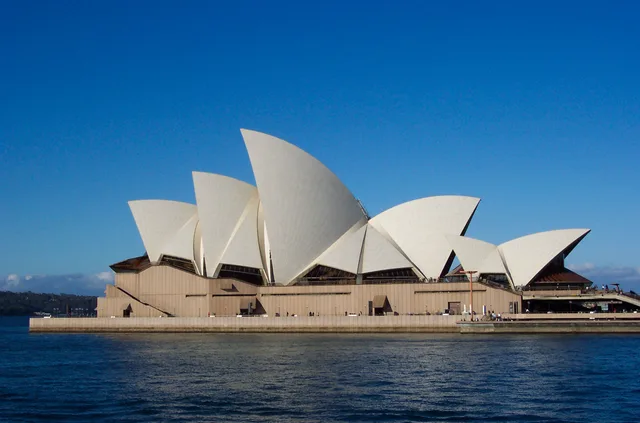
 SydneySydney Opera House

Relocate
Australia: Travel guide, visas and free housing · 2026
A newcomer can balance basic expenses near A$3,000 a month by sharing a suburban flat, but travelling past the coastal perimeter demands domestic flights because interstate driving swallows days behind the wheel.
Highlights of the country
SydneySydney Opera House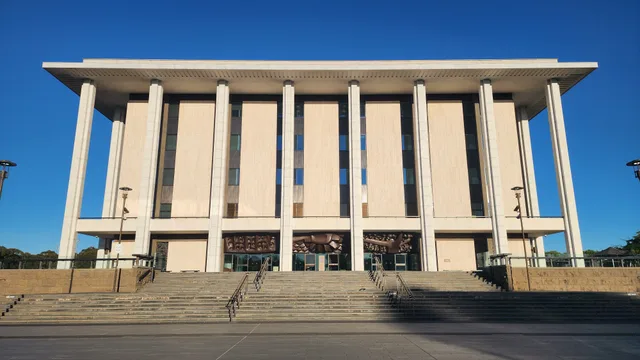 CanberraNational Library of Australia
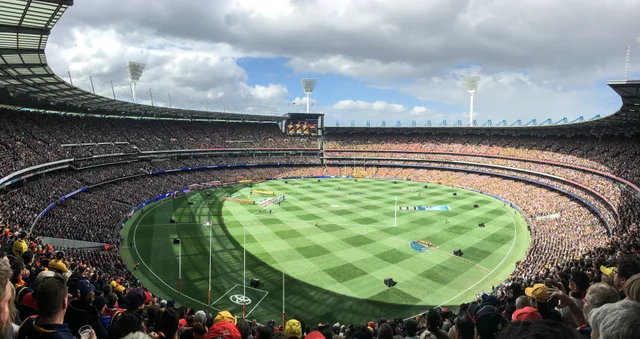 MelbourneMelbourne Cricket Ground
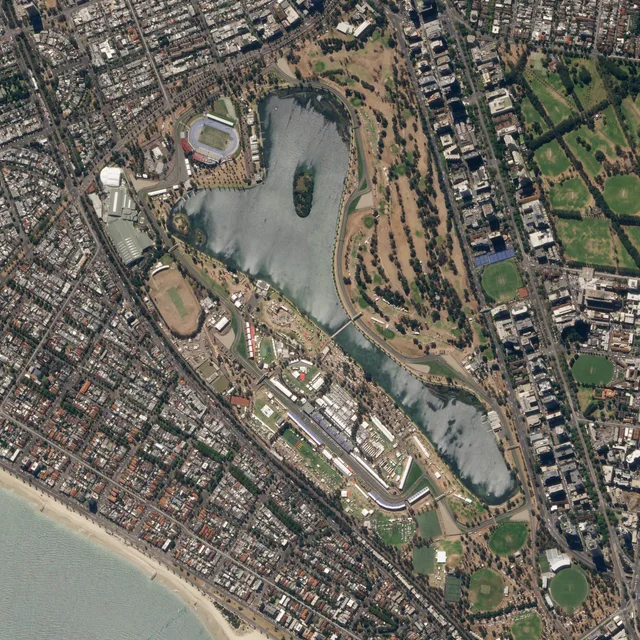 MelbourneAlbert Park Circuit
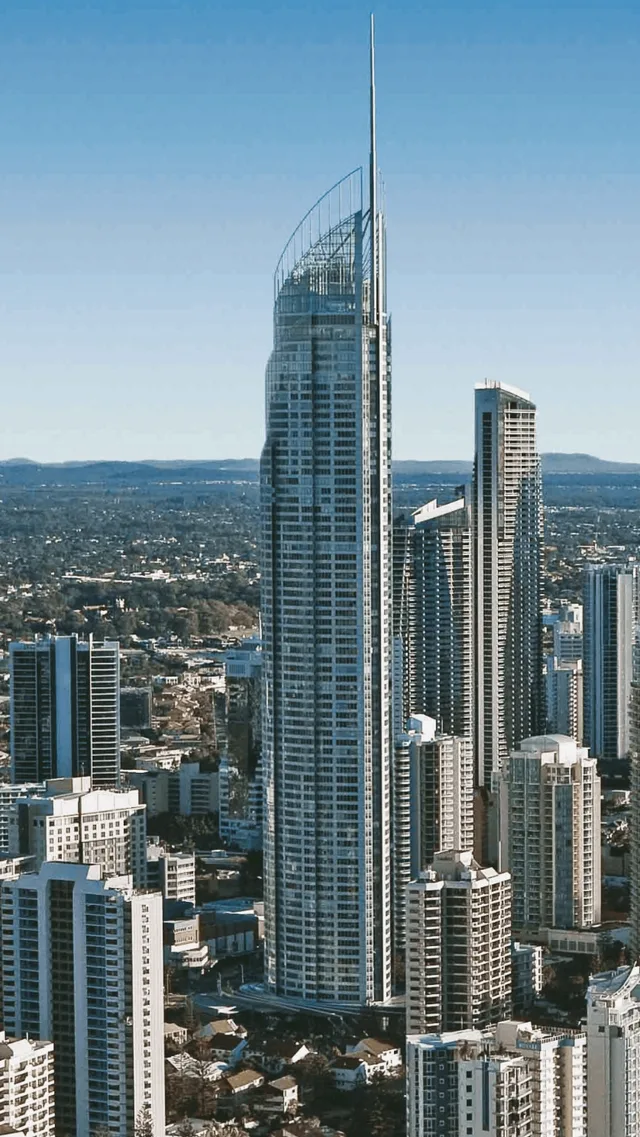 Gold CoastQ1 Tower
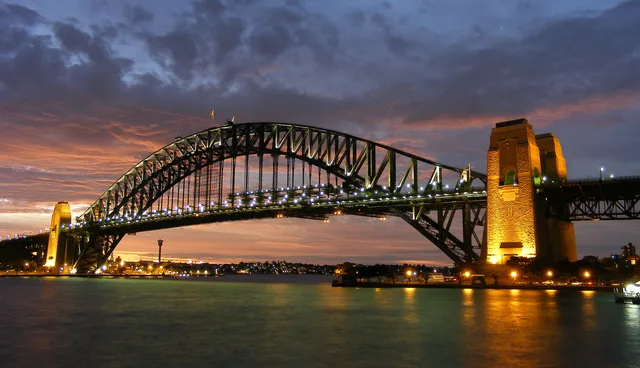 SydneySydney Harbour Bridge
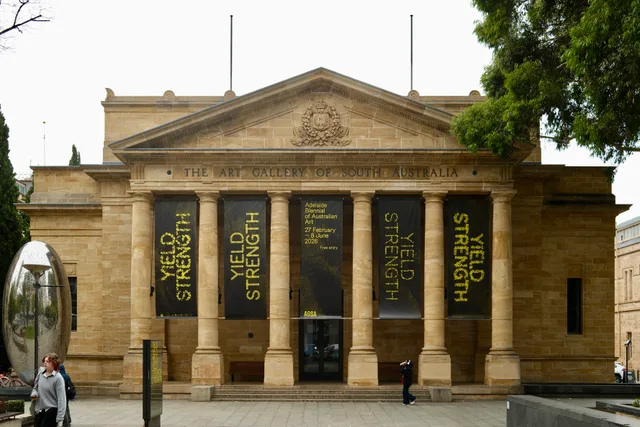 AdelaideArt Gallery of South Australia
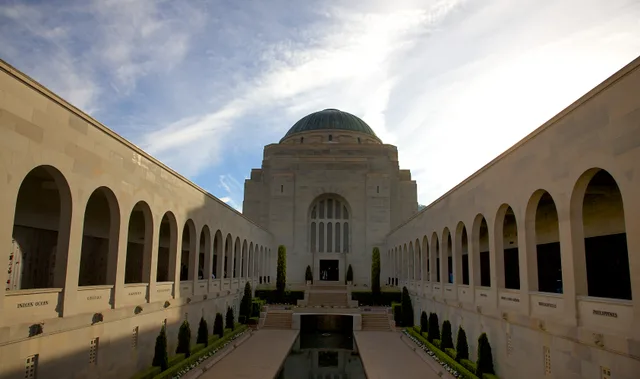 CanberraAustralian War Memorial
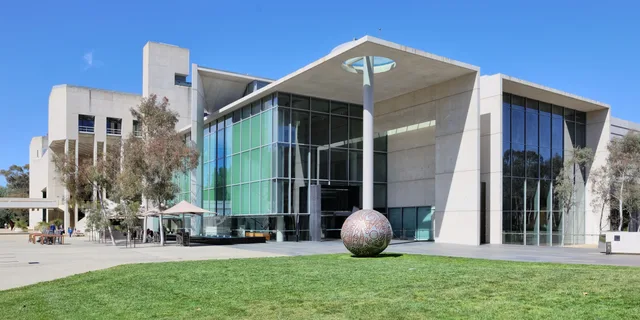 CanberraNational Gallery of Australia
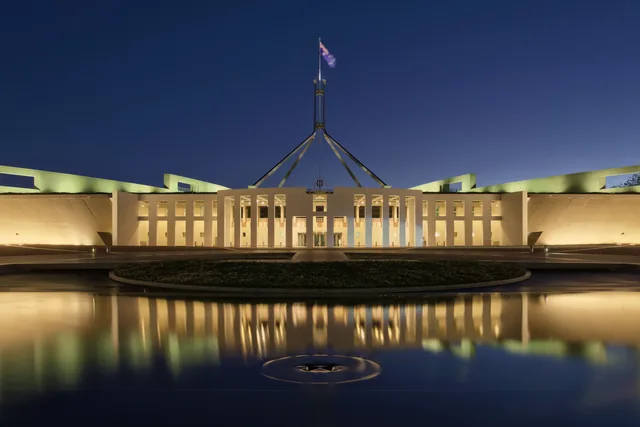 CanberraParliament House
 BrisbaneLang Park
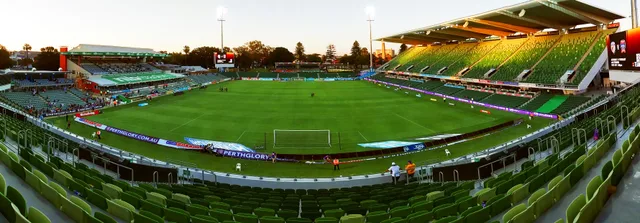 PerthPerth Rectangular Stadium
- Coffee at the counter
- $6
- Lunch at a canteen
- $25
- Dinner out
- $60
- Room per month
- ≈ $700
- SIM card
- $25
Sources: 3 · As of September 5, 2026
Source: Cost of Living in Australia 2026 | Australia Living Costs - Wise · Cost of Living in Australia 2026: Complete Price Guide · SIM Cards in Australia: Plans (2026) | SIM Guide Travel
About the place
Vast distances dictate everyday routines across the continent.
Settlement hugs the coastline while interior deserts dominate the landmass of the driest inhabited continent. Public transit functions smoothly across Sydney, Melbourne, and Perth, but departing these metropolitan rail networks makes car ownership indispensable. Moving between states entails agricultural quarantine checkpoints where border inspectors confiscate fresh produce and honey to shield regional crops.
Read on
High urban rents push long-term arrivals into shared houses, where communal living protects budgets from steep metropolitan leasing markets. Everyday food spending drops when residents bypass dining out and cook domestic staples at home. Neighborhood cafes finish service by mid-afternoon, while suburban parks feature communal electric barbecues where residents grill butcher cuts and steaks outdoors without charge.
Workplaces prioritize informal communication and egalitarian cooperation under the cultural expectation of equal opportunity. Outside urban perimeters, rural driving demands caution against dusk wildlife collisions and strictly enforced road speed regulations. Mobile phone reception drops entirely across remote interior highways, requiring long-distance motorists to carry emergency water, engine spare parts, and fuel.
Associations
- Communal park barbecues
- Interstate biosecurity
- Remote road travel
- Suburban share housing
- Cafe operating hours
Facts
- Vehicular traffic operates on the left side of the carriageway nationwide.
- Domestic agricultural quarantine checkpoints restrict carrying fruit and honey across state borders.
- Local public parks provide communal electric barbecue hotplates free of charge.
- The Australian dollar functions as the legal tender of the Commonwealth.
Source: Wikivoyage · Wikipedia
Money
Price examples
- Coffee
- $6
- Lunch at a canteen
- $25
- Dinner at a café
- $60
- Single transit ticket
- $5.70
- Room, per month
- $700
- SIM card
- $25
IEC ID points
Up to 50% of exchange programmes, internships and other IEC services can be paid with points.
+300+100
Points programme rules4 sources · As of September 5, 2026
Source: Cost of Living in Australia 2026 | Australia Living Costs - Wise · Public transport fares from 1 January 2026 - Transport Victoria · Cost of Living in Australia 2026: Complete Price Guide · SIM Cards in Australia: Plans (2026) | SIM Guide Travel
Getting there and staying
Transit tickets
- Single ticket
- $5.70
- Monthly pass
- $50
Step by step on arrival
- 01Purchase a prepaid SIM card at an airport terminal counter.
- 02Withdraw Australian dollars from an arrivals ATM.
- 03Purchase a public transit ticket to travel toward your accommodation.
3 sources · As of November 3, 2026
Source: TravelHub · SIM Cards in Australia: Plans (2026) | SIM Guide Travel · Public transport fares from 1 January 2026 - Transport Victoria
Visa and practicalities
Choose a passport
Set your passport — processing time, fee and documents differ between passports.
Internships, au pair and study programmes have a different visa category and a different set of documents. Applications go through CMO International Programmes.
IEC international programmesGood to know
- Transporting fruit, vegetables, and honey across state lines or into agricultural quarantine zones is prohibited.
- Vehicles drive on the left side of the roadway.
- Posted driving speed limits are rigorously enforced, and exceeding them triggers immediate monetary fines.
2 more rules
- Mobile network reception drops entirely away from major highways and towns, requiring remote travelers to carry survival gear.
- Violating the terms of an entry visa through unpermitted work or study leads to visa revocation and deportation.
Frequently asked
Do travelers need a visa before arriving in Australia?
Entry regulations require foreign travelers to obtain a visa or electronic travel authority in advance, with special provisions applying only to citizens of New Zealand. For detailed eligibility criteria, authorized lengths of stay, and specific permit categories, consult the visa section. Tourist entry permits do not grant work rights, and working holiday or employment arrangements require distinct visa streams.
Source: WikivoyageWhich side of the road do vehicles drive on in Australia?
Vehicles drive on the left side of the road across all Australian states and territories. Overseas visitors accustomed to driving on the right must exercise extra caution on quiet rural routes. Speed limits are strictly monitored across the country, and drivers must hold a valid overseas permit accompanied by an International Driving Permit if the original licence is not printed in English.
Source: WikivoyageCan fresh food and produce be carried between Australian states?
Quarantine regulations restrict the movement of fresh fruit, vegetables, and honey across state borders and between regional agricultural zones. Domestic flights and highway checkpoints enforce these rules to protect crops and natural ecosystems from pests. Travelers embarking on interstate drives should consume or dispose of produce before crossing state lines.
Source: WikivoyageIs mobile phone signal reliable when travelling through rural Australia?
Mobile coverage is concentrated in metropolitan areas and towns, disappearing entirely along unpaved tracks and vast stretches of inland highways. Telstra maintains the widest regional network coverage, whereas other major providers primarily serve urban corridors. Travelers heading away from populated settlements must prepare backup emergency supplies and verify local road conditions before departure.
Source: Wikivoyage · SIM Cards in Australia: Plans (2026) | SIM Guide TravelAre public barbecue facilities open for visitors in Australia?
Public parks, coastal reserves, and recreation areas across Australia provide communal barbecue hotplates for public use. Grilling outdoors is a widespread cultural pastime, with locals preparing beef steaks, sausages, and poultry rather than prawns. These community cooking facilities are accessible without booking and require visitors to clean the hotplate after use.
Source: WikivoyageWhere can visitors find native meats like kangaroo in Australia?
Native game such as kangaroo is rarely featured on everyday residential dinner tables, though packaged cuts are sold in standard supermarkets and butcher shops. Restaurants located in major visitor areas occasionally serve kangaroo dishes and farm-sourced crocodile meat. Traditional Indigenous game remains protected and is restricted to designated community harvesting.
Source: WikivoyageHow do commuters pay for public transport in major Australian cities?
Public transit networks in large metropolitan regions rely on smartcards, contactless bank cards, and digital phone wallets. Commuters tap their payment card or transit card upon boarding and tap off at the conclusion of each trip. While rail, tram, and bus connections serve central urban hubs, private vehicles remain essential for accessing regional and remote destinations.
Source: Wikivoyage · Fares | transportnsw.infoWhat driving hazards should motorists anticipate on rural Australian roads?
Collisions with native wildlife represent a substantial danger on rural highways, particularly around twilight and after dark. Long-distance routes also feature heavy freight trucks and unpaved sections that require deliberate overtaking maneuvers. Motorists travelling through remote regions must carry reserve fuel, extra water, and essential spares due to intense heat and absent mobile signal.
Source: WikivoyageHow do beer choices and pub culture vary across Australia?
Beer preferences follow distinct regional loyalties, with different domestic breweries dominating tap selections in each state. Draft glassware terminology also differs across state borders, where identical volumes carry entirely separate local names. Microbreweries and independent craft ales are widely available alongside mainstream draught beers in neighborhood taverns.
Source: Wikivoyage2 sources
Source: Wikivoyage · Wikivoyage
Safety and health
Safety · official adviceour data as of Nov 3, 2026
Operating a motor vehicle under the influence of drugs or alcohol is illegal, with police administering random breath tests.
Source: UK FCDO Foreign Travel Advice · US Department of State Travel Advisory · Wikivoyage
Getting here
Getting here
Public transport$5.70
People who have been here
Are you a student or recent graduate dreaming of Australia ? Make it real with our Hospitality Internship Program! ✅Work paid internships in world-class hotels like Accor, Hilton, and Marriott, with full support every step of the way-placement, insurance, and visa processing included. 💻Build professional skills, make international friends, gain independence and then enjoy travel across Australia . 🚀 The time has come for your professional growth! Hospitality Internship: internship in Australia | Agency IEC

April 29, 2014. Around 11 a.m. Astana. American Consulate. The dialogue between Kazakhs and Americans continues. They seem to be getting along well. All the students are coming out happy. But how will I get out of here...? An interesting question... A few minutes ago, I was afraid of mishearing a question and giving a wrong answer due to my hearing impairment, and now I am worried about the lie I told just a few seconds ago. According to the third rule of passing a visa interview that was drilled into our heads: "You must never lie to the consul." But I had to break this rule. I hope the consul doesn't notice... The guy interviewing me also wears glasses, just like me. "Maybe he'll let a fellow glasses-wearer pass without failing him," I thought. Then I thought that one day I might be in such a position myself. I have always liked the diplomatic service. To do that, first of all, I had to learn the language. With this goal in mind, without finishing school, right after the 9th grade, I went to college to start learning English from scratch. My decision was like a bolt from the blue for many people. Most of them, who expected me to become a history teacher, first took it as a joke, and then couldn't understand my choice. "A kid who doesn't know a thing about English wants to become an English teacher? How ridiculous. He'll be back in a month or two, unable to study..." — that's what many people thought about me back then. Only I knew the secret behind this. After 7 years, I am revealing to you a secret that no one knew until now. "If I can, I'll be a diplomat; if not, I'll be a teacher or a translator. In any case, a person who knows a language won't be lost!" — with this goal, I chose English and became convinced of the correctness of this path. Another thing that increased my interest in diplomacy and politics was Kassym-Jomart Tokayev's work titled "Belasu". In 2011, while working as a mentor in a children's summer camp, I bought this book with my first salary. It's a very wonderful book, but it's hard to believe that he wrote it himself. Maybe he did. After all, he is the son of a famous writer. In that book, Kassym-Jomart writes that he once worked at the Soviet embassy in Singapore. He also dealt with visa issues, just like the American standing in front of me now. One day, he jokingly said something in Russian to a person who came for a visa (if I remember correctly, it must have been an Australian citizen). Apparently, he thought Tokayev was a local Singaporean, and he was shocked when he spoke Russian. Looking at the American consul behind the thick glass, I remembered this incident. "I wonder if this person will joke with me about something...? Americans are fond of jokes..." While I was thinking about all this, the interviewer managed to ask his next question. As luck would have it, this question turned out to be a continuation of the one I had lied about just a few seconds ago: - Can you cook «Beshbarmak»? - Yes, of course! – I didn't even notice how the answer automatically slipped out of my mouth. Oh, mon Dieu! Now what if he asks how «Beshbarmak» is made? How should I know how it's made? Something I've never cooked in my life. Okay, I'll just say they cook it by adding meat, dough, and potatoes, but what will I answer if he asks about the process? How should I know what to put first, what to put second...? This lie is enough! I can't lie to the consul anymore. This is the second time I've lied. "He's definitely going to fail me. That's it, say goodbye to your dream! – No, wait, stop! Nothing is certain yet!" — I was struggling with my own thoughts. The consul didn't even look at my face. He glanced at me as soon as I arrived, then looked once when I asked "In America?" back to him, and that was it. He asked all his questions while looking down and flipping through his papers. Sometimes he looks at the computer, sometimes at his papers. He doesn't look at me standing in front of him. Let him not look! Let him not


 +2

The coming summer is no exception. Hundreds of thousands of Russian-speaking students and graduates are already in full swing, packing their bags to head out toward new discoveries, encounters, and sensations. Among them is a student from a Russian university who won the “TSMO-2049” contest and received a free trip through the “Work and Travel 2029” program. Our office staff met with Travelina Vorkinyuk to find out some details about her personal life and her plans for the upcoming summer season. – Hi, Travelina. First of all, congratulations on your brilliant victory in the contest! You have such an unusual name. What is the story behind it? – Hello. Thank you for the congratulations! The story of my mysterious name began 20 years ago, when TSMO announced the recruitment for the next “Work and Travel 2009” season. My parents met in New York – the amazing “city that never sleeps.” Ironically, my mom and dad were planning a tour to Niagara Falls, organized by the International Exchange Center in America. That’s where their whirlwind romance began, which continues to this day. And I was born the year after their next trip. You could say I was christened in honor of this program. (laughs) – How romantic!.. So, it has become a family tradition for you? – Exactly. My parents, however, only managed to participate in the program twice. At that time, it was only available to students up to their fifth year inclusive. As for me, I have already been an international exchange student twice. This will be my third time. And I plan to make such trips at least four more times. I hope that in the near future, Luxembourg and Switzerland will join the list of countries, as I am studying German and would really like to activate the language in a natural environment. – Interesting, do your preferences align with your parents' choices? – Back when the “Work and Travel” program was just gaining momentum and there wasn't a large choice of where to go (besides the USA, there was only France), my parents didn't have to rack their brains about it. Since then, the boundaries of choice have expanded significantly. Even if you, of course, only speak English besides Russian, it is extremely difficult to decide: either Canada with super friendly people and a stable economy, or England with its rich traditions and “posh” English, or even Australia with its unusually rich flora and fauna (even if it is winter there!). And I won't even mention the students studying Spanish and French! Belgium, France, Spain… – Travelina, will you reveal the secret of your upcoming trip? – With pleasure. My destination will be New Zealand. This summer, TSMO announced an international exchange season between New Zealand and Australia. In my opinion, this is a great chance to cover the features of two cultures at once and make even more contacts. – Please tell us more, what does the international exchange season between these countries consist of? – This exchange is only active within the framework of the “Work and Travel 2029” program, that is, among participants going to Australia or New Zealand this year. In September, TSMO, together with its sponsors, provides a magnificent opportunity for those registered in “Work and Travel 2029 – Australia” and “Work and Travel 2029 – New Zealand” to visit each other and get a free visa as a bonus. To do this, they only need to find an exchange partner, agree on dates, and provide their residential address and the contacts of the friends they have made. A similar season was already held in 2028 between America and Canada. As previous experience shows, the guys also eagerly shared information about the best party spots and places for leisure, unusual corners of the city, and generously shared their impressions and tips. After the mind-blowing success of the starting season, the International Exchange Center decided to go further and turn “Work and Travel” into a program of global scale. – How do you think the life and activities of TSMO hav


Hello everyone! My name is Araylym. I am a student from Kazakhstan at Suleyman Demirel University and a future diplomat. I have been studying languages since childhood and can proudly speak about my success in mastering English, Turkish, and Korean. I started with languages because one of the important goals of my life is to travel the world, and languages are the first steps toward my dream. 20-30 years ago, traveling and working abroad was difficult, especially for students. But now it has become a relevant aspect of our lives. Various organizations and centers have become a buffer between students and other countries. And in my opinion, the leader today is the International Exchange Center. For 20 years, the International Exchange Center has been brilliantly coping with the task of implementing student exchanges. Students now have the opportunity not only to travel but also to earn money while practicing languages and exchanging culture. I have not been abroad yet, and now that I am 100% ready for such changes in my life, I want to fulfill my dream. And this competition stimulates me even more and gives a huge chance. Knowing how the Center has worked to this day, I want to make predictions about how the Center will work in 20 years. So, IEC-2029: - IEC is a global network of international exchange centers. You can find an IEC in every corner of the globe. There are already 105 IECs around the world. In Kazakhstan, there are already 7 centers: Astana, Almaty, Shymkent, Atyrau, Karaganda, Semey, and Kyzylorda. - The center provides an opportunity not only for the younger generation but also for the older generation to gain international communication and work experience. You can participate in the program if you are 18-40 years old. If you have difficulties with languages, professional specialists at the center will prepare you in a short period using accelerated methods. - All IEC program participants receive an "IEC-Visa": with one visa to the USA, you can freely cross the borders of countries participating in the IEC agreement. How far has globalization come? - The list of countries you can go to has significantly increased - UK, Australia, Canada, South America, European countries, China, Japan, India, and others. Now Kazakhstan also welcomes foreign job seekers and travelers into its warm embrace. Kazakhstan is among the 50 developed countries of the world. And it is interesting for foreigners to explore what our country represents. - IEC offers hot vacancies online. Participants choose the vacancy they like. - IEC provides each participant with a so-called "IEC with me" sensor. This sensor is made in the form of a watch. In case of questions or difficulties, the participant gives a "Domestic IEC" signal. And "Domestic IEC" instantly contacts "Host IEC" and the participant's problem is solved promptly. - IEC is now also the largest employment agency. If you are educated, perfect in language, and competent, then IEC will place you in the best international companies in any industry. - The IEC network works systematically and is constantly improving. An annual meeting of representatives of all centers is held, and the work of the centers is analyzed. - IEC is engaged in charity. 10 million dollars are allocated annually for charity. This speaks to the international prestige and good intentions of the IEC. This is our "IEC-2029". IEC does not stop at what has been achieved but goes higher and higher. Good luck and success to you, IEC!!!


Viktor, Chelyabinsk "I went on vacation at just the right time. In Chelyabinsk, it hit minus 20 degrees. I arrived in South Africa, and it was plus 30! The difference in weather was 50 degrees!" Viktor Honestly, I never thought I would have to write about this country, let alone based on my own feelings and impressions. This became possible thanks to Semyon's request. Somehow, during that period of time called spring in Russia and the entire Northern Hemisphere, in March 2008, Semyon said to me: — I'm thinking of going to South Africa! — Why? — I was amazed. — To live and work. Through an exchange program. I'll see the country, visit the Southern Hemisphere. — The flight will be long! And what about jet lag, acclimatization, tropical diseases, all those sharks and crocodiles; crime? There is no apartheid there anymore, the white man is not treated with enough respect, — I bombarded him with questions. — It's fine! — came the answer. — I read about the nature: the climate is subtropical, the summer is not too hot, I won't stay until their winter, as I'm going for half a year. By the way, their whole winter is more like the beginning of our autumn. And crime — just follow basic safety measures and everything will be okay. And white people live quite normally there, it's all just tall tales and rumors! "Okay, we'll see," I thought. And for a few months, I forgot about that conversation. Imagine my surprise when, having gone to Ukraine in July, I learned that Semyon was not just thinking about going to South Africa, but was already preparing: collecting documents, certificates, and so on. He was planning it quite seriously! He found an organization (International Exchange Centre), which, by the way, is located across the street from my house, and which carries out various programs like "Work & Travel in USA, Canada, Australia". Later, I also took a "brochure" from them about foreign internships, but I didn't read anything sensible about South Africa in the advertisement. Apparently, the country had not yet earned enough attention from our advanced youth, who prefer the "decaying" (as they said in Soviet times) West. And a thought came to my mind: "Maybe I should go too?!" I was worried by the complete lack of experience traveling abroad (CIS republics don't count. When I told friends that I had traveled abroad (!) to Uzbekistan, they chuckled: "Found a foreign country!" "But there's customs there!!!" was my strongest argument. "Doesn't matter! Uzbekistan is not abroad! Don't make people laugh!" they replied), while Semyon had managed to travel on a work visa to the United Kingdom, to the USA, and travel through seven countries of Western Europe and thirteen cities on a tourist package. Returning from Ukraine, I cautiously asked if I could go to South Africa too. It's interesting after all! — Of course! — Semyon replied readily. — I'll leave, get settled, and then I'll send you an invitation! You don't need to process many documents, you don't need to go to the embassy either. A visa, unlike America, is given easily. The main thing is to buy tickets on time: it's a different hemisphere after all, they can be expensive. And process all the documents necessary to obtain a visa, down to the last one! In August, I left for Almaty, and Semyon began to prepare closely for the trip. Honestly, I asked him that time just like that, without much hope that I would go. But while in Kazakhstan, I thought: "Why not?" I started writing letters to friends describing the upcoming difficulties and asking questions like "is it worth it or not?" One answer stuck in my memory: "Go, of course! Africa is a completely different world, everything is different there: both nature and people!" As a result, returning from Central Asia, I told Semyon that I was going! He flew out in mid-September. And from October, my preparation for the trip began. I bought tickets. In November, a letter arrived from Semyon with an invitation to visit (to obtain a visitor visa


 +2
Stay longer on a programme
Work and Travel, internships, au pair and volunteering in Australia: visa, invitation and on-site support are handled by CMO International Programmes.

6
2
Internshipupdated Aug 17, 2026
Hospitality Internship in Australia
Seasonyear-roundLanguageEnglish · B2Paybackpaying off
workandtravel.com
Internshipupdated Aug 17, 2026
Professional Internship in Australia
Seasonyear-roundLanguageEnglish · B2
workandtravel.com
Internshipupdated Aug 17, 2026
Stipend Internship in Australia
Seasonyear-roundLanguageEnglish · B2Paybackpartially
workandtravel.com
Cities of Australia
Places in Australia
Countries nearby
Frequent questions about Australia
Can’t find the place you need? Search understands any language. Open search